 Bug FAQ
Green Silver-lines
Pseudoips prasinana · Order: Lepidoptera · Family: Nolidae
Source: Wikipedia
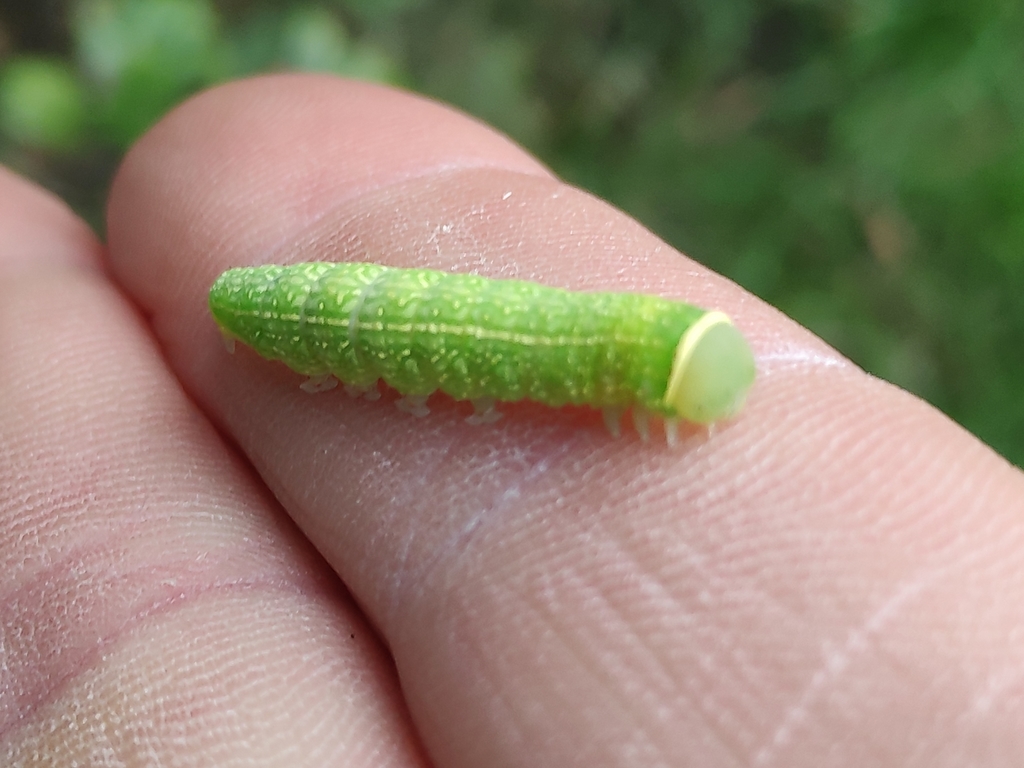
Green Silver-lines have a wingspan of about 30 to 35 mm and are common in wooded areas across the Palearctic region. Adults fly in June-July, while the caterpillars appear in August and feed on the leaves of oak, birch and similar trees.
Source: Wikipedia
How to recognize it
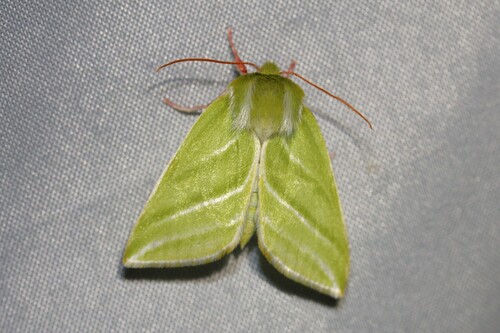
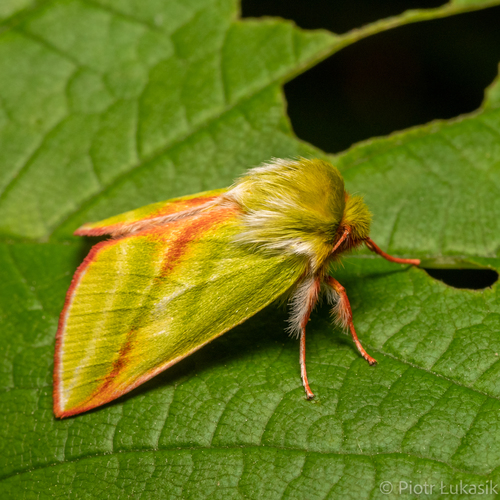
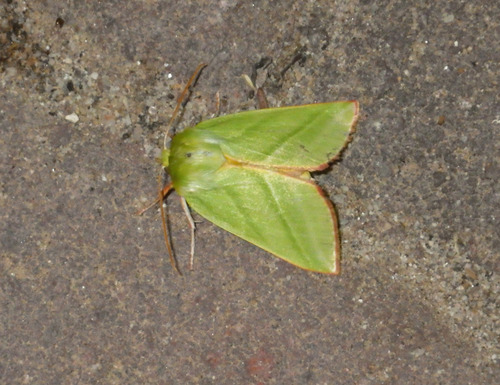
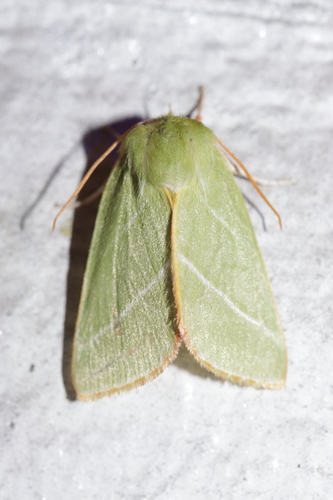
Forewings are yellow-green with a pink costal edge that fades toward the tip; the inner margin is pink-suffused, and both inner and outer lines are dark green edged with white, sometimes pink; the hindwing is yellow with a pale pink fringe.
Source: Wikipedia
Size
The moth’s wingspan ranges from 30 to 35 mm.
Source: Wikipedia
Where it lives
It is commonly found in wooded regions.
Source: Wikipedia
Life cycle
Adults are on the wing from June to July and produce a stridulating sound while flying. In August the larvae feed on the leaves of oak, birch and other deciduous trees.
Source: Wikipedia
When you see it
The moth’s flight period is June to July, varying with location.
Source: Wikipedia
Where it comes from
Its distribution covers the Palearctic realm, including northern and central Europe, Russia, Siberia, Korea and Japan.
Source: Wikipedia
Lookalikes
It can be confused with Bena bicolorana.
Source: Wikipedia
More photos
Questions people ask
When are Green Silver-lines active?
Adults fly from June to July, and the caterpillars appear in August.
Source: Wikipedia
Where can I find this moth?
It is common in wooded areas throughout the Palearctic region.
Source: Wikipedia
How can I identify Green Silver-lines?
Look for a 30 to 35 mm wingspan, yellow-green forewings with pink edges and dark green lines edged in white, and a yellow hindwing.
Source: Wikipedia
Same family (Nolidae)


Sources
- Wikipedia: https://en.wikipedia.org/wiki/Pseudoips_prasinana
Look it up elsewhere: GBIF · iNaturalist · BugGuide · Wikipedia
Text written 2026-10-22 from the sources above and checked sentence by sentence against them. Data fetched 2026-10-22.