 Bug FAQ
Gum Leaf Skeletoniser
Uraba lugens · Order: Lepidoptera · Family: Nolidae
Also called: Gum Leaf Skeletonizer, Mad Hatterpillar
Source: Wikipedia

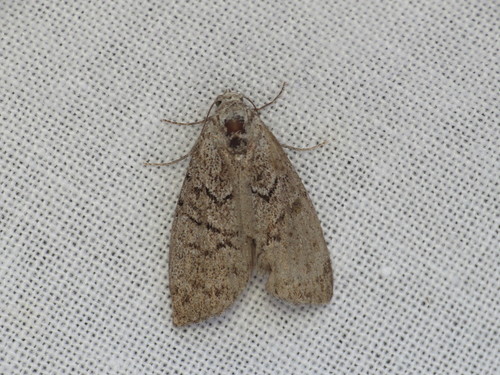
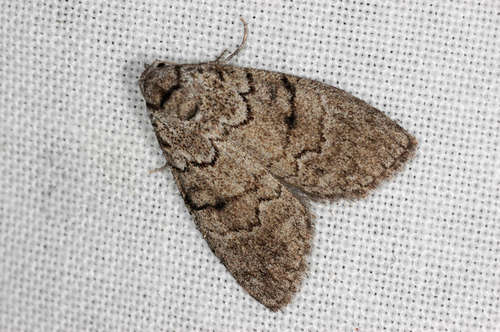
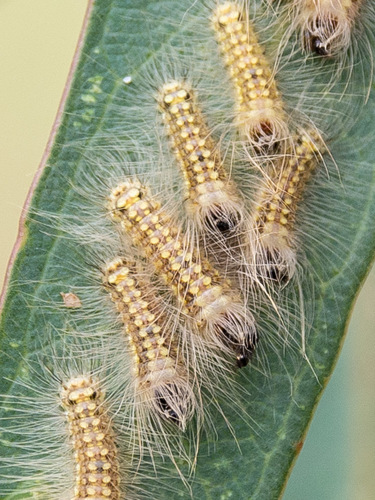
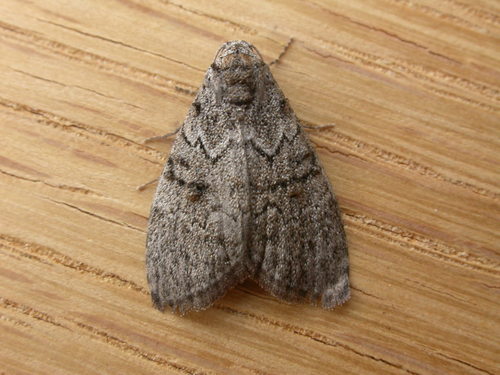
The caterpillars are yellow with black markings and the adult moths are grey, with a wingspan of about 25 to 30 mm. They occur in Australia and New Zealand and have two generations each year, one in summer and one in winter.
Source: Wikipedia
How to recognize it
Adult moths that emerge from cocoons are grey in colour.
Source: Wikipedia
Size
The moth’s wingspan ranges from 25 to 30 mm.
Source: Wikipedia
Is it a pest in the house?
An infestation was recorded in south-west Auckland in 2001. The larvae can damage trees by chewing their leaves.
Source: Wikipedia
How to get rid of it
Management programmes have been created and potential biological control agents tested. The parasitoid C. urabae proved most successful, repeatedly attacking the larvae over several generations.
Source: Wikipedia
What it eats
The larvae feed heavily on eucalyptus species and their close relatives. During the larval stage they chew the leaves, causing visible damage.
Source: Wikipedia
Life cycle
Uraba lugens develops as a typical moth.
Source: Wikipedia
When you see it
It produces two generations each year, one in summer and one in winter.
Source: Wikipedia
Where it comes from
Its native range includes Australia and New Zealand.
Source: Wikipedia
Lookalikes
It is sometimes called the mad hatterpillar because of its unique exoskeletal appearance.
Source: Wikipedia
More photos
Questions people ask
How can I control gum leaf skeletoniser infestations?
Biological control using the parasitoid C. urabae has been effective, and targeted management programmes are available.
Source: Wikipedia
What do the caterpillars look like?
They are mostly yellow with black markings and are nicknamed the mad hatterpillar.
Source: Wikipedia
When are the larvae active?
There are two generations each year, one in summer and one in winter.
Source: Wikipedia
Same family (Nolidae)


Sources
- Wikipedia: https://en.wikipedia.org/wiki/Uraba_lugens
Look it up elsewhere: GBIF · iNaturalist · BugGuide · Wikipedia
Text written 2026-10-22 from the sources above and checked sentence by sentence against them. Data fetched 2026-10-22.