 Bug FAQ
Spindle Ermine Moth
Yponomeuta cagnagellus · Order: Lepidoptera · Family: Yponomeutidae
Also called: Spindletree ermine moth, Spindle Ermine
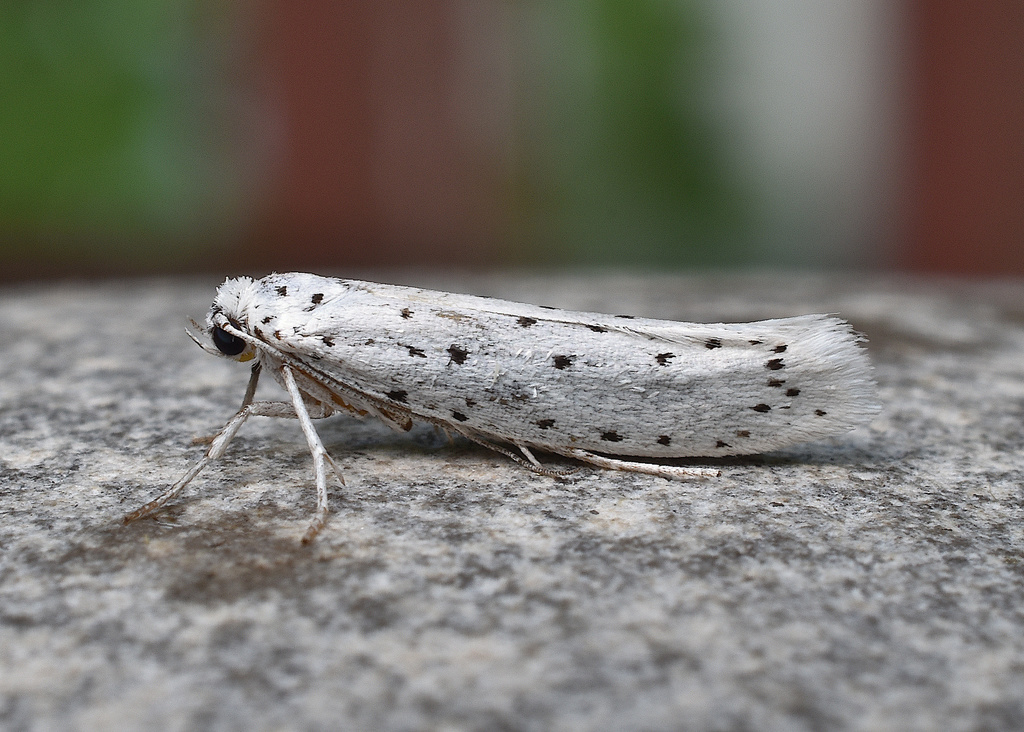
The spindle ermine moth has a wingspan of about 19 to 26 mm and white head with white forewings marked by several rows of black dots, while the hindwings are dark grey. Adults are attracted to light and fly from late June through October; the larvae feed on European spindle.
Source: Wikipedia
How to recognize it
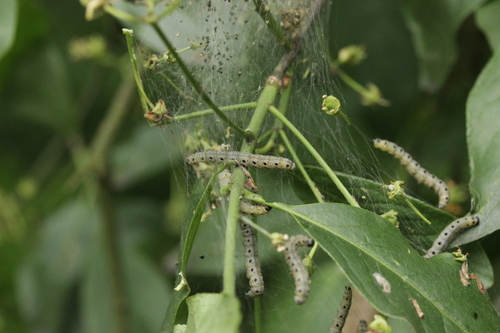
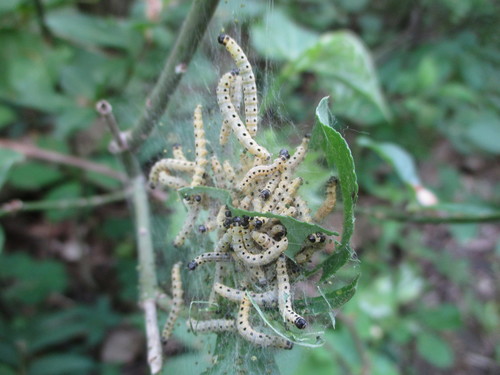
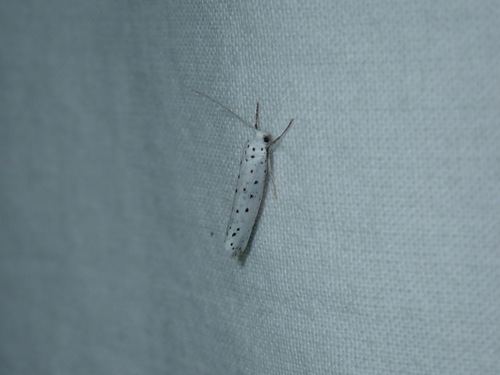
The head is white. Forewings are white with four longitudinal rows of black dots and white cilia. Hindwings are dark grey. The larva is pale grey-yellowish with black spots and a black head.
Source: Wikipedia
Size
Wingspan ranges from 19 to 26 mm.
Source: Wikipedia
Where it lives
Adults are attracted to light.
Source: Wikipedia
What it eats
The host plant is the European spindle.
Source: Wikipedia
Life cycle
Adults fly from the end of June to October.
Source: Wikipedia
When you see it
Flight period extends from late June through October.
Source: Wikipedia
Lookalikes
Other ermine moths that also use European spindle are Yponomeuta plumbella and Yponomeuta irrorella.
Source: Wikipedia
Where it is found in the US
Recorded in 14 of 51 states and DC. Most records: Michigan, Minnesota, Vermont, New York, Massachusetts, Washington, Pennsylvania, Wisconsin.
Darker = more records. Counts are museum and citizen-science records, not population size.
Source: GBIF
Status: introduced in United States; introduced in Canada. Source: iNaturalist
Months it is reported in the US
Source: GBIF
More photos

Questions people ask
When are adult spindle ermine moths active?
Adults are on the wing from late June through October.
Source: Wikipedia
How can I recognize a spindle ermine moth?
Look for a white head, white forewings with rows of black dots, and dark grey hindwings.
Source: Wikipedia
Are there similar moths I might confuse it with?
Yes, Yponomeuta plumbella and Yponomeuta irrorella are similar species that also use European spindle.
Source: Wikipedia
Same family (Yponomeutidae)
Sources
- Wikipedia: https://en.wikipedia.org/wiki/Yponomeuta_cagnagella
Look it up elsewhere: GBIF · iNaturalist · BugGuide · Wikipedia
Text written 2026-10-27 from the sources above and checked sentence by sentence against them. Data fetched 2026-10-27.