 Bug FAQ
Pine Needle Sheathminer
Zelleria haimbachi · Order: Lepidoptera · Family: Yponomeutidae
Also called: Pine Needle Sheathminer Moth
Source: Wikipedia
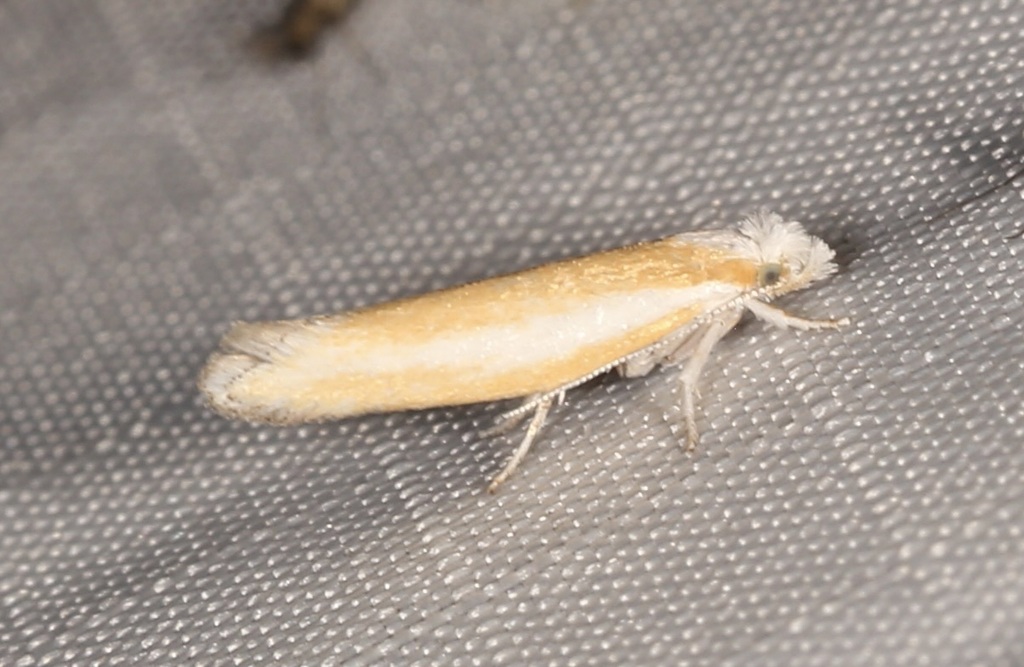
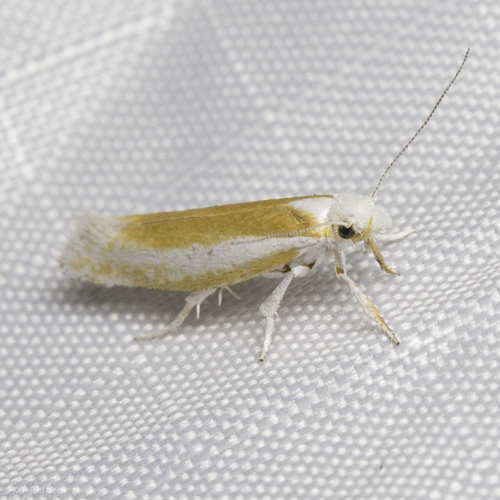
The adult moth has a wingspan of about 13 mm. It lives across much of North America, from British Columbia south of 52° N eastward to Quebec and down to California. The species is considered a pest and has caused outbreaks, especially recorded in several locations in British Columbia during the mid-20th century.
Source: Wikipedia
Size
Adults have a wingspan of roughly 13 mm.
Source: Wikipedia
Is it a pest in the house?
The moth is regarded as a pest and can produce outbreaks. Infestations have been documented in British Columbia towns like Penticton (1951) and Clearwater-Shuswap (1985-1992).
Source: Wikipedia
Where it lives
In North America it occurs from British Columbia south of 52° N, across to Quebec, and as far south as California.
Source: Wikipedia
What it eats
Larvae feed on the needles of several pine species such as Jack pine, lodgepole pine and ponderosa pine, and also on some other conifers.
Source: Wikipedia
Where it comes from
Its North-American range includes British Columbia, Quebec and California.
Source: Wikipedia
Where it is found in the US
Recorded in 19 of 51 states and DC. Most records: California, Montana, Michigan, Virginia, Colorado, Nevada, Washington, Arizona.
Darker = more records. Counts are museum and citizen-science records, not population size.
Source: GBIF
Status: native in North America; native in Canada. Source: iNaturalist
Months it is reported in the US
Source: GBIF
More photos
Questions people ask
Where can I find this moth?
It is found across North America from British Columbia south of 52° N east to Quebec and down to California.
Source: Wikipedia
What trees does it damage?
Its larvae feed on several pine species, including Jack pine, lodgepole pine and ponderosa pine.
Source: Wikipedia
Has it been a problem in homes or gardens?
It is considered a pest and has caused outbreaks, with recorded infestations in several British Columbia locations.
Source: Wikipedia
Same family (Yponomeutidae)
Sources
- Wikipedia: https://en.wikipedia.org/wiki/Zelleria_haimbachi
Look it up elsewhere: GBIF · iNaturalist · BugGuide · Wikipedia
Text written 2026-10-27 from the sources above and checked sentence by sentence against them. Data fetched 2026-10-27.