 Bug FAQ
Southeastern Field Cricket
Gryllus rubens · Order: Orthoptera · Family: Gryllidae
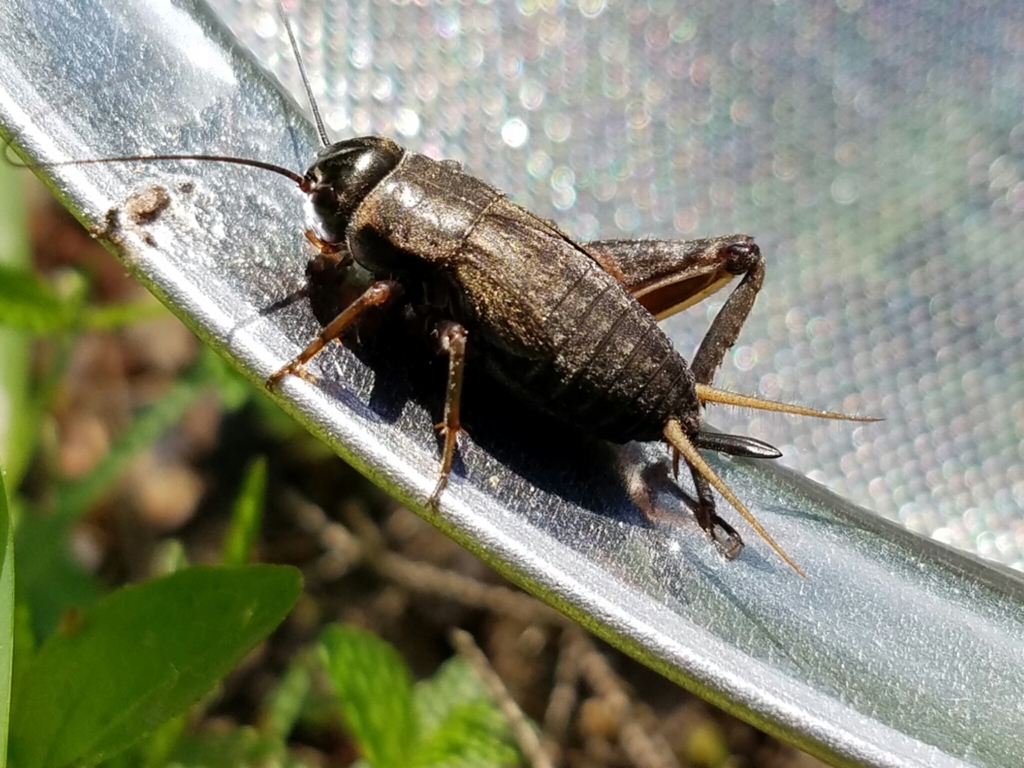
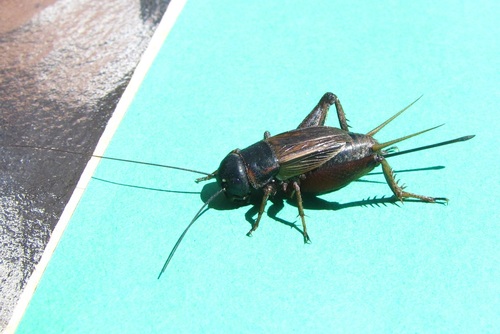
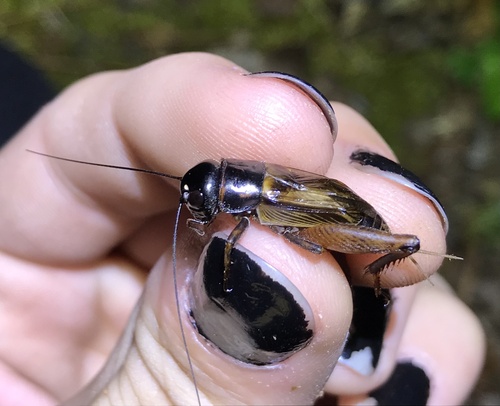
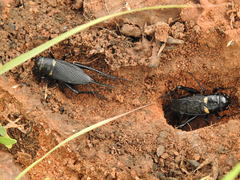
The southeastern field cricket is found across most of the southeastern United States and its range stretches from southern Delaware to extreme southeastern Kansas in the north and from Florida to eastern Texas in the south. It shows seasonal wing forms, bearing long wings that reach the abdomen in spring and summer, and short wings in autumn and winter.
Source: Wikipedia
How to recognize it
Its forewings have a pale lateral field with faint veins and crossveins. Its calling song is slower than that of the similar Gryllus firmus.
Source: Wikipedia
Life cycle
Research often focuses on its wing polymorphism. Short-winged females lay eggs earlier and produce more eggs than long-winged females.
Source: Wikipedia
When you see it
During spring and summer it commonly has long wings that reach the end of the abdomen. In autumn and winter it tends to be short-winged.
Source: Wikipedia
Lookalikes
It can be distinguished from G. firmus by its slower call song and the color pattern of its forewings.
Source: Wikipedia
Where it is found in the US
Recorded in 20 of 51 states and DC. Most records: Florida, Georgia, North Carolina, California, Alabama, Virginia, Kansas, Maryland.
Darker = more records. Counts are museum and citizen-science records, not population size.
Source: GBIF
Status: endemic in North America; endemic in United States. Source: iNaturalist
Months it is reported in the US
Source: GBIF
More photos
Questions people ask
How can I tell the southeastern field cricket apart from similar crickets?
Listen for its slower call song and examine the forewing color pattern; these features separate it from the similar Gryllus firmus.
Source: Wikipedia
Same family (Gryllidae)


Sources
- Wikipedia: https://en.wikipedia.org/wiki/Gryllus_rubens
Look it up elsewhere: GBIF · iNaturalist · BugGuide · ITIS · Wikipedia
Text written 2026-10-27 from the sources above and checked sentence by sentence against them. Data fetched 2026-10-27.