 Bug FAQ
Tropical House Cricket
Gryllodes sigillatus · Order: Orthoptera · Family: Gryllidae
Also called: Indian House Cricket
Source: Wikipedia
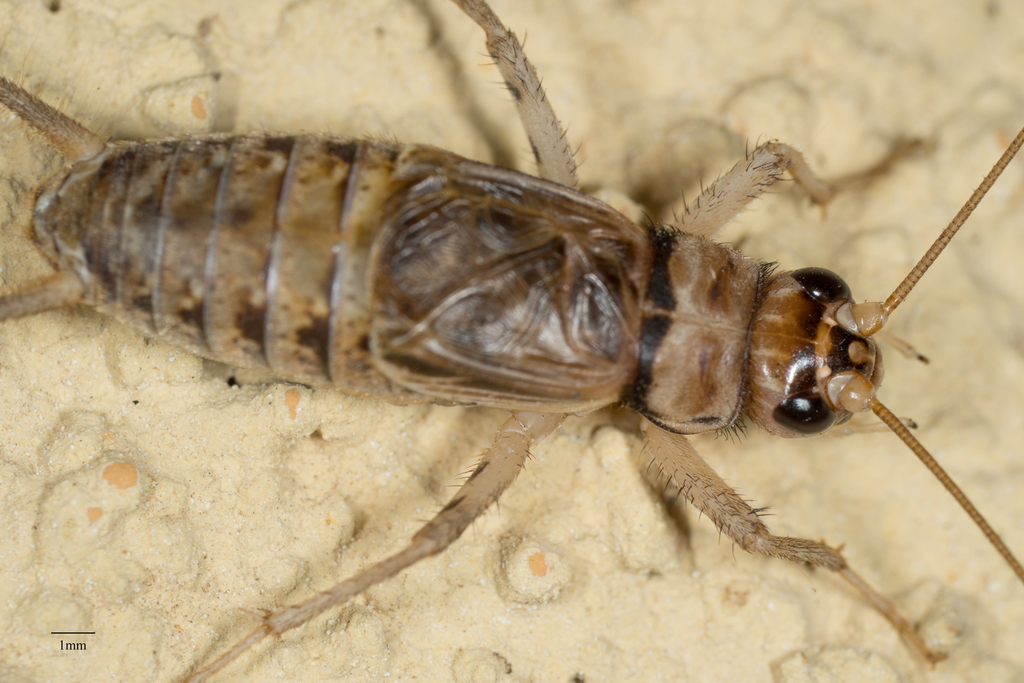
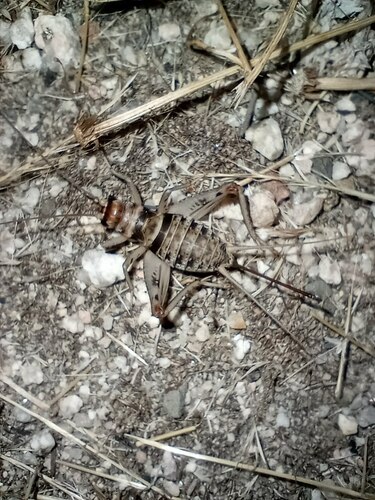
Tropical house crickets are small, about 13 to 18 mm long. They are light yellow-tan with two thick black bands. The males sing and can be a nuisance indoors.
Source: Wikipedia
Is it a pest in the house?
They generally cause no damage, but the singing males can be a nuisance.
Source: Wikipedia
How to get rid of it
Baits sold for cockroach or earwig control can be used to manage them.
Source: Wikipedia
Where it comes from
They probably originate from southwestern Asia but now occur throughout tropical regions worldwide.
Source: Wikipedia
Where it is found in the US
Recorded in 37 of 51 states and DC. Most records: California, Arizona, Florida, Texas, Nevada, Hawaii, South Carolina, Utah.
Darker = more records. Counts are museum and citizen-science records, not population size.
Source: GBIF
Status: introduced in North America; introduced in Canada; introduced in United States. Source: iNaturalist
Months it is reported in the US
Source: GBIF
More photos
Questions people ask
How can I get rid of tropical house crickets?
Use baits marketed for cockroach or earwig control.
Source: Wikipedia
Why are tropical house crickets noisy?
Male crickets sing, which can be a nuisance indoors.
Source: Wikipedia
What do tropical house crickets look like?
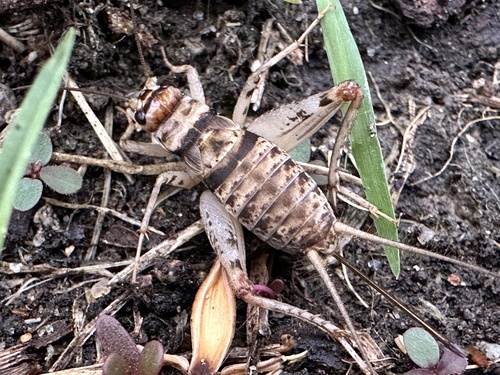
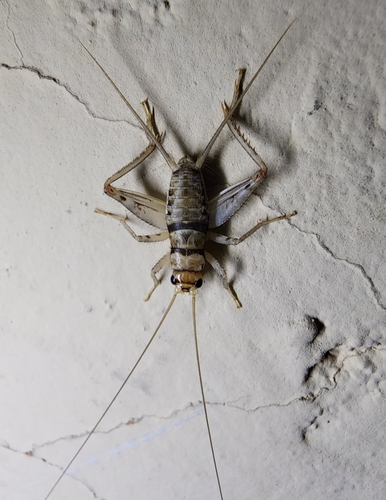
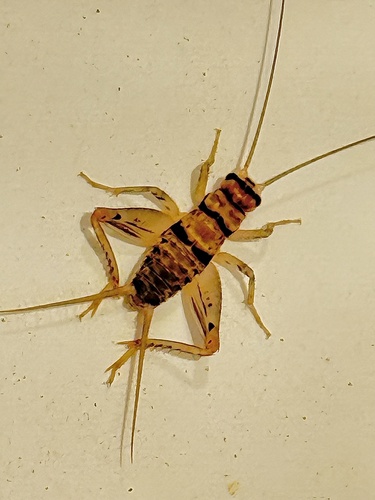
They are light yellow-tan with two thick black bands.
Source: Wikipedia
Where are tropical house crickets from?
They likely originated in southwestern Asia and have spread to tropical regions worldwide.
Source: Wikipedia
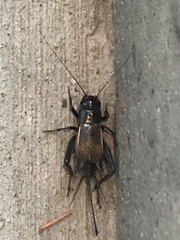
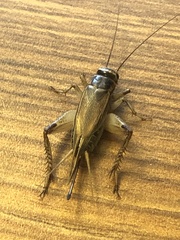
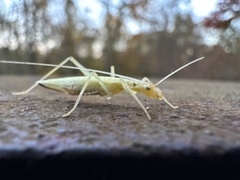
Same family (Gryllidae)

Sources
- Wikipedia: https://en.wikipedia.org/wiki/Tropical_house_cricket
Look it up elsewhere: GBIF · iNaturalist · BugGuide · ITIS · Wikipedia
Text written 2026-10-23 from the sources above and checked sentence by sentence against them. Data fetched 2026-10-22.