 Bug FAQ
South African Bont Tick
Amblyomma hebraeum · Order: Ixodida · Family: Ixodidae
Also called: Bont tick
Source: Wikipedia
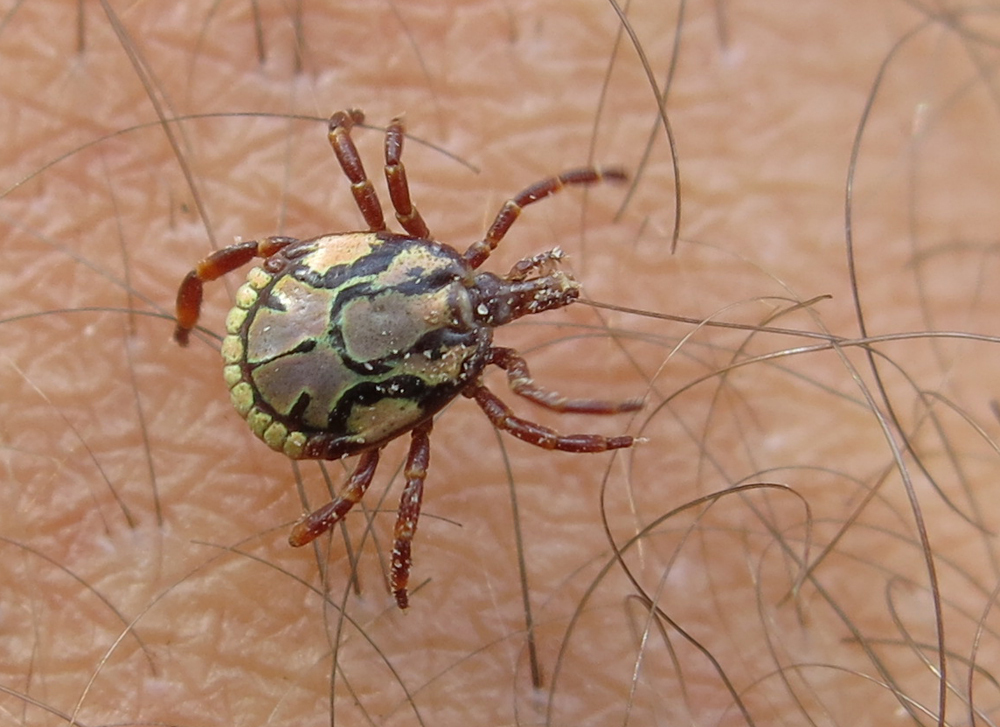
Adult females can swell to about two centimeters when fully fed, while males stay only a few millimetres long. They have a mottled back and legs that are dark with lighter joints, and their bodies are edged with noticeable festoons. These ticks live in eastern and northern South Africa and nearby countries, and they can carry heart-water disease that harms cattle and other livestock.
Source: Wikipedia
How to recognize it
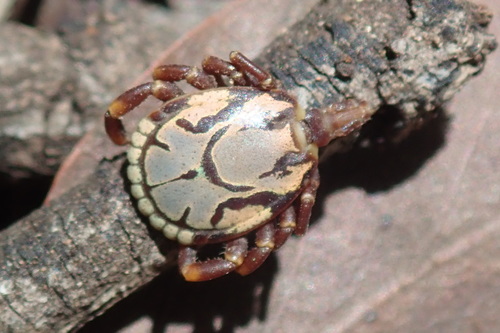
Males show a dappled shield on the back, while females have a dappled scutum and a solid black rear part; both have prominent festoons and dark-red legs that get lighter at the joints.
Source: Wikipedia
Size
Males are 4 to 6 mm long; females can expand to up to 20 mm after feeding.
Source: Wikipedia
Where it lives
They are native to eastern and northern parts of South Africa, Eswatini, eastern Botswana, most of Zimbabwe and southern Mozambique.
Source: Wikipedia
Life cycle
Both nymphs and adults can carry heartwater disease for their whole lives, though infection rates change with season and region.
Source: Wikipedia
When you see it
In South Africa, about one to seven percent of ticks are infected at any given time.
Source: Wikipedia
Where it comes from
The species is native to southern Africa.
Source: Wikipedia
Lookalikes
Further north and on Madagascar it is replaced by the tropical bont tick, which overlaps in some areas.
Source: Wikipedia
More photos
Questions people ask
What disease does the South African bont tick transmit?
It spreads heartwater disease, which can be fatal to domestic ruminants such as cattle and goats.
Source: Wikipedia
How large do these ticks get?
Males are only a few millimetres long, while females can swell to about two centimetres after feeding.
Source: Wikipedia
How can I tell a South African bont tick apart from similar ticks?
Its back is dappled in colour, the rear part of the female is solid black, and both sexes have distinct festoons along the edge of the body.
Source: Wikipedia
Same family (Ixodidae)
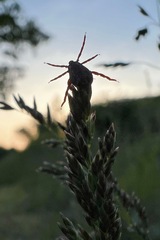 American Dog TickDermacentor variabilisCan spread germs or disease
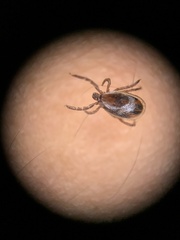 Eastern Black-legged TickIxodes scapularisCan spread germs or disease
 Lone Star TickAmblyomma americanumCan spread germs or disease
 Gulf Coast TickAmblyomma maculatumCan spread germs or disease
 Western Black-legged TickIxodes pacificusCan spread germs or disease
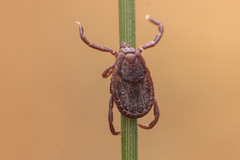 Brown Dog TickRhipicephalus sanguineusCan spread germs or disease
Sources
- Wikipedia: https://en.wikipedia.org/wiki/Amblyomma_hebraeum
Look it up elsewhere: GBIF · iNaturalist · BugGuide · ITIS · Wikipedia
Text written 2026-10-23 from the sources above and checked sentence by sentence against them. Data fetched 2026-10-23.