 Bug FAQ
Sooty Longwing
Capnobotes fuliginosus · Order: Orthoptera · Family: Tettigoniidae
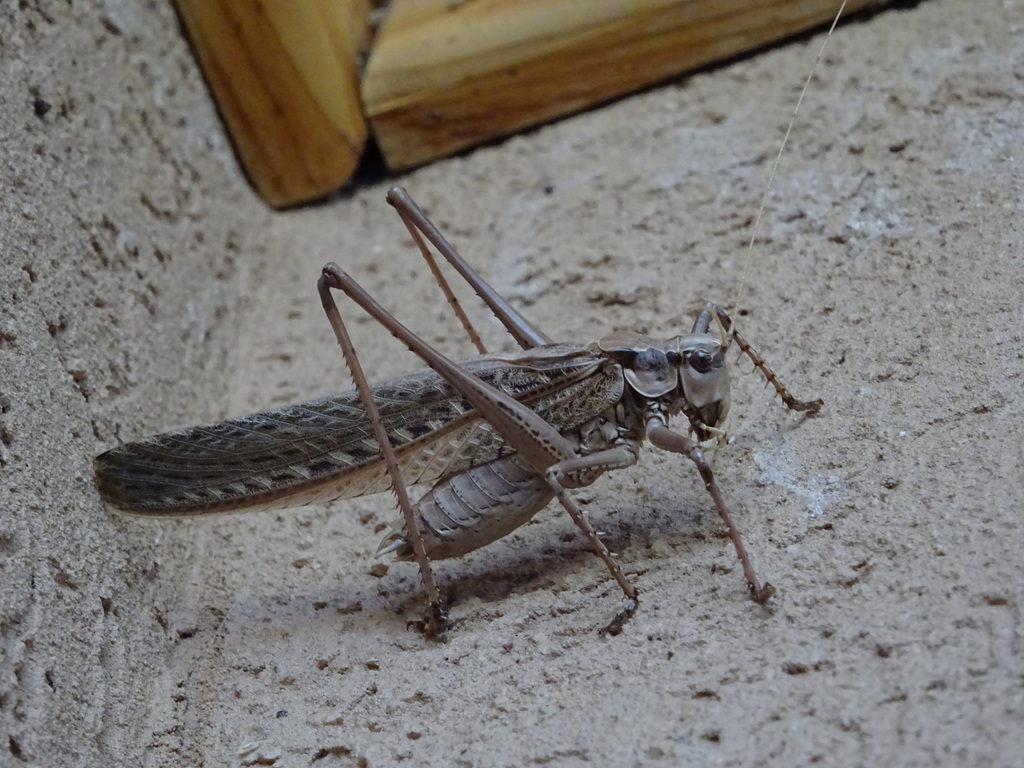
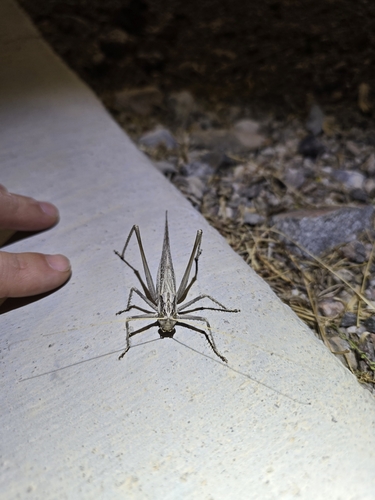
The Sooty Longwing can reach about 75 mm from tip to tip of its wings and has a brown-gray body with long wings; its hindwings are darker than the forewings and are shown when the insect is startled. It lives in the deserts of California and other parts of the western United States and Mexico, being most active on hot desert nights.
Source: Wikipedia
How to recognize it
It is brownish-gray, has long wings, a shield-like back, and its hindwings are darker than the forewings. When startled, it flashes its dark hindwings.
Source: Wikipedia
Size
Adults can grow up to about 75 mm (3 in) long, measured to the wing tips.
Source: Wikipedia
Where it lives
They are most active on hot nights.
Source: Wikipedia
When you see it
They are highly active on hot nights.
Source: Wikipedia
Where it comes from
The species occurs in the western United States and Mexico.
Source: Wikipedia
Where it is found in the US
Recorded in 9 of 51 states and DC. Most records: Arizona, Nevada, California, Utah, New Mexico, Colorado, Texas, Oklahoma.
Darker = more records. Counts are museum and citizen-science records, not population size.
Source: GBIF
Status: native in North America. Source: iNaturalist
Months it is reported in the US
Source: GBIF
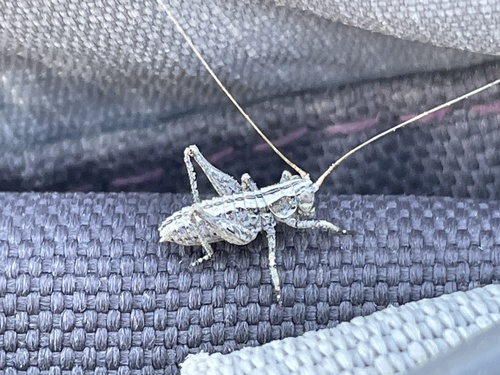
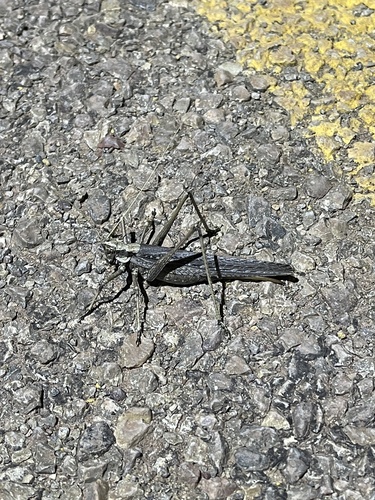
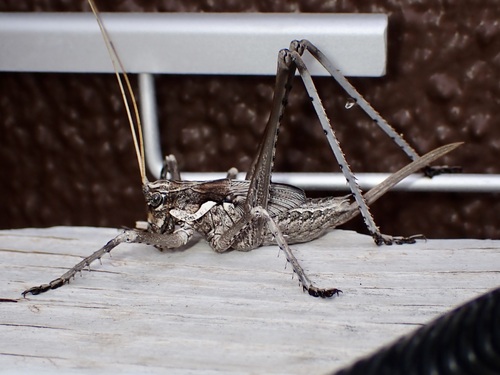
More photos
Same family (Tettigoniidae)
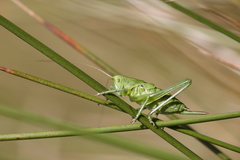 Great Green Bush-cricketTettigonia viridissimaCan bite
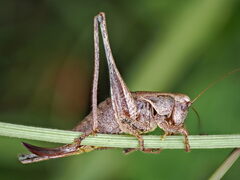 Dark Bush-cricketPholidoptera griseoaptera
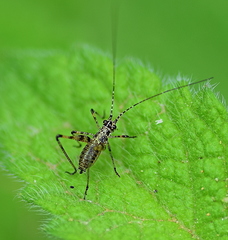 Mediterranean KatydidPhaneroptera nanaDamages trees, gardens or crops
 Fork-tailed Bush KatydidScudderia furcataDamages trees, gardens or crops
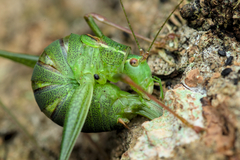 Speckled Bush-cricketLeptophyes punctatissima
 Roesel's Bush-cricketRoeseliana roeselii
Sources
- Wikipedia: https://en.wikipedia.org/wiki/Capnobotes_fuliginosus
Look it up elsewhere: GBIF · iNaturalist · BugGuide · ITIS · Wikipedia
Text written 2026-10-24 from the sources above and checked sentence by sentence against them. Data fetched 2026-10-24.