 Bug FAQ
Snouted Harvester Termite
Trinervitermes trinervoides · Order: Blattodea · Family: Termitidae

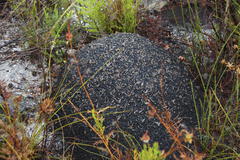
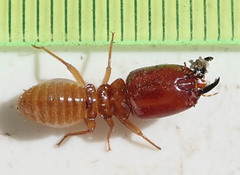
Snouted harvester termites have a distinctive snout on the soldier’s head and collect grass, which gives them their name. They live in savannah and grassland areas of southern Africa, especially south of the Limpopo River, and avoid barren land. These termites store grass in their mounds and forage at night, stopping activity during the winter months of June to August.
Source: Wikipedia
How to recognize it
Soldier termites have a snout on their heads and gather grass, which is why they are called snouted harvester termites.
Source: Wikipedia
Where it lives
Their preferred habitats are savannah and grassland, and they stay away from barren ground.
Source: Wikipedia
What it eats
They feed like other harvester termites, collecting and storing grass in their mounds just below the surface.
Source: Wikipedia
When you see it
Snouted harvester termites are mainly active at night. They stop foraging during the winter months of June through August.
Source: Wikipedia
Where it comes from
The species is native to and widespread across southern Africa.
Source: Wikipedia
Questions people ask
Why are they called snouted harvester termites?
Because the soldier termites have a snout on their heads and they collect grass.
Source: Wikipedia
Where do snouted harvester termites live?
They live in savannah and grassland areas of South Africa, Namibia, Zimbabwe, and Mozambique, especially south of the Limpopo River.
Source: Wikipedia
What do they eat and store?
They feed on grass like other harvester termites and keep the grass stored just beneath the surface of their mounds.
Source: Wikipedia
When are they active?
They are mostly nocturnal and stop foraging during the winter months of June to August.
Source: Wikipedia
Same family (Termitidae)




Sources
- Wikipedia: https://en.wikipedia.org/wiki/Trinervitermes_trinervoides
Look it up elsewhere: GBIF · iNaturalist · BugGuide · Wikipedia
Text written 2026-10-23 from the sources above and checked sentence by sentence against them. Data fetched 2026-10-23.