 Bug FAQ
Spinifex Termite
Nasutitermes triodiae · Order: Blattodea · Family: Termitidae
Also called: Cathedral Termite
Source: Wikipedia
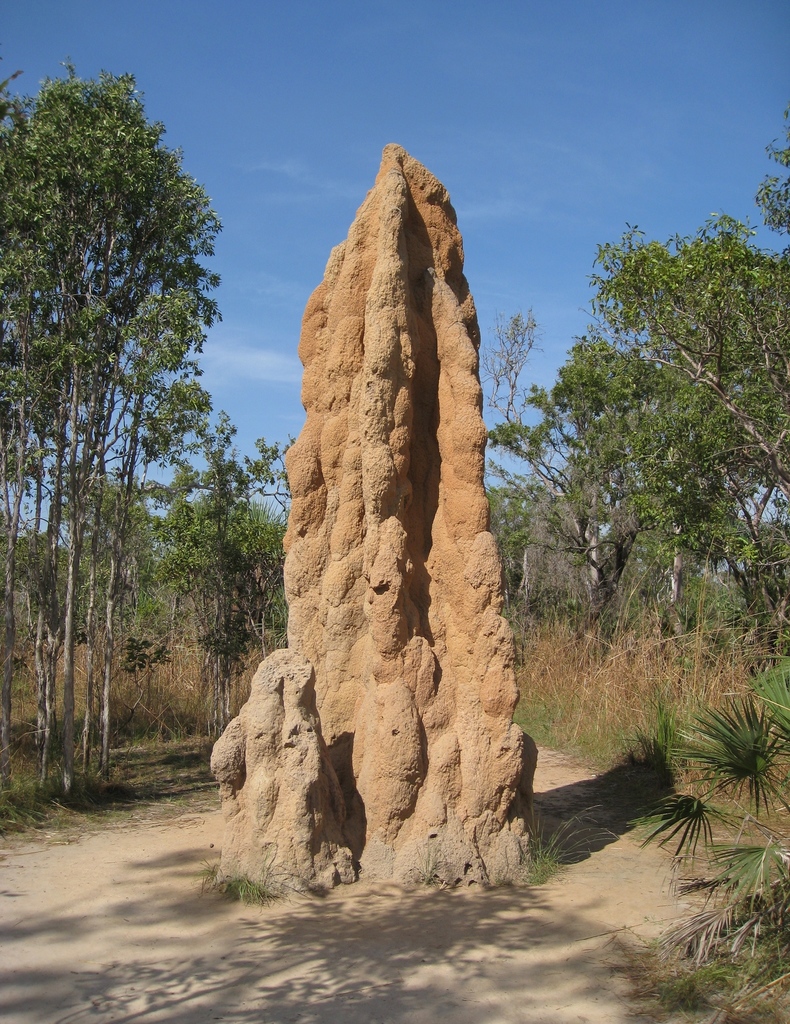
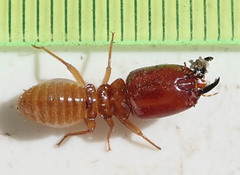
Soldier termites have a dark brown head and a long tubular snout called a nasus that can spray chemicals. They live in the Northern Territory of Australia and feed on Triodia grass, whether the plant is alive or dead. If a person puts a finger into a mound, the defensive fluid may irritate the skin.
Source: Wikipedia
How to recognize it
Soldier termites show a dark brown head and an elongated, tube-like nasus. They store a mix of monoterpenes, sesquiterpenes and diterpenes that can be ejected from the nasus.
Source: Wikipedia
Does it bite or sting?
If a human sticks a finger into the mound, it will be covered in the defensive fluid. The secretions can entangle, irritate and repel invaders.
Source: Wikipedia
Where it lives
They are mostly found in the Northern Territory of Australia.
Source: Wikipedia
What it eats
They commonly feed on Triodia grass. They will eat the plant material whether it is living or dead.
Source: Wikipedia
Life cycle
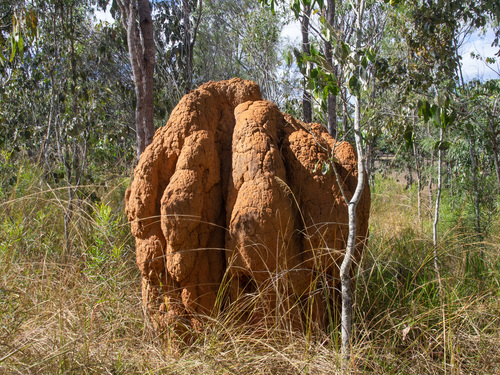
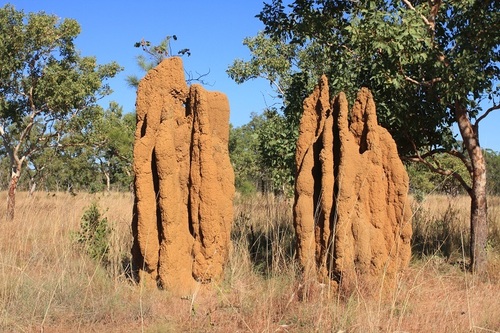
The hollow columns of their mounds allow air to move from the cooler soil at the base to the warmer top.
Source: Wikipedia
Where it comes from
Their native range is the Northern Territory, Australia.
Source: Wikipedia
More photos
Questions people ask
How can I identify a Spinifex termite soldier?
Look for a dark brown head and a long tubular snout (nasus) that can spray chemicals.
Source: Wikipedia
Where does the Spinifex termite live?
It is mostly found in the Northern Territory of Australia.
Source: Wikipedia
Does it bite or sting people?
If you put a finger into a mound, the defensive fluid may irritate your skin.
Source: Wikipedia
What does the Spinifex termite eat?
It feeds on Triodia grass, whether the grass is alive or dead.
Source: Wikipedia
Same family (Termitidae)

Sources
- Wikipedia: https://en.wikipedia.org/wiki/Nasutitermes_triodiae
Look it up elsewhere: GBIF · iNaturalist · BugGuide · Wikipedia
Text written 2026-10-23 from the sources above and checked sentence by sentence against them. Data fetched 2026-10-23.