 Bug FAQ
Small Skipper
Thymelicus sylvestris · Order: Lepidoptera · Family: Hesperiidae
Also called: Hesperiid moth
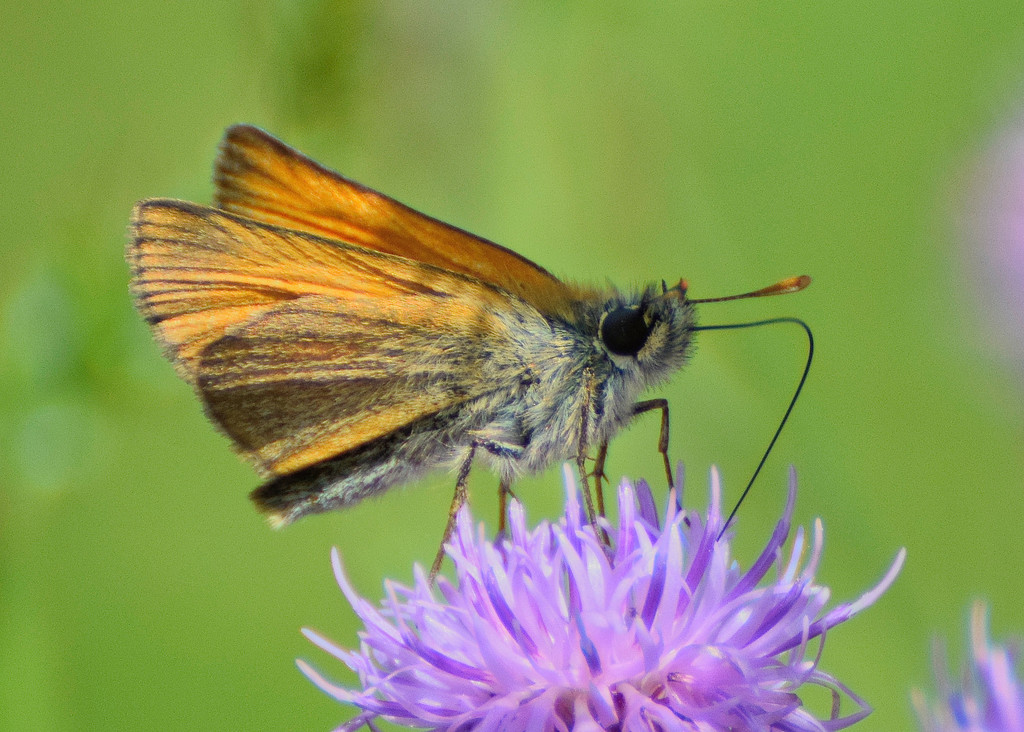
The Small Skipper is a small orange-brown butterfly with a wingspan of about 25 to 30 mm and silvery white underside. It lives where tall grasses grow across much of Europe, North Africa and the Middle East, and its caterpillars feed on several common grass species.
Source: Wikipedia
How to recognize it
The wings, upper body and antenna tips have a rusty orange colour, and males show a black scent-scale stripe on the forewing.
Source: Wikipedia
Size
Its wingspan measures roughly 25 to 30 mm (about 1 inch).
Source: Wikipedia
Where it lives
It is typically found in places where grass grows tall.
Source: Wikipedia
What it eats
Caterpillars mainly eat Yorkshire fog grass but will also use timothy, creeping soft grass, false brome, meadow foxtail and cock's foot.
Source: Wikipedia
Life cycle
Newly hatched caterpillars eat their eggshell, then hibernate alone in a silk-sealed grass sheath before pupating near the base of the host plant in June.
Source: Wikipedia
Where it comes from
Its range covers most of Europe, extending east to the Urals, and also includes Ireland, Britain, Scandinavia, North Africa and the Middle East.
Source: Wikipedia
Lookalikes
It looks very similar to the Essex skipper, but its antenna tip undersides are yellow-orange rather than black.
Source: Wikipedia
More photos

Questions people ask
Are Small Skippers a garden pest?
They feed on common grasses but are not reported to damage crops or gardens.
Source: Wikipedia
How can I tell a Small Skipper apart from an Essex skipper?
Look at the underside of the antenna tips: Small Skippers have yellow-orange tips, while Essex skippers have black tips.
Source: Wikipedia
Same family (Hesperiidae)

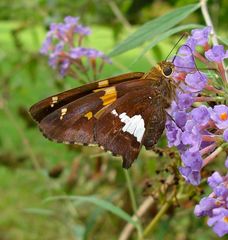

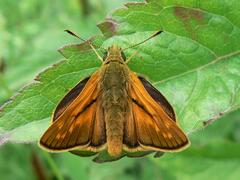


Sources
- Wikipedia: https://en.wikipedia.org/wiki/Small_skipper
Look it up elsewhere: GBIF · iNaturalist · BugGuide · Wikipedia
Text written 2026-10-22 from the sources above and checked sentence by sentence against them. Data fetched 2026-10-22.