 Bug FAQ
Small Gold Grasshopper
Euthystira brachyptera · Order: Orthoptera · Family: Acrididae
Also called: Eurasian Small Gold Grasshopper, Iberian Small Gold Grasshopper
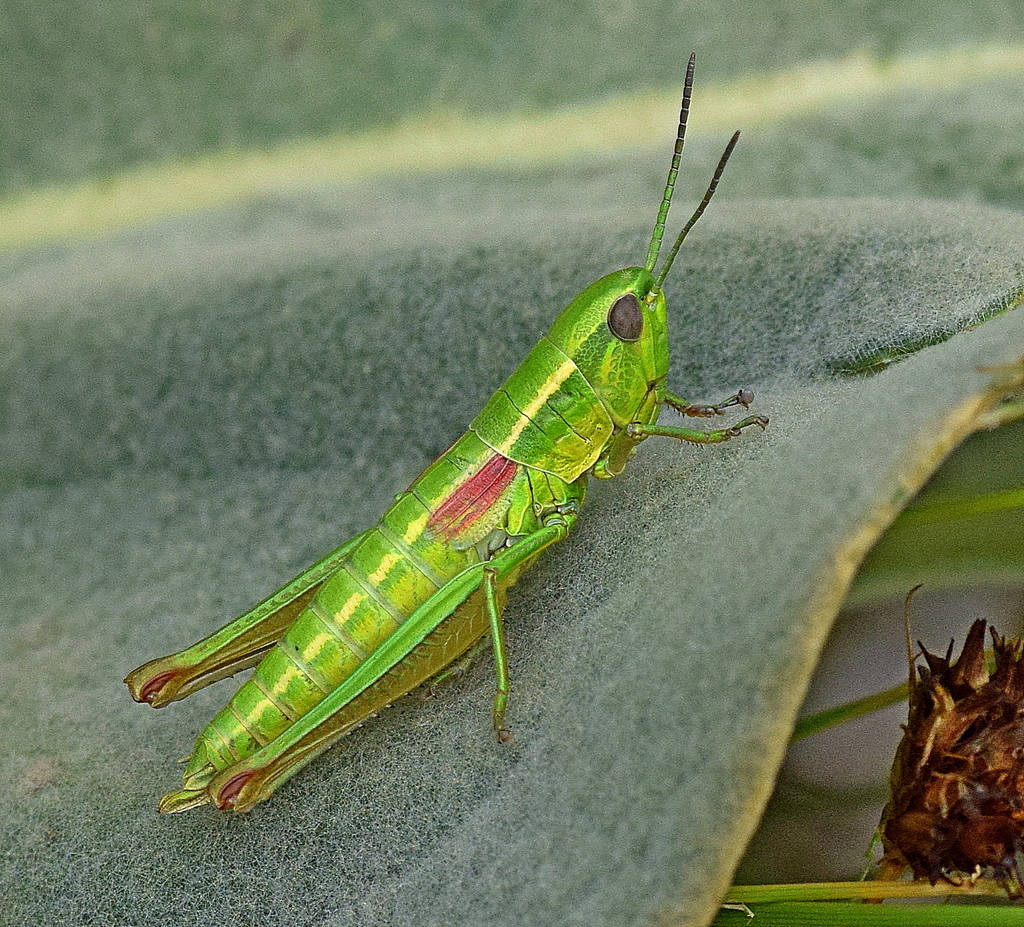
The small gold grasshopper is 13 to 26 mm long, with females usually larger than males. Its body shines yellow-green, males have wings reaching the abdomen middle while females have very short, often pink or purple wings. It lives in mountain and sub-alpine meadows, calcareous grasslands with tall grasses, and woodland clearings across most of Europe, the eastern Palearctic, and the Near East, and adults appear from July to September.
Source: Wikipedia
How to recognize it
The grasshopper’s body is a shiny yellow-green color. Males have wings that reach the middle of the abdomen; females have very short wings that are often pink or purple.
Source: Wikipedia
Size
Adults measure between 13 and 26 mm, with females generally larger.
Source: Wikipedia
Where it lives
It is common in calcareous grasslands that contain Brachypodium pinnatum.
Source: Wikipedia
When you see it
Adults are active from July through September.
Source: Wikipedia
Where it comes from
The species occurs throughout most of Europe, the eastern Palearctic realm, and the Near East.
Source: Wikipedia
More photos

Same family (Acrididae)
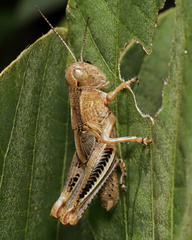 Differential GrasshopperMelanoplus differentialisDamages trees, gardens or crops
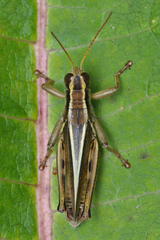 Two-striped GrasshopperMelanoplus bivittatusDamages trees, gardens or crops
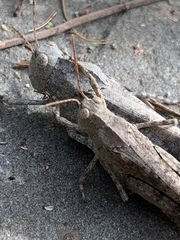 Carolina GrasshopperDissosteira carolinaDamages trees, gardens or crops
 Common Field GrasshopperChorthippus brunneus
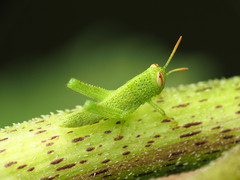 Egyptian Bird GrasshopperAnacridium aegyptium
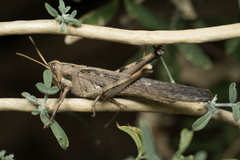 Gray Bird GrasshopperSchistocerca nitensDamages trees, gardens or crops
Sources
- Wikipedia: https://en.wikipedia.org/wiki/Euthystira_brachyptera
Look it up elsewhere: GBIF · iNaturalist · BugGuide · Wikipedia
Text written 2026-10-22 from the sources above and checked sentence by sentence against them. Data fetched 2026-10-22.