 Bug FAQ
Small-eyed Sphinx
Paonias myops · Order: Lepidoptera · Family: Sphingidae
Also called: Small-eyed Sphinx Moth
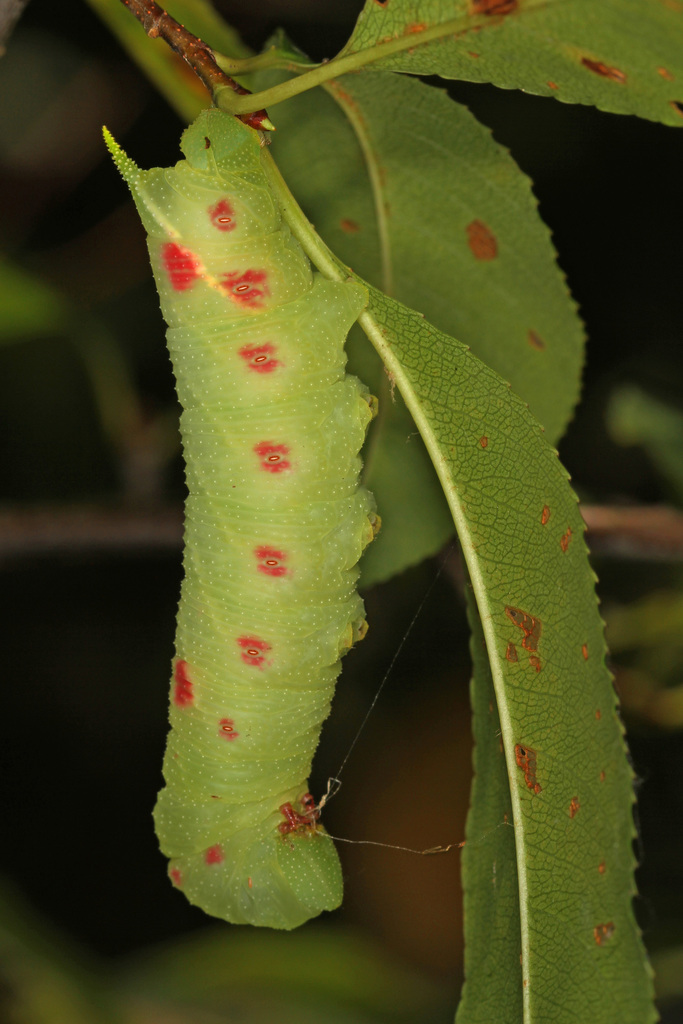
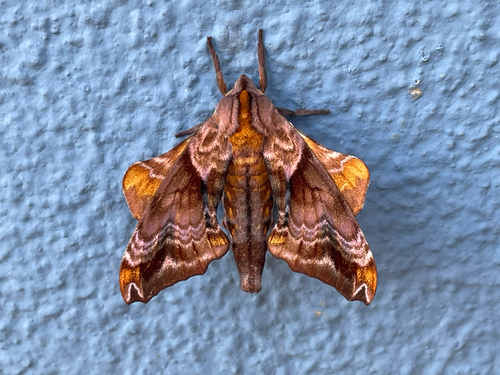
The small-eyed sphinx has a wingspan of about 5 to 7 cm. Adults are more active at night than most hawk moths. It lives across North America from southeastern Canada down to Florida and almost to the Pacific Coast. In eastern Canada adults fly from June to September; farther south they may have several generations per year.
Source: Wikipedia
How to recognize it
Adults are more nocturnal than most sphingids.
Source: Wikipedia
Size
Wingspan ranges from 52 to 69 mm.
Source: Wikipedia
Life cycle
Adults are on wing June-September in eastern Canada; New Jersey has two generations per year, Louisiana four.
Source: Wikipedia
When you see it
Adults fly from June to September in eastern Canada.
Source: Wikipedia
Where it comes from
Its range covers southeastern Canada, the United States down to Florida, and stretches west toward the Pacific.
Source: Wikipedia
Where it is found in the US
Recorded in 48 of 51 states and DC. Most records: Massachusetts, Pennsylvania, Vermont, Michigan, Ohio, New York, Connecticut, Maryland.
Darker = more records. Counts are museum and citizen-science records, not population size.
Source: GBIF
Status: native in North America; native in Canada; native in United States. Source: iNaturalist
Months it is reported in the US
Source: GBIF
More photos
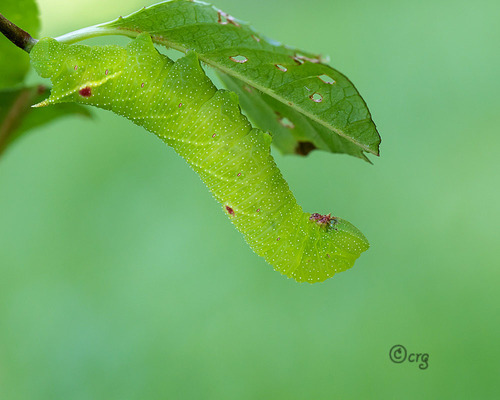
Same family (Sphingidae)
 White-lined SphinxHyles lineataDamages trees, gardens or crops
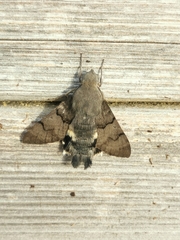 Eurasian Hummingbird HawkmothMacroglossum stellatarum
 Snowberry ClearwingHemaris diffinis
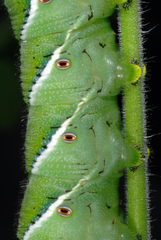 Carolina SphinxManduca sextaDamages trees, gardens or crops
 Hummingbird ClearwingHemaris thysbeDamages trees, gardens or crops
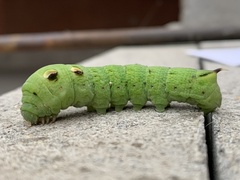 Elephant HawkmothDeilephila elpenor
Sources
- Wikipedia: https://en.wikipedia.org/wiki/Paonias_myops
Look it up elsewhere: GBIF · iNaturalist · BugGuide · ITIS · Wikipedia
Text written 2026-10-22 from the sources above and checked sentence by sentence against them. Data fetched 2026-10-22.