 Bug FAQ
Small Elephant Hawkmoth
Deilephila porcellus · Order: Lepidoptera · Family: Sphingidae
Also called: Small Elephant Hawk-Moth
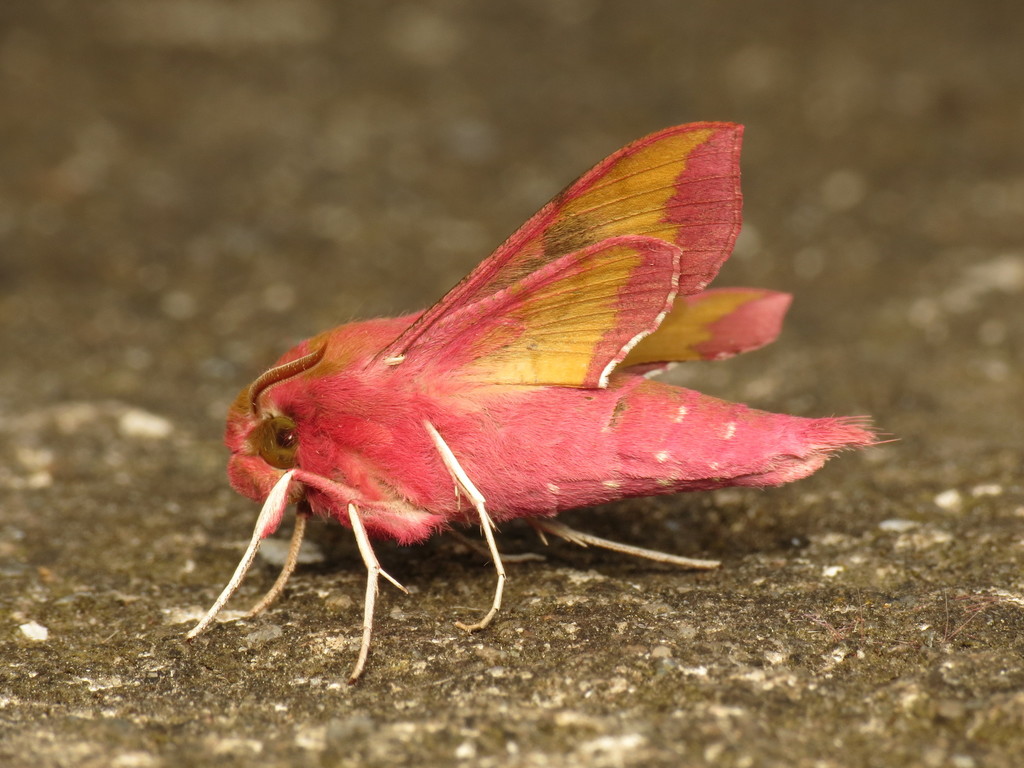
The small elephant hawkmoth has a wingspan of about 45 to 51 mm and shows ochre-brown forewings with pinkish edges and a pink band on the outer edge. It lives near coasts, heaths and meadow edges in Europe where Galium grows, and also in arid mountain forests or scrub in central Iran and Central Asia. The caterpillars eat Galium and Epilobium, and the adult moth is on the wing from May to July depending on location.
Source: Wikipedia
How to recognize it
Forewings are ochre with a faint olive hue, edged and blotched with pink, plus a broad irregular pink band along the outer margin. Hindwings are dark along the upper edge, pink on the outer edge, and ochre-olive in between.
Source: Wikipedia
Size
Wingspan ranges from 45 to 51 mm (about 1.8 to 2.0 inches).
Source: Wikipedia
Where it lives
Found in European coastal areas, heaths and meadow edges where Galium grows. Also occurs in open, dry mountain forests or scrub in central Iran and Central Asia.
Source: Wikipedia
What it eats
Caterpillars feed on plants of the Galium and Epilobium genera.
Source: Wikipedia
Life cycle
Adults are active and fly from May through July, timing varies by location.
Source: Wikipedia
When you see it
Flight period is May to July, depending on where it lives.
Source: Wikipedia
Where it comes from
Its native range includes Europe, North Africa and West Asia.
Source: Wikipedia
Lookalikes
It is often mistaken for the larger elephant hawk moth, Deilephila elpenor. The small elephant hawkmoth is the smaller species, and differences in size and colour help tell them apart.
Source: Wikipedia
Same family (Sphingidae)
 White-lined SphinxHyles lineataDamages trees, gardens or crops
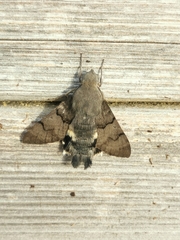 Eurasian Hummingbird HawkmothMacroglossum stellatarum
 Snowberry ClearwingHemaris diffinis
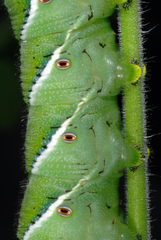 Carolina SphinxManduca sextaDamages trees, gardens or crops
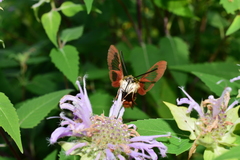 Hummingbird ClearwingHemaris thysbeDamages trees, gardens or crops
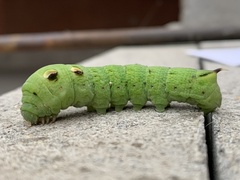 Elephant HawkmothDeilephila elpenor
Sources
- Wikipedia: https://en.wikipedia.org/wiki/Deilephila_porcellus
Look it up elsewhere: GBIF · iNaturalist · BugGuide · Wikipedia
Text written 2026-10-22 from the sources above and checked sentence by sentence against them. Data fetched 2026-10-22.