 Bug FAQ
Small Branded Swift
Pelopidas mathias · Order: Lepidoptera · Family: Hesperiidae
Also called: Black-branded Swift, Dark Small-branded Swift
Source: Wikipedia
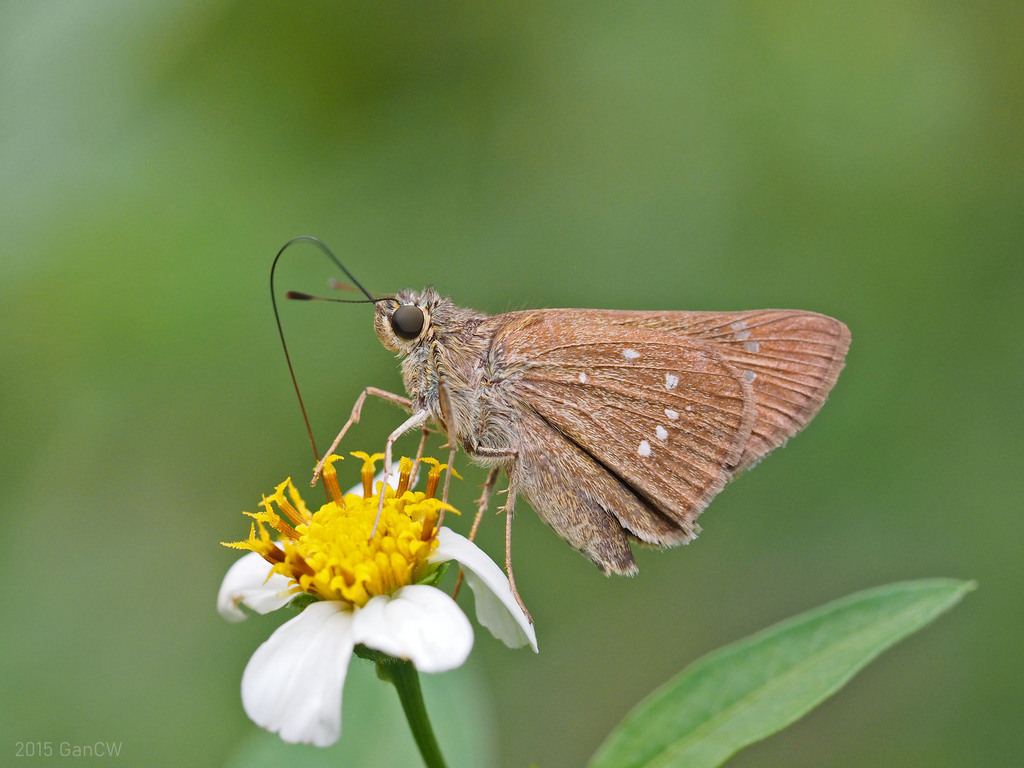
Adults are about 1.6 inches across and show distinct wing markings that differ between males and females. It lives across much of South, Southeast and East Asia, the Philippines, tropical Africa and Arabia. Caterpillars eat young seedlings and roll up leaves with silk to feed more efficiently.
Source: Wikipedia
How to recognize it
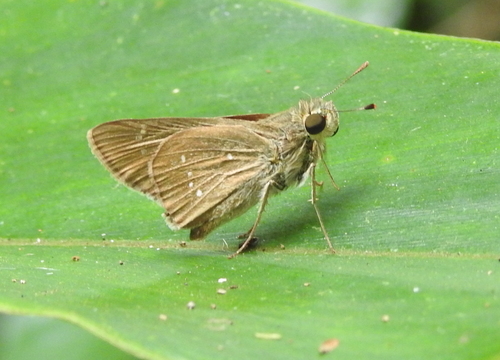
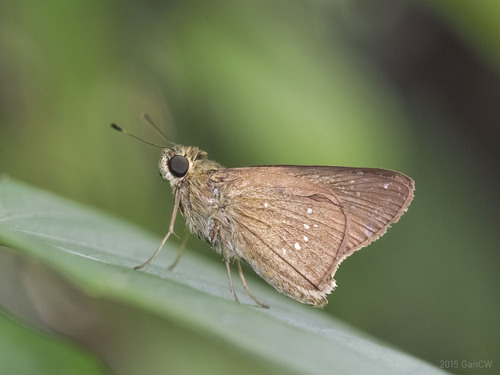
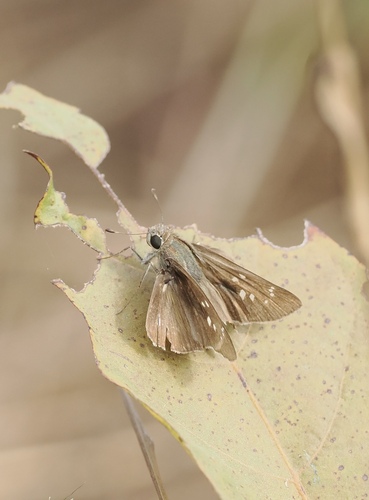
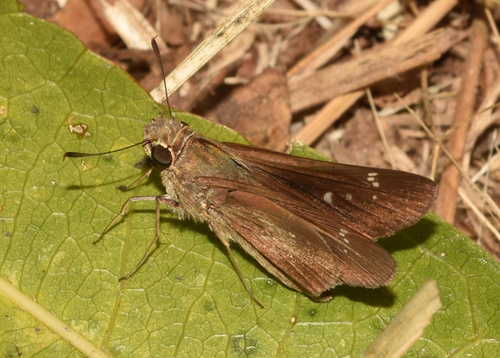
Males have olive-brown uppersides with two small yellowish spots in the forewing cell, three spots near the apex, and three oblique discal spots plus a dark-bordered streak; hindwing may show one or two faint pale spots. Females show five discal spots on the forewing and four or five on the hindwing; the underside is paler with clearer markings and a spot at the upper end of the hindwing cell.
Source: Wikipedia
Size
The butterfly’s wingspan is about 1.6 inches.
Source: Wikipedia
Is it a pest in the house?
It is less damaging to rice plants than the related species Parnara guttata.
Source: Wikipedia
Where it lives
It also occurs in tropical Africa and Arabia.
Source: Wikipedia
What it eats
Newly hatched caterpillars are very voracious, feeding on young seedlings. They use silk to roll and stitch partially eaten leaves, making feeding more efficient.
Source: Wikipedia
Where it comes from
Its native range includes South, Southeast and East Asia and the Philippines. It is also native to tropical Africa and Arabia.
Source: Wikipedia
More photos
Questions people ask
What plants do the caterpillars damage?
The larvae feed heavily on young seedlings, stripping them of foliage.
Source: Wikipedia
Is this butterfly a problem for rice crops?
It causes less damage to rice than the related pest Parnara guttata.
Source: Wikipedia
Where might I find this butterfly?
It occurs across much of South, Southeast and East Asia, the Philippines, tropical Africa and Arabia.
Source: Wikipedia
Same family (Hesperiidae)




Sources
- Wikipedia: https://en.wikipedia.org/wiki/Pelopidas_mathias
Look it up elsewhere: GBIF · iNaturalist · BugGuide · Wikipedia
Text written 2026-10-22 from the sources above and checked sentence by sentence against them. Data fetched 2026-10-22.