 Bug FAQ
Slender Clearwing
Hemaris gracilis · Order: Lepidoptera · Family: Sphingidae
Also called: Graceful Clearwing, Slender Clearwing Moth, blueberry clearwing sphinx
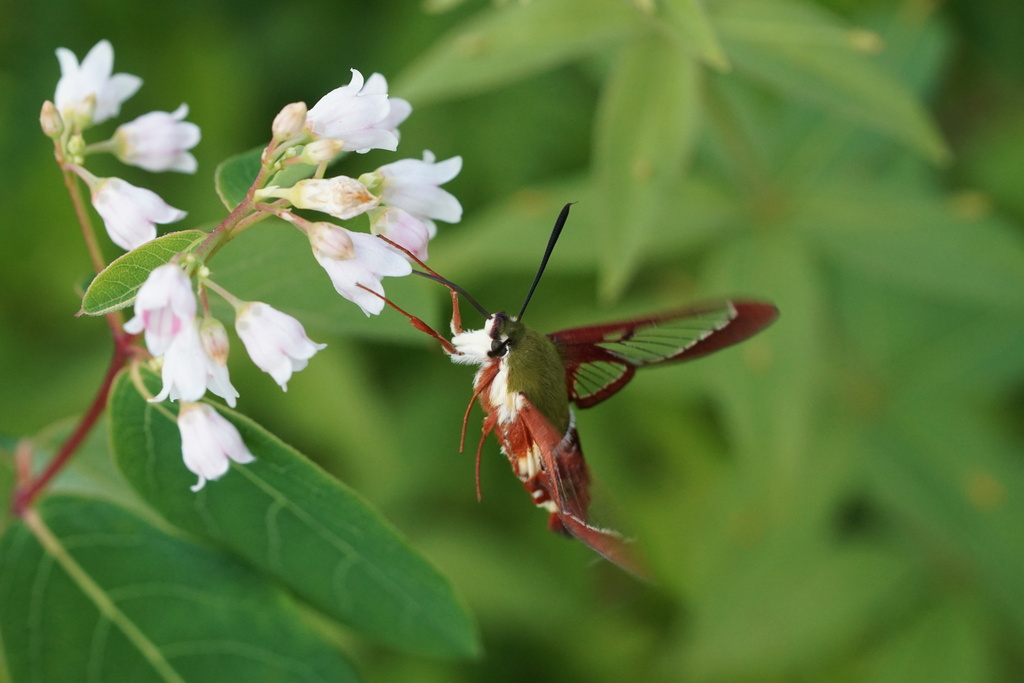
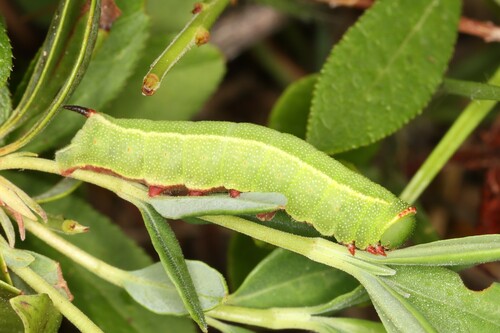
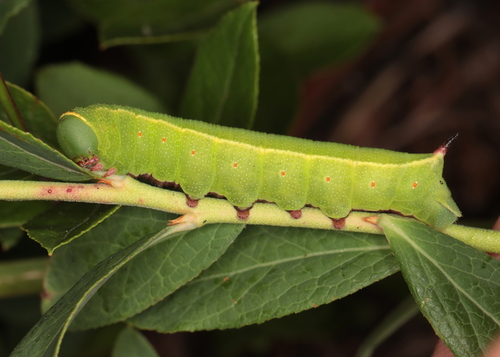
The wingspan is about 40 to 45 mm. It lives from Nova Scotia down the East Coast to central Florida and west to Michigan, Saskatchewan and New England. Adults feed on nectar from many flowers, while larvae eat lowbush blueberry and Kalmia species.
Source: Wikipedia
How to recognize it
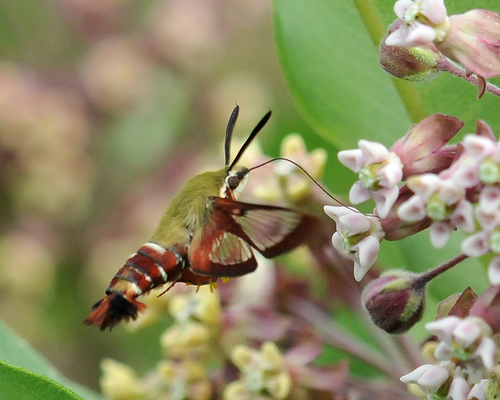
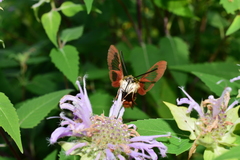
It has a pair of red-brown bands on each side of the thorax, a red abdomen, and clear wings edged with reddish-brown.
Source: Wikipedia
Size
The wingspan measures roughly 40 to 45 mm.
Source: Wikipedia
What it eats
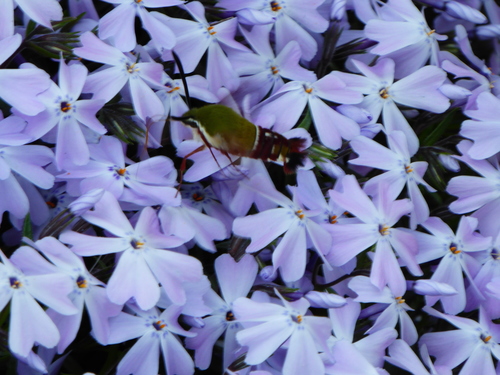
Adults sip nectar from many flowers such as pickerelweed, raspberries, dandelions, orange hawkweed and phlox. Larvae have been recorded feeding on lowbush blueberry and Kalmia species.
Source: Wikipedia
Life cycle
There are probably two generations each year, with adults on the wing from March to August. Pupation occurs in a thin-walled cocoon hidden in leaf litter.
Source: Wikipedia
When you see it
Adults are active from March through August, usually in two generations per year.
Source: Wikipedia
Where it comes from
Its native range includes the same North American region from Nova Scotia to central Florida and west to Michigan and Saskatchewan.
Source: Wikipedia
Where it is found in the US
Recorded in 19 of 51 states and DC. Most records: Michigan, Massachusetts, New Hampshire, Wisconsin, New York, Maine, New Jersey, Pennsylvania.
Darker = more records. Counts are museum and citizen-science records, not population size.
Source: GBIF
Status: native in North America; native in Canada; native in United States. Source: iNaturalist
Months it is reported in the US
Source: GBIF
More photos
Questions people ask
How can I recognize a Slender Clearwing?
Look for red-brown bands on each side of the thorax, a red abdomen, and clear wings with reddish-brown borders.
Source: Wikipedia
When are they active?
Adults fly from March to August, typically producing two generations each year.
Source: Wikipedia
What do they feed on?
Adults drink nectar from flowers like pickerelweed, raspberries, dandelions, orange hawkweed and phlox; larvae eat lowbush blueberry and Kalmia plants.
Source: Wikipedia
Where are they found?
They occur from Nova Scotia down the East Coast to central Florida and west to Michigan, Saskatchewan and New England.
Source: Wikipedia
Same family (Sphingidae)

Sources
- Wikipedia: https://en.wikipedia.org/wiki/Hemaris_gracilis
Look it up elsewhere: GBIF · iNaturalist · BugGuide · ITIS · Wikipedia
Text written 2026-10-26 from the sources above and checked sentence by sentence against them. Data fetched 2026-10-26.