 Bug FAQ
Sleepy Duskywing
Erynnis brizo · Order: Lepidoptera · Family: Hesperiidae
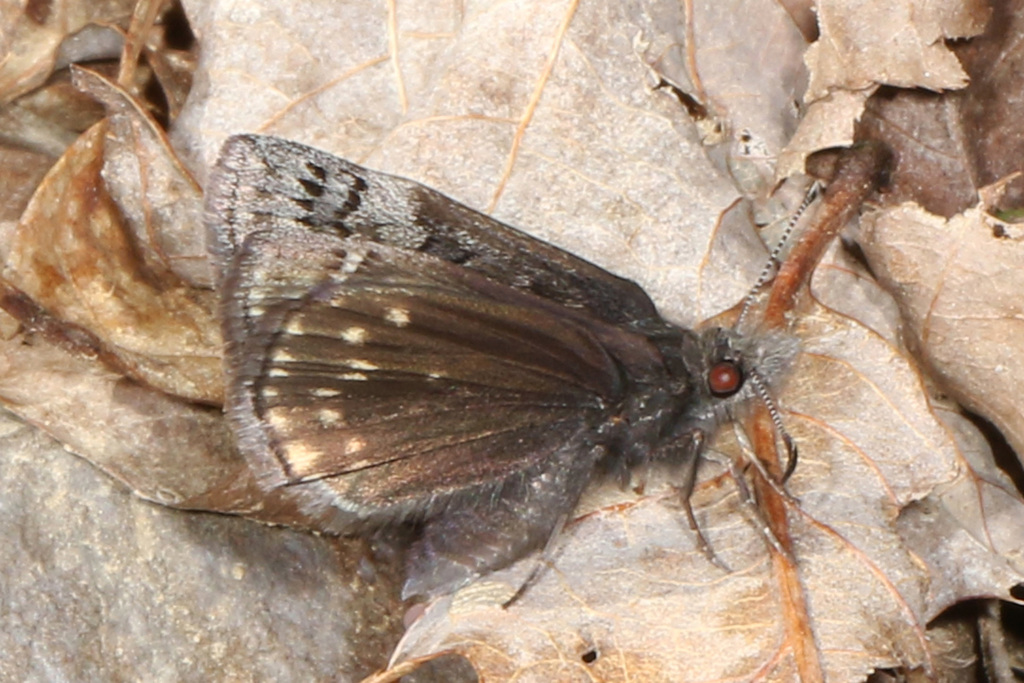
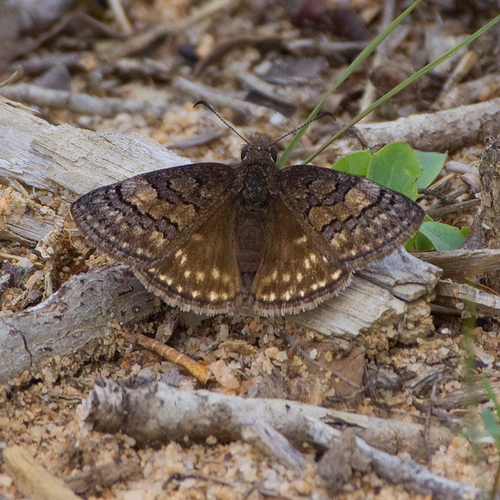
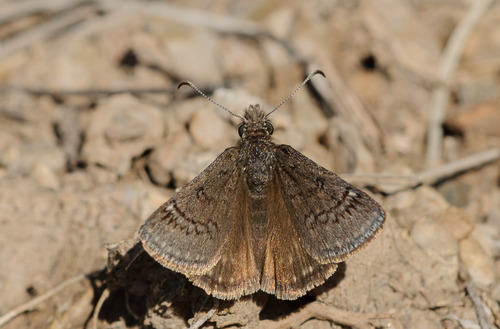
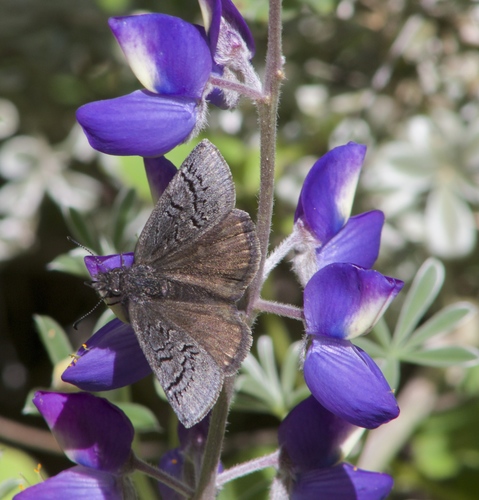
The sleepy duskywing caterpillar is small, gray-green with purplish tips. Adults have blackish-brown forewings with continuous bluish-brown spots and mostly brown hindwings with lighter spots. It lives across North America, favoring oak-pine barrens, cut-over forests, and forest edges near roads, tracks, and towns.
Source: Wikipedia
Size
Caterpillars are small and gray-green with purplish tips.
Source: Wikipedia
Where it lives
It can be seen near forest edges, roads, train tracks, and towns.
Source: Wikipedia
What it eats
Larvae feed on scrub oak and other shrubby oaks. Adults drink nectar from heaths such as wild azalea and blueberry, as well as blackberry and dandelion.
Source: Wikipedia
Where it comes from
It occurs throughout North America.
Source: Wikipedia
Where it is found in the US
Recorded in 45 of 51 states and DC. Most records: New Mexico, Florida, California, Maryland, Ohio, Massachusetts, Arizona, North Carolina.
Darker = more records. Counts are museum and citizen-science records, not population size.
Source: GBIF
Status: native in North America; native in Canada; native in United States. Source: iNaturalist
Months it is reported in the US
Source: GBIF
More photos

Questions people ask
What flowers do adult sleepy duskywings visit?
Adults sip nectar from heaths like wild azalea and blueberry, plus blackberry and dandelion.
Source: Wikipedia
Where am I likely to see this butterfly?
In oak-pine barrens, cut-over forests, and forest edges near roads, train tracks, or towns.
Source: Wikipedia
Same family (Hesperiidae)




Sources
- Wikipedia: https://en.wikipedia.org/wiki/Erynnis_brizo
Look it up elsewhere: GBIF · iNaturalist · BugGuide · ITIS · Wikipedia
Text written 2026-10-23 from the sources above and checked sentence by sentence against them. Data fetched 2026-10-23.