 Bug FAQ
Essex Skipper
Thymelicus lineola · Order: Lepidoptera · Family: Hesperiidae
Also called: European Skipper
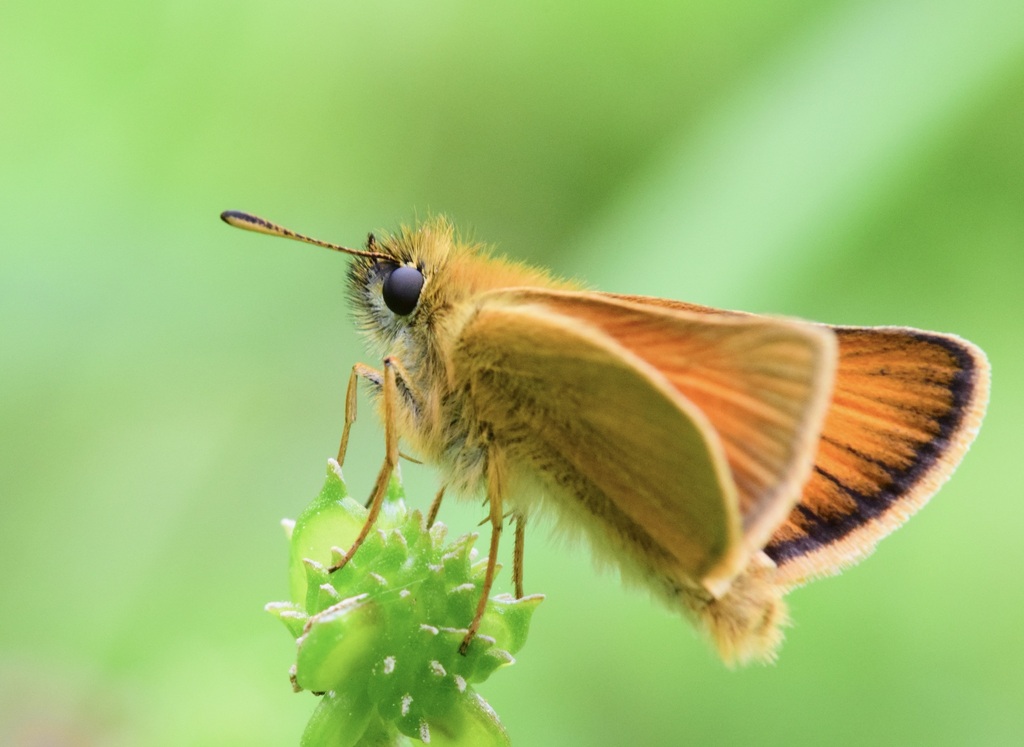
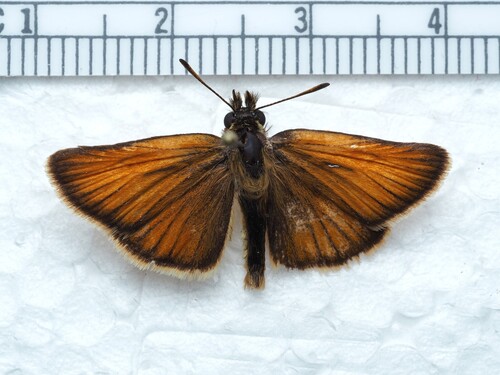
The Essex Skipper is a small butterfly with a wingspan of about 2.5 to 2.9 cm. Adults are on the wing in July and August and lay eggs on grass stems that overwinter.
Source: Wikipedia
How to recognize it
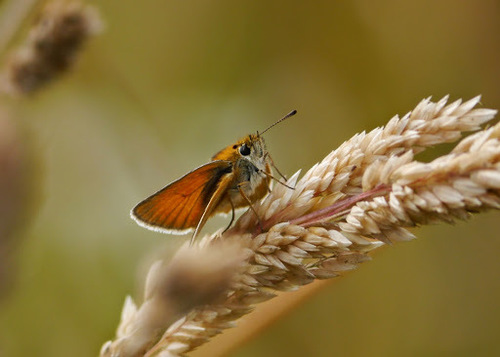
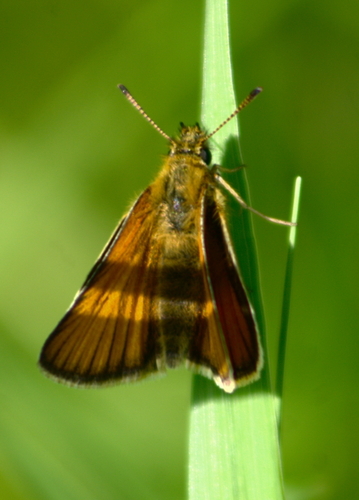
The antenna tip faces forward and is black in the Essex Skipper, while the Small Skipper’s tip is orange or brown.
Source: Wikipedia
What it eats
Main food plant is cock’s-foot (Dactylis glomerata); it rarely uses Yorkshire fog. It also feeds on creeping soft grass, couch grass, timothy-grass, meadow foxtail, false brome and tor-grass.
Source: Wikipedia
Life cycle
Eggs are laid in strings on grass stems and stay there over winter.
Source: Wikipedia
When you see it
Adults fly from July through August.
Source: Wikipedia
Where it comes from
Found throughout much of the Palaearctic region.
Source: Wikipedia
Lookalikes
It looks very similar to the Small Skipper, sharing the same wingspan.
Source: Wikipedia
Where it is found in the US
Recorded in 34 of 51 states and DC. Most records: Vermont, Illinois, Michigan, Minnesota, New York, Wisconsin, Montana, Massachusetts.
Darker = more records. Counts are museum and citizen-science records, not population size.
Source: GBIF
Status: introduced in North America; introduced in Canada; introduced in United States. Source: iNaturalist
Months it is reported in the US
Source: GBIF
More photos
Questions people ask
Are they a garden pest?
They feed on various grasses but are not reported to damage crops or ornamental plants.
Source: Wikipedia
Same family (Hesperiidae)




Sources
- Wikipedia: https://en.wikipedia.org/wiki/Essex_skipper
Look it up elsewhere: GBIF · iNaturalist · BugGuide · ITIS · Wikipedia
Text written 2026-10-22 from the sources above and checked sentence by sentence against them. Data fetched 2026-10-22.