 Bug FAQ
Shoreline Wolf Spider
Arctosa littoralis · Order: Araneae · Family: Lycosidae
Also called: Beach Wolf Spider, Wolf Spiders
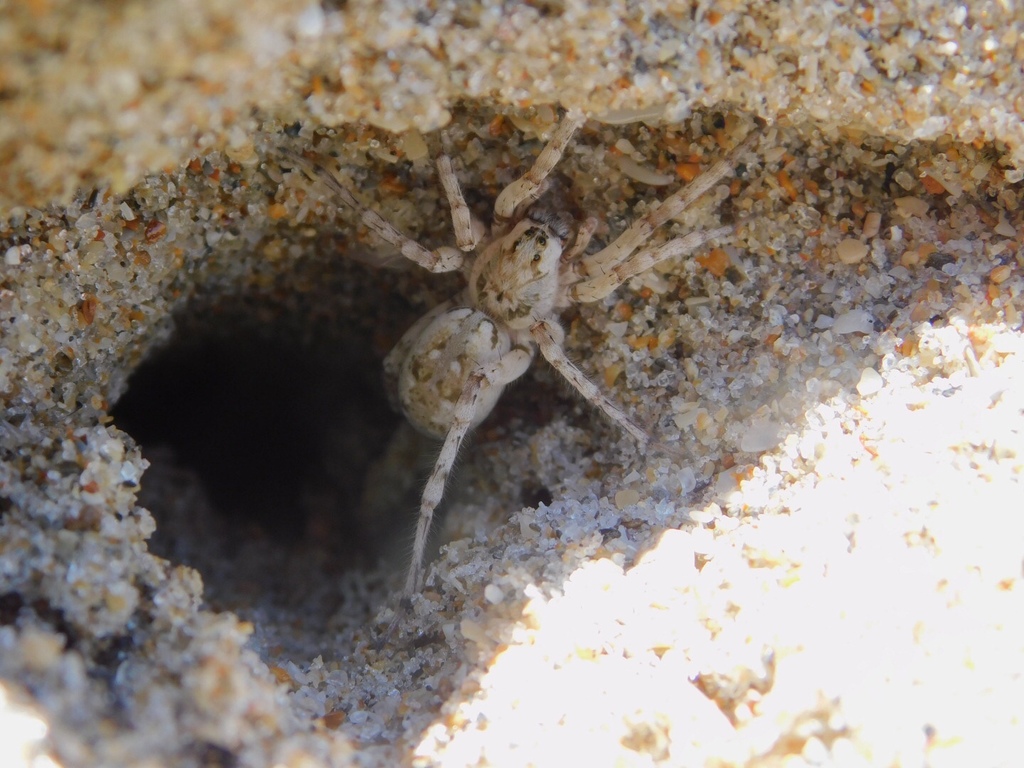
Shoreline wolf spiders are medium-sized spiders with females about 11 to 15 mm long and males about 10 to 13 mm long (body only). They blend into sandy areas with mottled white, gray or brown coloring and live on sand at beaches, riverbanks, lakes and scrub habitats across North and Central America. These active hunters chase prey instead of building webs, and females keep egg sacs under rocks or in sand burrows, later carrying spiderlings on their backs until they disperse.
Source: Wikipedia
How to recognize it
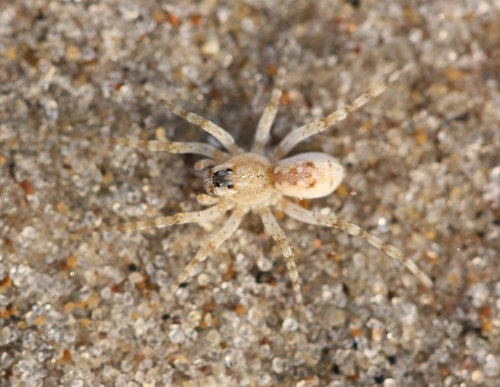
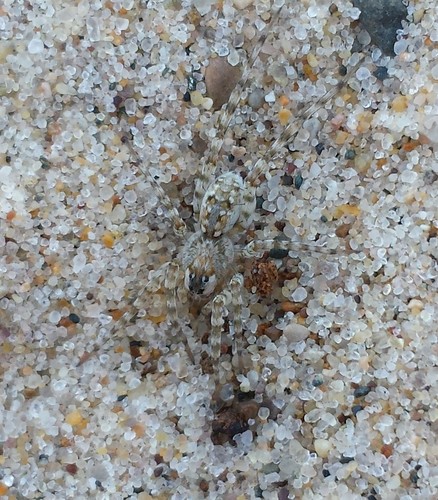
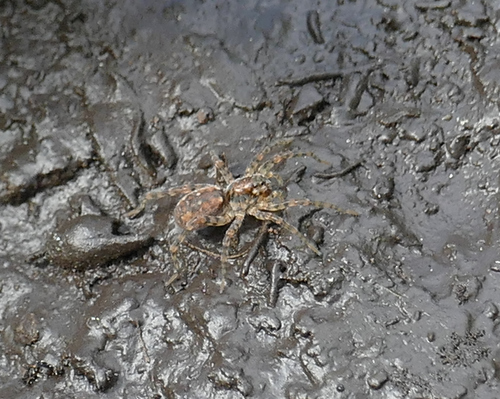
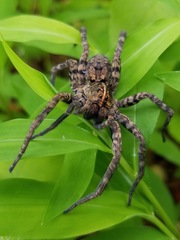
Their bodies are mottled white, gray or brown, which helps them hide on sand.
Source: Wikipedia
Size
Females are typically 11.2 to 14.7 mm long, while males are 9.6 to 12.8 mm long, not counting legs.
Source: Wikipedia
Where it lives
They are found in sandy substrates within scrub, grass-shrub areas, seashores, riverbanks and lakes.
Source: Wikipedia
What it eats
They chase and attack prey rather than spinning webs.
Source: Wikipedia
Life cycle
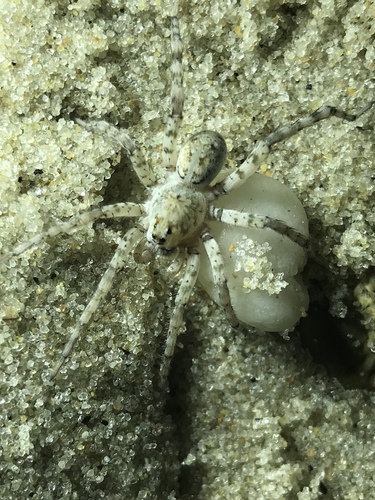
Females store egg sacs under rocks or in burrows made by gluing sand grains with silk. After hatching, spiderlings ride on the mother’s back until they molt and leave.
Source: Wikipedia
When you see it
They are active both day and night.
Source: Wikipedia
Where it comes from
Their range includes sandy habitats across North and Central America.
Source: Wikipedia
Lookalikes
Arctosa littoralis is a wolf spider in the Lycosidae family, also called the beach wolf spider.
Source: Wikipedia
Where it is found in the US
Recorded in 49 of 51 states and DC. Most records: Texas, California, Michigan, Arizona, Oklahoma, Massachusetts, Florida, New York.
Darker = more records. Counts are museum and citizen-science records, not population size.
Source: GBIF
Status: native in North America; native in Canada; native in United States. Source: iNaturalist
Months it is reported in the US
Source: GBIF
More photos
Questions people ask
How can I tell a shoreline wolf spider apart from other spiders?
Look for a mottled white, gray or brown body that matches sand, and a size of about 10 to 15 mm (excluding legs).
Source: Wikipedia
Where are shoreline wolf spiders most likely to be found?
They live on sandy ground in beach, riverbank, lake and scrub habitats across North and Central America.
Source: Wikipedia
Do these spiders build webs to catch food?
No, they hunt by chasing and attacking their prey.
Source: Wikipedia
Same family (Lycosidae)


Sources
- Wikipedia: https://en.wikipedia.org/wiki/Arctosa_littoralis
Look it up elsewhere: GBIF · iNaturalist · BugGuide · ITIS · Wikipedia
Text written 2026-10-22 from the sources above and checked sentence by sentence against them. Data fetched 2026-10-22.