 Bug FAQ
Carolina Wolf Spider
Hogna carolinensis · Order: Araneae · Family: Lycosidae
Also called: Giant Wolf Spider
Source: Penn State Extension
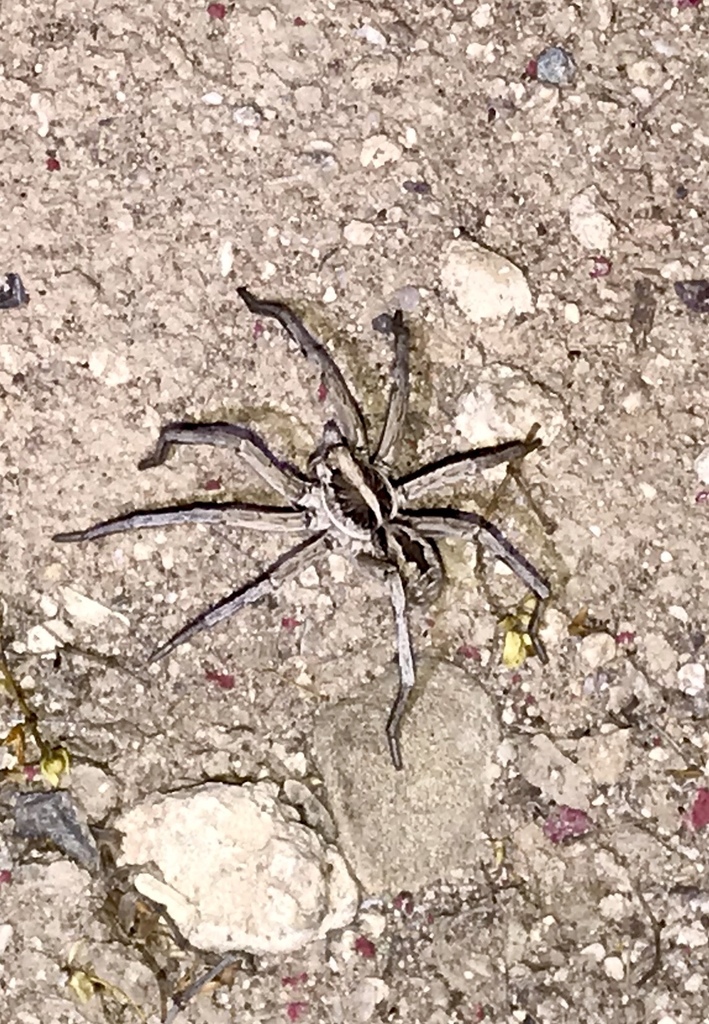
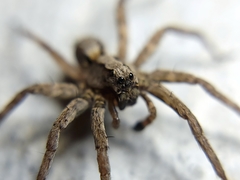
The Carolina wolf spider is the largest North American wolf spider, brown with orange sides on males, and lives in burrows or hidden spots. It hunts insects and sometimes small vertebrates, is active at night from March to October, and may wander into homes where it helps control pests.
Source: Wikipedia
How to recognize it
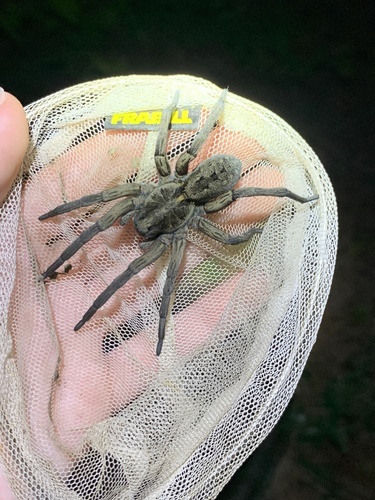
Adults are mottled brown; males show orange on their sides, which helps tell them apart. They are generally brown to tan and may have black markings, making them hard to spot when still.
Size
Females grow 22 to 35 mm long, while males are smaller at 18 to 20 mm.
Source: Wikipedia, Penn State Extension
Is it a pest in the house?
They sometimes enter homes, especially where insects are abundant, and build retreats under siding, boards, or in soil pockets. In Pennsylvania, they are among the larger hunting spiders occasionally found indoors.
Source: Wikipedia, Penn State Extension, UC IPM
Does it bite or sting?
They will bite if mishandled or trapped against skin, causing brief pain, redness, and possible swelling that usually fades within a day. Spiders seen out in daylight are unlikely to bite. Bites that happen when the spider is caught in clothing are usually no worse than a mild itch or a bee sting.
Source: Penn State Extension, UC IPM
How to get rid of it
Reduce spider hiding places by sweeping, mopping, and vacuuming regularly. Remove webs and debris where they could build retreats.
Source: UC IPM
Where it lives
They live in self-made burrows or in burrows they find, often under stones, boards, or firewood.
Source: Wikipedia, Penn State Extension
What it eats
They mainly eat insects such as grasshoppers and crickets, and have been seen catching small vertebrates like juvenile geckos.
Source: Wikipedia
Life cycle
Females carry egg sacs on their abdomen for about two weeks, and spiderlings stay with the mother for the first six days after hatching in late summer.
Source: Wikipedia
When you see it
They are active from March through October and hide during the winter months. They hunt at night.
Source: Wikipedia
Where it comes from
They are found across much of North America, including the Great Lakes, the Southwest, South Carolina, and Kansas.
Source: Wikipedia
Lookalikes
Tigrosa aspersa looks similar in color but has a narrow line of yellow hairs near the eyes, and is slightly smaller.
Source: Penn State Extension
Where it is found in the US
Recorded in 39 of 51 states and DC. Most records: Texas, Arizona, Colorado, New Mexico, Florida, Utah, Kansas, Oklahoma.
Darker = more records. Counts are museum and citizen-science records, not population size.
Source: GBIF
Status: native in North America; native in Canada; native in United States. Source: iNaturalist
Months it is reported in the US
Source: GBIF
More photos
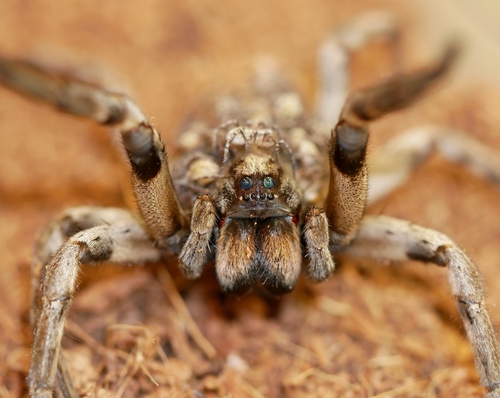
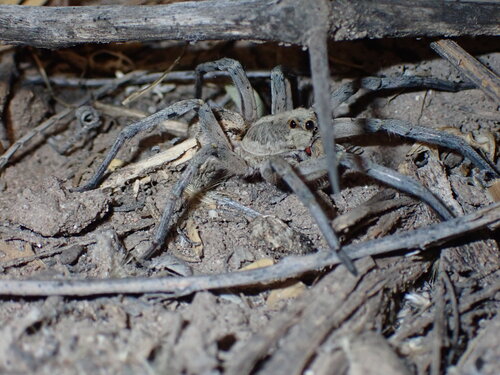
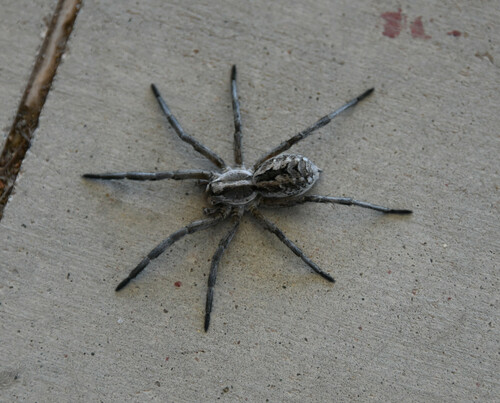
Questions people ask
Do Carolina wolf spiders bite?
Yes, they bite if handled or trapped, causing mild pain and temporary redness that usually clears within 24 hours.
Source: Penn State Extension
Can they be found inside homes?
They sometimes wander indoors, especially where insects are plentiful, and hide under boards, siding, or in soil pockets.
Source: Wikipedia, Penn State Extension, UC IPM
How can I keep them out of my house?
Regular cleaning to remove webs and potential hiding spots, plus sealing cracks and removing debris, helps deter them.
Source: UC IPM
Same family (Lycosidae)


Sources
- Penn State Extension: https://extension.psu.edu/wolf-spiders
- Wikipedia: https://en.wikipedia.org/wiki/Hogna_carolinensis
- UC IPM: https://ipm.ucanr.edu/PMG/PESTNOTES/pn7442.html
Look it up elsewhere: GBIF · iNaturalist · BugGuide · ITIS · Wikipedia
Text written 2026-10-22 from the sources above and checked sentence by sentence against them. Data fetched 2026-10-22.