 Bug FAQ
Shore Spider
Pardosa milvina · Order: Araneae · Family: Lycosidae
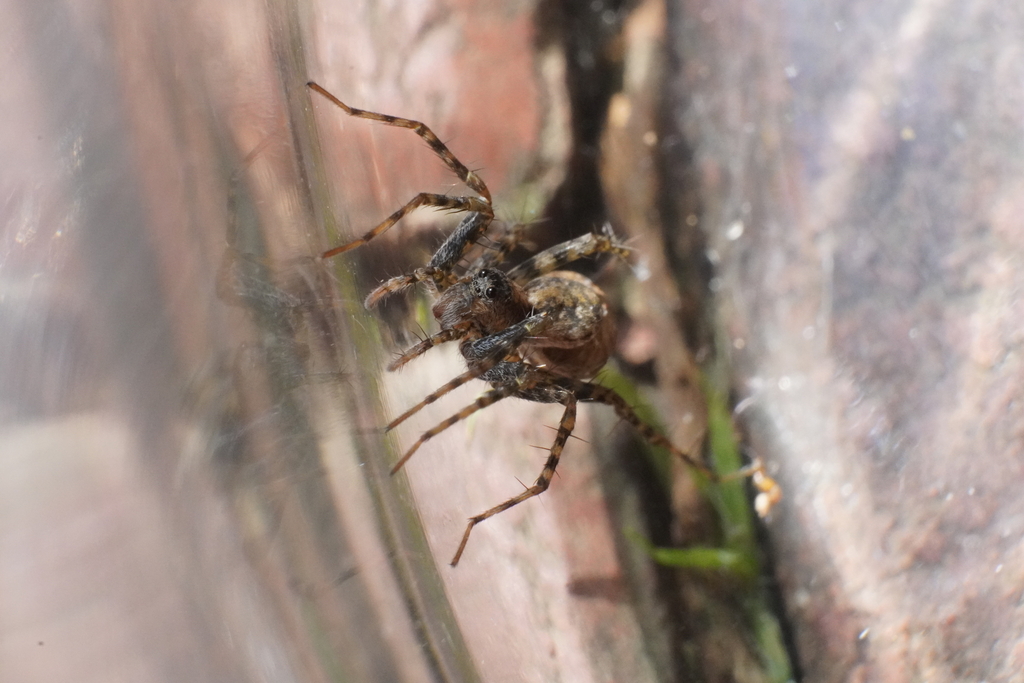
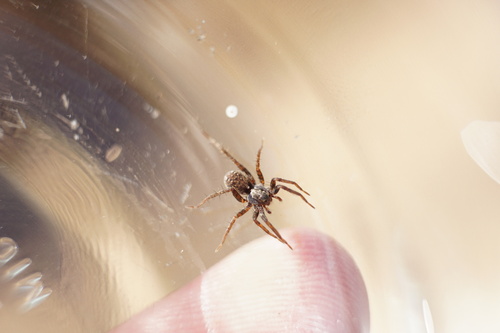
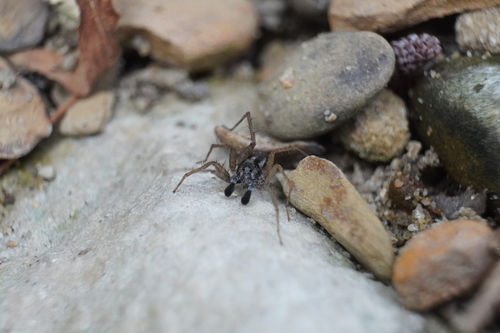
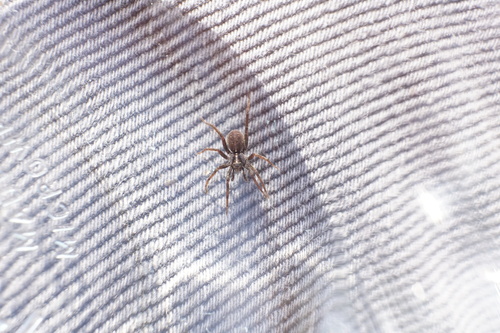
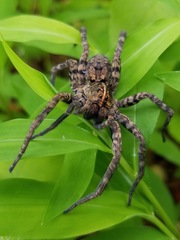
Shore spiders are small wolf spiders, with females up to about 6 mm and males up to about 5 mm in length. They live in high densities near rivers, ponds, streams and agricultural areas across eastern North America, including New England, Georgia and regions west of the Rockies. Females carry large egg sacs and tend to their young for several weeks after hatching.
Source: Wikipedia
How to recognize it
The eyes are arranged with four on the top row and two on each of the lower rows.
Source: Wikipedia
Size
Females grow to about 6.2 mm and males to about 4.7 mm in length.
Source: Wikipedia
Where it lives
They are found in high densities near rivers and agricultural fields in eastern North America.
Source: Wikipedia
What it eats
They are active hunters that prey on ground-dwelling arthropods such as crickets.
Source: Wikipedia
Life cycle
The egg sacs are large relative to the spider’s size.
Source: Wikipedia
Where it comes from
Shore spiders belong to the wolf-spider family and are native to eastern North America.
Source: Wikipedia
Where it is found in the US
Recorded in 38 of 51 states and DC. Most records: Ohio, Texas, Illinois, Mississippi, Oklahoma, Georgia, Pennsylvania, New York.
Darker = more records. Counts are museum and citizen-science records, not population size.
Source: GBIF
Status: native in North America; native in Canada; native in United States. Source: iNaturalist
Months it is reported in the US
Source: GBIF
More photos
Questions people ask
How can I identify a shore spider?
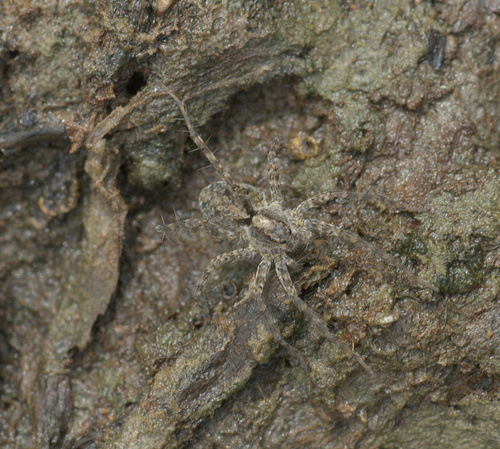
Look for a small wolf spider (about 5 mm long) with four eyes on the top row and two on each lower row, yellow spots on the abdomen, and in males, white hairs on the kneecaps.
Source: Wikipedia
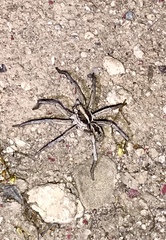
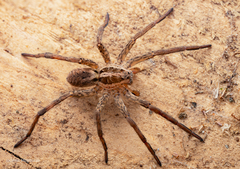
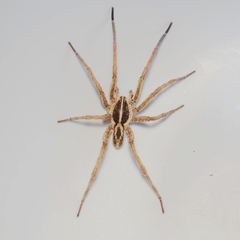
Same family (Lycosidae)


Sources
- Wikipedia: https://en.wikipedia.org/wiki/Pardosa_milvina
Look it up elsewhere: GBIF · iNaturalist · BugGuide · ITIS · Wikipedia
Text written 2026-10-24 from the sources above and checked sentence by sentence against them. Data fetched 2026-10-24.