 Bug FAQ
Schizocosa perplexa
Schizocosa perplexa · Order: Araneae · Family: Lycosidae
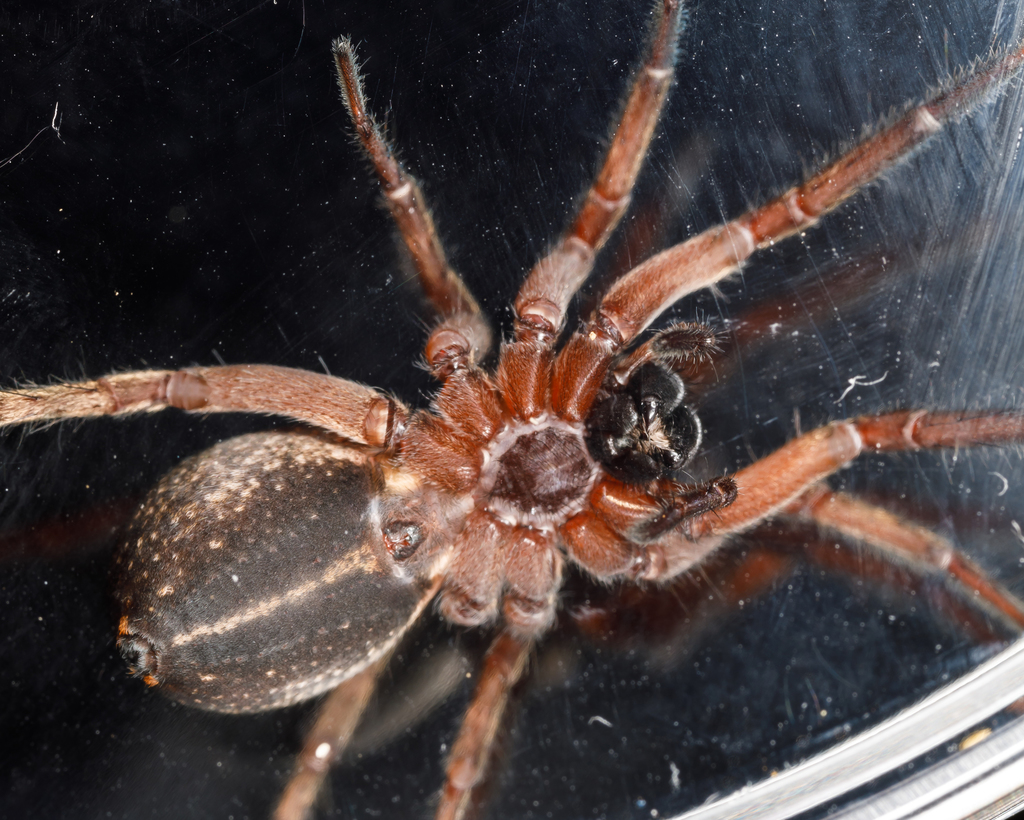
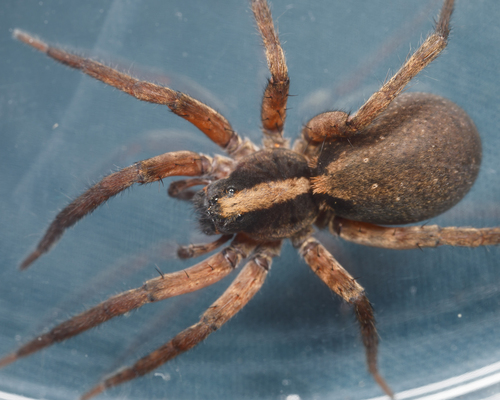
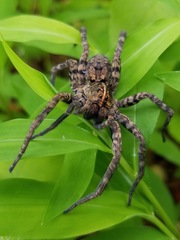
Male Schizocosa perplexa are about 9 mm long and have a dark carapace with a pale median stripe and black-haired sides. The abdomen shows a distinct heart-shaped mark outlined with black dots, while the sides are black with long dark hairs. They are found in open grassland areas of the United States, especially central Texas near Dallas.
Source: Wikipedia
How to recognize it
The male’s carapace is dark with a light stripe down the middle and brown sides covered in black hairs. The abdomen’s dorsum has a clear heart-shaped (“spear”) mark outlined by black dots, and the lateral abdomen is black with long dark hairs.
Source: Wikipedia
Size
Male Schizocosa perplexa are roughly 9 mm (0.35 in) in body length.
Source: Wikipedia
Where it lives
They likely live in open habitats such as grasslands, similar to many other North American wolf spiders.
Source: Wikipedia
Where it comes from
Schizocosa perplexa occurs in the United States, with records from central Texas around Dallas.
Source: Wikipedia
Where it is found in the US
Recorded in 2 of 51 states and DC. Most records: Texas, Ohio.
Darker = more records. Counts are museum and citizen-science records, not population size.
Source: GBIF
Months it is reported in the US
Source: GBIF
More photos
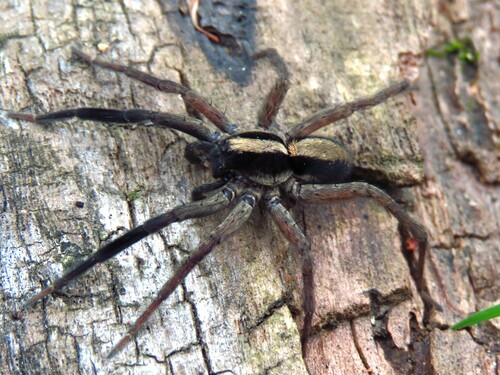
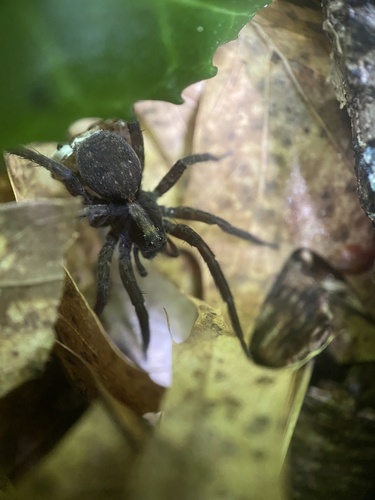
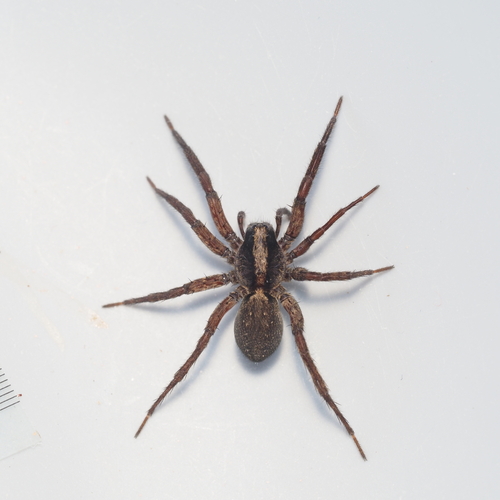
Same family (Lycosidae)


Sources
- Wikipedia: https://en.wikipedia.org/wiki/Schizocosa_perplexa
Look it up elsewhere: GBIF · iNaturalist · BugGuide · ITIS · Wikipedia
Text written 2026-10-29 from the sources above and checked sentence by sentence against them. Data fetched 2026-10-29.