 Bug FAQ
Sand Field Cricket
Gryllus firmus · Order: Orthoptera · Family: Gryllidae
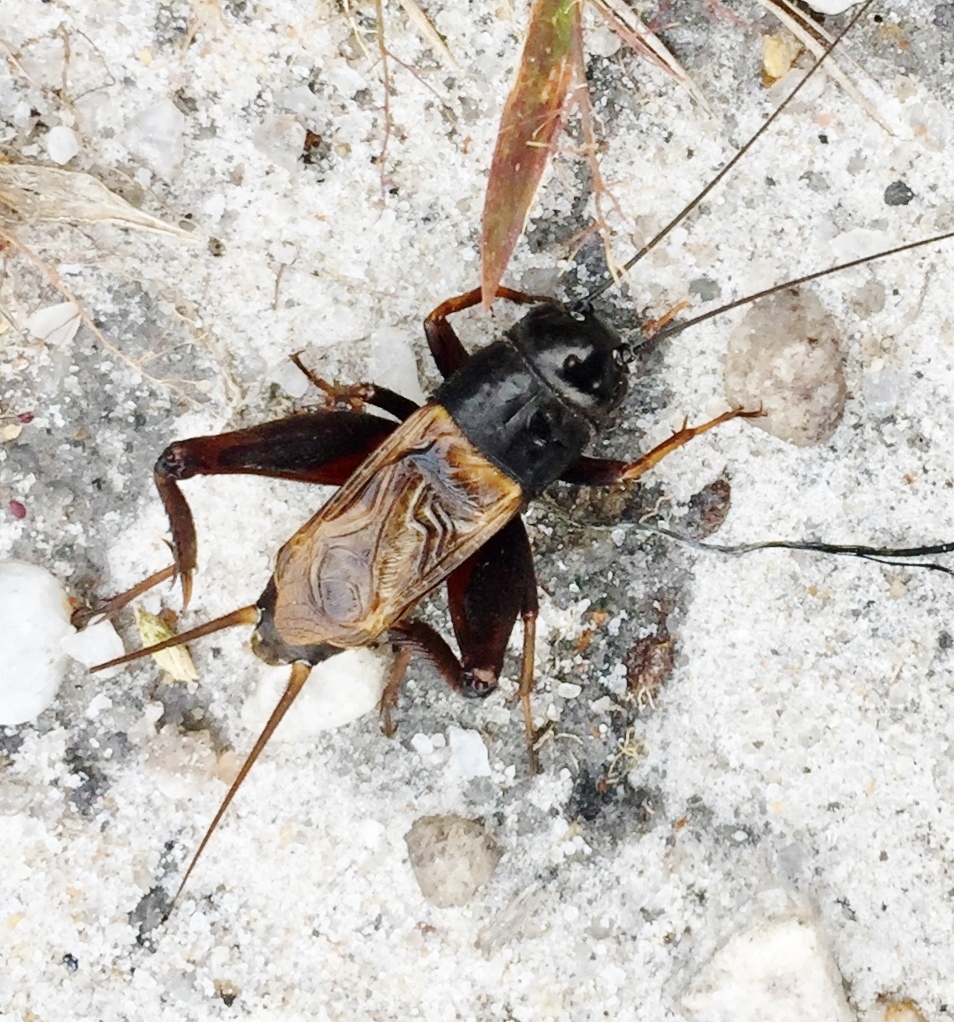
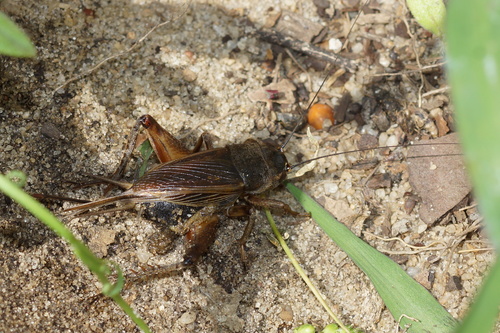
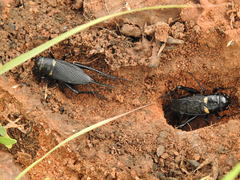
The sand field cricket has a black head and prothorax with a brown abdomen. It lives on light, well-drained sandy soils in grasslands, pastures, roadside verges and lawns, and the long-winged form can migrate. Its range covers the southeastern United States from Connecticut and New Hampshire down to Florida and west to Texas.
Source: Wikipedia
How to recognize it
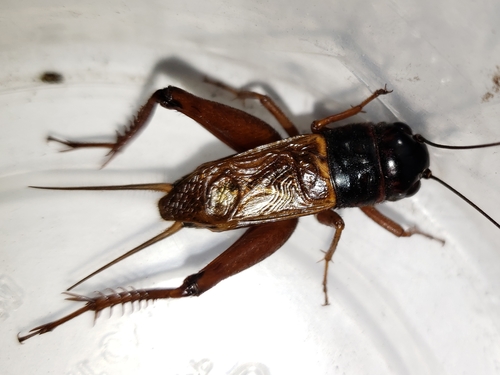
The head and prothorax are black while the abdomen is brown.
Source: Wikipedia
Where it lives
The long-winged morph is capable of migration.
Source: Wikipedia
Life cycle
Females lay two types of eggs: some hatch in two to four weeks, while others enter diapause and hatch after five to twenty-eight weeks.
Source: Wikipedia
Where it comes from
Its distribution extends from Connecticut and New Hampshire south to Florida and west to Texas.
Source: Wikipedia
Lookalikes
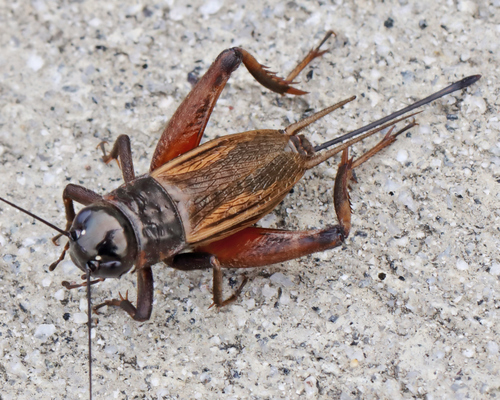
It can be separated from those species by the colour and vein pattern of the forewing and especially by its call.
Source: Wikipedia
Where it is found in the US
Recorded in 13 of 51 states and DC. Most records: Florida, Massachusetts, South Carolina, New York, North Carolina, Texas, Georgia, Rhode Island.
Darker = more records. Counts are museum and citizen-science records, not population size.
Source: GBIF
Months it is reported in the US
Source: GBIF
More photos
Questions people ask
How can I tell a sand field cricket apart from similar crickets?
Check the colour and vein pattern of the forewing and listen to the call; these features differ from the southeastern and Texas field crickets.
Source: Wikipedia
Same family (Gryllidae)


Sources
- Wikipedia: https://en.wikipedia.org/wiki/Gryllus_firmus
Look it up elsewhere: GBIF · iNaturalist · BugGuide · ITIS · Wikipedia
Text written 2026-10-28 from the sources above and checked sentence by sentence against them. Data fetched 2026-10-28.