 Bug FAQ
Rustic Wolf Spider
Trochosa ruricola · Order: Araneae · Family: Lycosidae
Also called: Spider
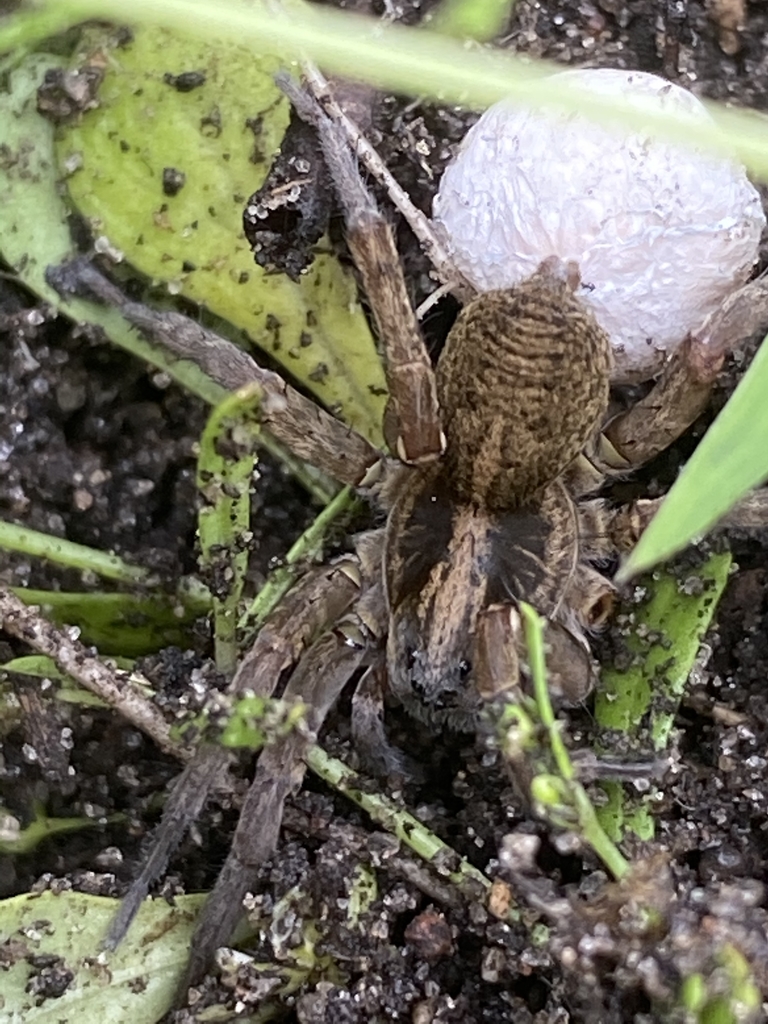
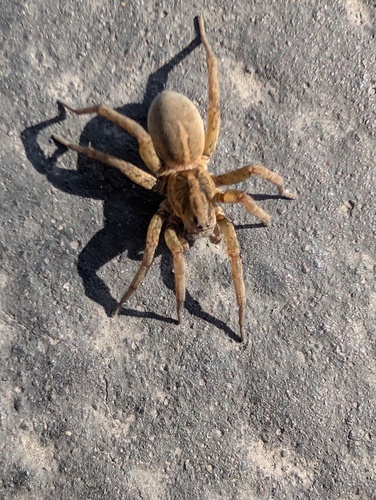
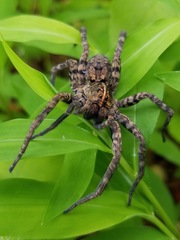
The rustic wolf spider is a ground-hunting spider found in grasslands, woodlands, scrub and lawns across temperate Europe, Asia and introduced areas of North America. Females are 15 to 25 mm long, males about 10 mm, and both sexes are dark brown with a pale longitudinal band on the carapace and abdomen. Females carry an egg sac for about three weeks; the spiderlings hatch and stay on the mother’s back before dispersing.
Source: Wikipedia
Size
Females range from 15 mm to 25 mm, while males are about 10 mm long.
Source: Wikipedia
Where it lives
It lives in grassland, woodland, scrub and lawns in temperate regions.
Source: Wikipedia
What it eats
It hunts on the ground and is often caught in pitfall traps.
Source: Wikipedia
Where it comes from
It is native from Europe across to China, Japan and Korea, and has been introduced to North America, Cuba, Puerto Rico and Bermuda.
Source: Wikipedia
Where it is found in the US
Recorded in 27 of 51 states and DC. Most records: Washington, Illinois, Maine, New York, Massachusetts, Ohio, Wisconsin, Utah.
Darker = more records. Counts are museum and citizen-science records, not population size.
Source: GBIF
Status: introduced in North America; introduced in Canada; introduced in United States. Source: iNaturalist
Months it is reported in the US
Source: GBIF
More photos
Questions people ask
What does the rustic wolf spider look like?
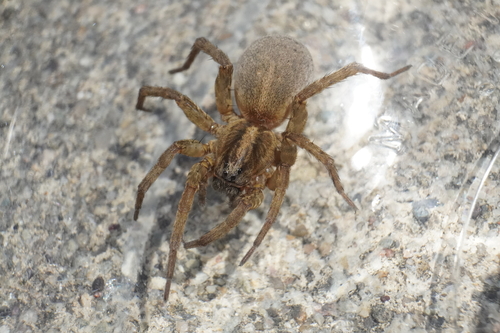
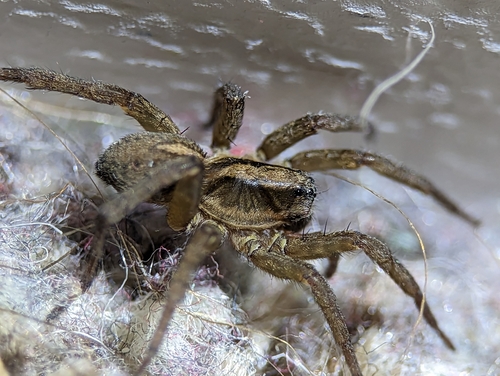
It is dark brown with a pale longitudinal band on the carapace and abdomen, and females are 15 to 25 mm while males are about 10 mm long.
Source: Wikipedia
Where is the rustic wolf spider found?
It inhabits grasslands, woodlands, scrub and lawns in temperate Europe and Asia, and has been introduced to North America and some Caribbean islands.
Source: Wikipedia
What does the rustic wolf spider eat?
It hunts on the ground, preying on small invertebrates and is often caught in pitfall traps.
Source: Wikipedia
How does the rustic wolf spider reproduce?
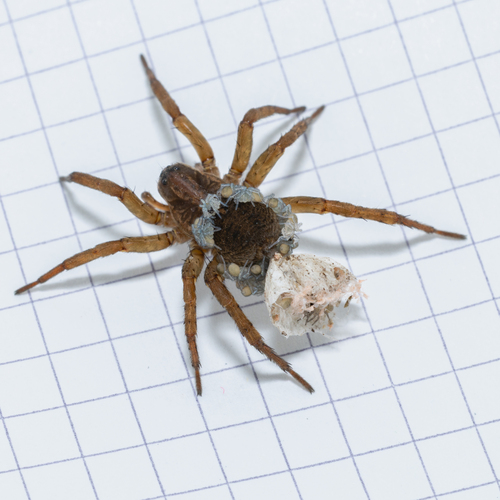
Females carry an egg sac for about three weeks; after the spiderlings hatch they ride on the mother’s back before dispersing.
Source: Wikipedia
Same family (Lycosidae)


Sources
- Wikipedia: https://en.wikipedia.org/wiki/Trochosa_ruricola
Look it up elsewhere: GBIF · iNaturalist · BugGuide · ITIS · Wikipedia
Text written 2026-10-24 from the sources above and checked sentence by sentence against them. Data fetched 2026-10-24.