 Bug FAQ
Rufous Grasshopper
Gomphocerippus rufus · Order: Orthoptera · Family: Acrididae
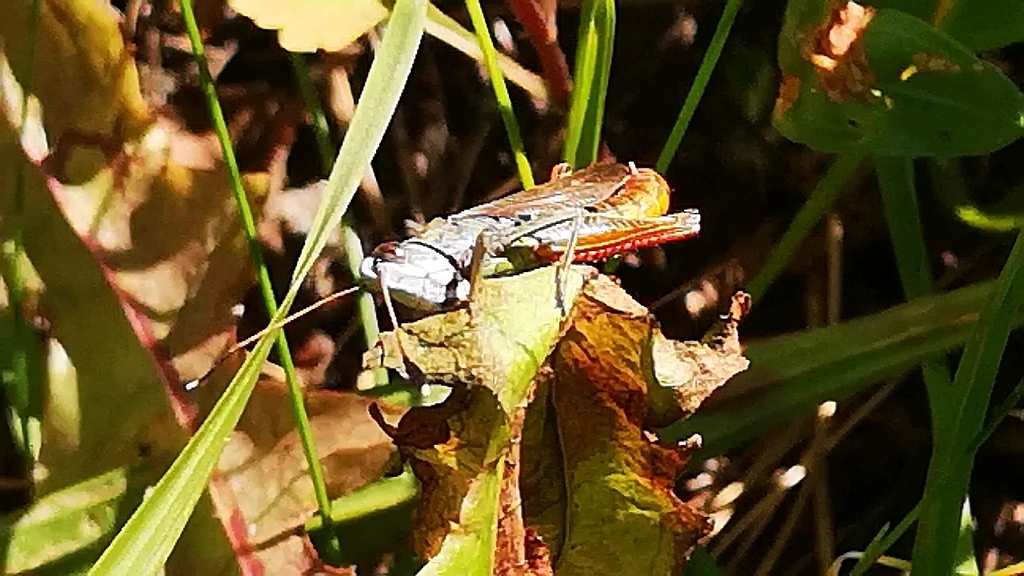
The Rufous Grasshopper is a fairly large, short-horned grasshopper about 14 to 22 mm long, with a broad brown body and clubbed antennae that end in a pale tip. Found across most of Europe, the eastern Palearctic, and the Near East, it feeds on grasses and other herbaceous plants, laying eggs in semi-arid soil in autumn and winter; the nymphs emerge in late May and adults appear by late July.
Source: Wikipedia
How to recognize it
It is a medium-sized, broad, brown grasshopper with short horns and clubbed antennae that have a conspicuous white or pale tip.
Source: Wikipedia
Size
Adults measure about 14 to 22 mm in length.
Source: Wikipedia
Where it lives
You can find it from late July through mid-December.
Source: Wikipedia
What it eats
Researchers have identified its diet by analyzing DNA from its feces.
Source: Wikipedia
Life cycle
Females lay about five eggs per packet in semi-arid soil near grass roots during autumn and winter. Nymphs hatch around late May, and adults emerge beginning in late July.
Source: Wikipedia
When you see it
Adults are present from late July through mid-December.
Source: Wikipedia
Where it comes from
The species occurs in most of Europe, the eastern Palearctic realm, and the Near East.
Source: Wikipedia
More photos
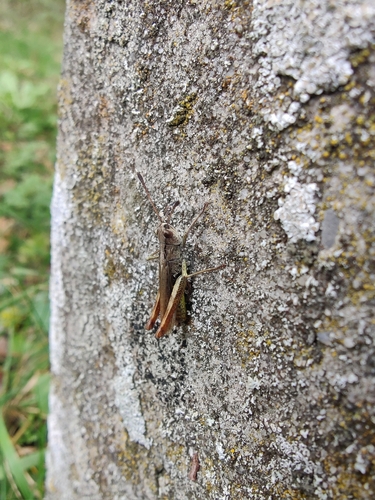
Questions people ask
When can I expect to see Rufous Grasshoppers?
Adults are active from late July until mid-December.
Source: Wikipedia
Same family (Acrididae)
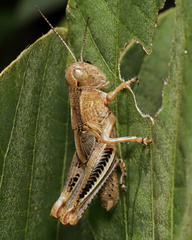 Differential GrasshopperMelanoplus differentialisDamages trees, gardens or crops
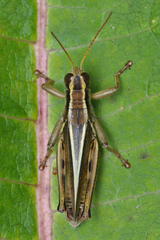 Two-striped GrasshopperMelanoplus bivittatusDamages trees, gardens or crops
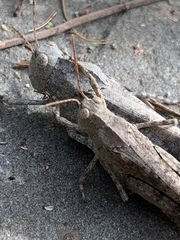 Carolina GrasshopperDissosteira carolinaDamages trees, gardens or crops
 Common Field GrasshopperChorthippus brunneus
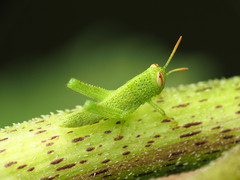 Egyptian Bird GrasshopperAnacridium aegyptium
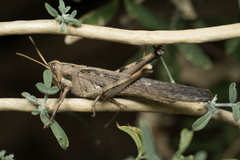 Gray Bird GrasshopperSchistocerca nitensDamages trees, gardens or crops
Sources
- Wikipedia: https://en.wikipedia.org/wiki/Rufous_grasshopper
Look it up elsewhere: GBIF · iNaturalist · BugGuide · Wikipedia
Text written 2026-10-22 from the sources above and checked sentence by sentence against them. Data fetched 2026-10-22.