 Bug FAQ
Rocky Mountain Wood Tick
Dermacentor andersoni · Order: Ixodida · Family: Ixodidae
Also called: Rocky Mountain-spotted fever tick
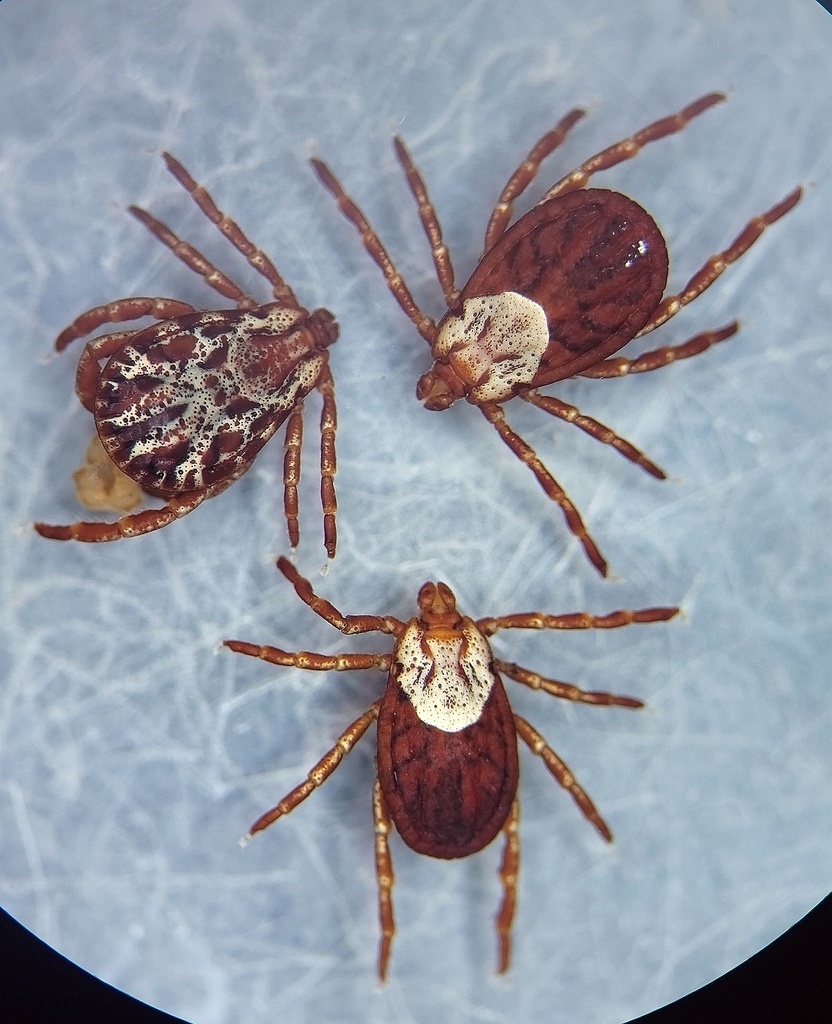
The Rocky Mountain wood tick lives in the northwestern United States and southwestern Canada along the Rockies. Adult females are flat, pear-shaped and can swell to nearly three times their size when engorged, while males stay much smaller. It feeds on mammals at all life stages, bites humans as an adult, and can spread Colorado tick fever.
Source: Wikipedia, Utah State Extension, extension.colostate.edu
How to recognize it
Females have a silver-gray dorsal pattern that darkens when feeding; males are spotted gray and white without a distinct shield. Unfed adults are brown and flattened, becoming grayish after engorgement.
Source: Wikipedia, extension.colostate.edu, Utah State Extension
Size
Unfed females measure about 2 to 5 mm long, roughly 1/8 inch, and can expand to about 5/8 inch when full of blood. Males are smaller, about 1/16 to 1/4 inch long.
Source: Wikipedia, Utah State Extension
Is it a pest in the house?
Adult females can feed for 5 to 15 days, making removal important.
Source: Wikipedia, extension.colostate.edu
Does it bite or sting?
Adults will bite humans and can transmit Colorado tick fever, with symptoms appearing 3 to 7 days after the bite. Ticks can also cause paralysis in cattle, dogs and other mammals.
How to get rid of it
Wear proper clothing in tick habitats, check yourself after being outdoors, and remove attached ticks carefully. Removal can be difficult once the tick is firmly attached, so prompt action is needed.
Source: Wikipedia, Utah State Extension, extension.colostate.edu
Where it lives
They are found on grasses, low plants and sagebrush in the Rocky Mountain region.
Source: Wikipedia, Utah State Extension
What it eats
All stages take a single blood meal from mammals; adults will also bite humans.
Source: Wikipedia
When you see it
Eggs are laid on moist vegetation in May-June; larvae hatch in early summer and start questing for small mammals.
Source: Wikipedia
Where it comes from
Their range is the northwestern USA and southwestern Canada.
Source: Wikipedia
Lookalikes
The similar American dog tick (D. variabilis) is more common in the eastern US and mainly spreads Rocky Mountain spotted fever.
Source: Wikipedia, extension.colostate.edu
Where it is found in the US
Recorded in 18 of 51 states and DC. Most records: Utah, Colorado, New Mexico, Montana, Wyoming, Oregon, Idaho, Washington.
Darker = more records. Counts are museum and citizen-science records, not population size.
Source: GBIF
Status: native in North America; native in United States; native in Canada. Source: iNaturalist
Months it is reported in the US
Source: GBIF
More photos
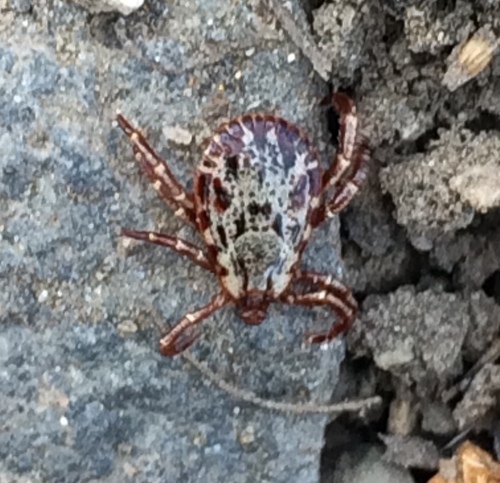

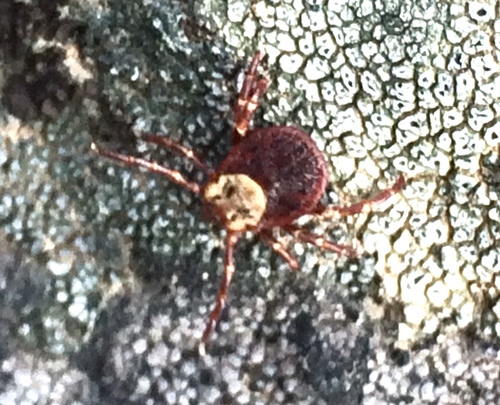
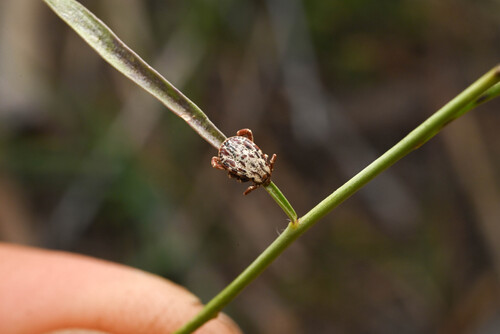
Questions people ask
How can I prevent Rocky Mountain wood tick bites?
Wear long sleeves and pants, stay on clear paths, and inspect your skin and clothing after being in tick habitat.
Source: Wikipedia, Utah State Extension
What disease does this tick transmit?
It can transmit Colorado tick fever, which usually shows symptoms three to seven days after the bite.
Do these ticks bite humans?
Yes, adult Rocky Mountain wood ticks will bite humans to feed on blood.
Source: Wikipedia
How do I safely remove an attached tick?
Use fine-point tweezers to grasp the tick close to the skin and pull upward steadily; clean the area afterward.
Source: extension.colostate.edu
Same family (Ixodidae)
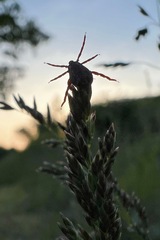 American Dog TickDermacentor variabilisCan spread germs or disease
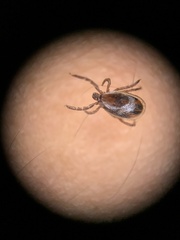 Eastern Black-legged TickIxodes scapularisCan spread germs or disease
 Lone Star TickAmblyomma americanumCan spread germs or disease
 Gulf Coast TickAmblyomma maculatumCan spread germs or disease
 Western Black-legged TickIxodes pacificusCan spread germs or disease
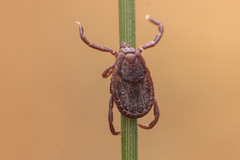 Brown Dog TickRhipicephalus sanguineusCan spread germs or disease
Sources
- extension.colostate.edu: https://extension.colostate.edu/?p=2465
- Utah State Extension: https://extension.usu.edu/planthealth/research/ticks-and-tickborne-diseases-of-utah.php
- Wikipedia: https://en.wikipedia.org/wiki/Dermacentor_andersoni
Look it up elsewhere: GBIF · iNaturalist · BugGuide · ITIS · Wikipedia
Text written 2026-10-23 from the sources above and checked sentence by sentence against them. Data fetched 2026-10-23.