 Bug FAQ
Ring-legged Earwig
Euborellia annulipes · Order: Dermaptera · Family: Anisolabididae
Also called: Ringlegged earwig
Source: UF/IFAS
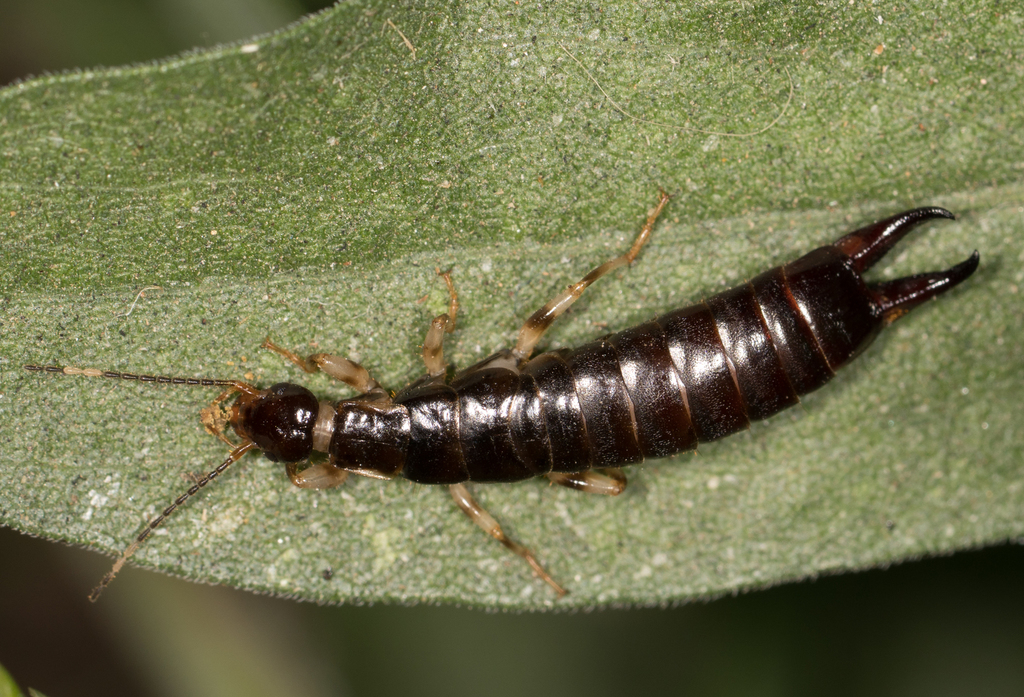
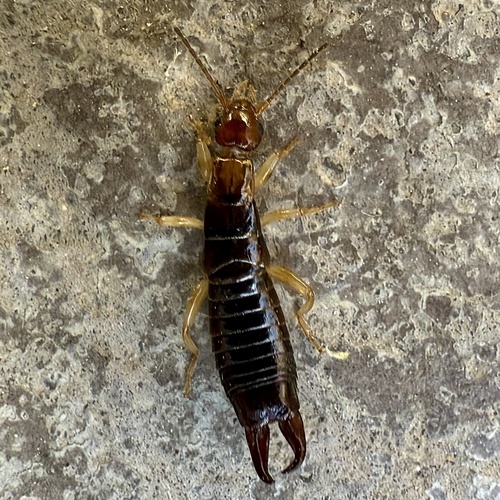
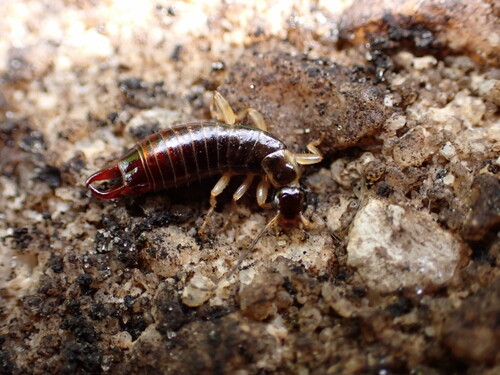
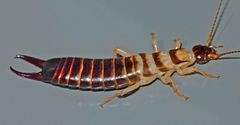
Adult ring-legged earwigs are dark brown, 10 to 25 mm long, with whitish legs that have a dark ring around the femur and usually sixteen-segmented antennae. They live in tropical and temperate areas worldwide, are active all year except winter when they stay underground, and they both eat small insects and occasionally feed on garden vegetables.
How to recognize it
Antennae normally have sixteen segments, though other counts can occur.
Source: Wikipedia
Size
Females are larger than males and the species has no wings.
Source: Wikipedia
Is it a pest in the house?
They can contaminate produce by defecating on leafy green vegetables.
Source: UF/IFAS
How to get rid of it
Their predatory behavior on insects and sowbugs likely offsets the small amount of plant damage they cause. They are mostly considered a nuisance, and any plant-feeding injury is probably balanced by their beneficial predation.
Source: UF/IFAS
Where it lives
They inhabit both tropical and temperate climates.
Source: Wikipedia
What it eats
Ring-legged earwigs are voracious predators of insects and sowbugs. They also feed on above-ground and below-ground parts of plants, causing little direct injury to crops.
Source: UF/IFAS
Life cycle
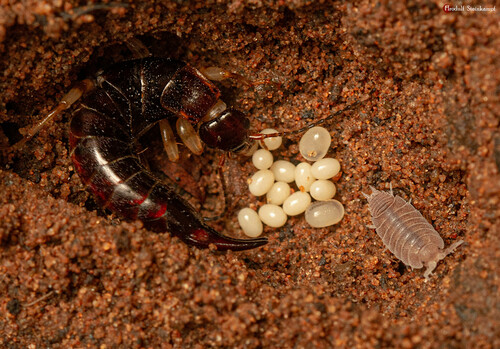
Females lay about fifty eggs per batch and produce two to four batches. They complete two to three generations per year, with a single generation taking about 61 days.
Source: Wikipedia
When you see it
Adults can be found all year except winter, when they remain underground.
Source: Wikipedia
Where it comes from
The species has been recorded in the United States since 1902. It now has a cosmopolitan distribution and is documented worldwide.
Source: Wikipedia
Where it is found in the US
Recorded in 33 of 51 states and DC. Most records: California, Texas, Florida, North Carolina, Arizona, Georgia, Alabama, Louisiana.
Darker = more records. Counts are museum and citizen-science records, not population size.
Source: GBIF
Status: introduced in North America; introduced in Canada; introduced in United States. Source: iNaturalist
Months it is reported in the US
Source: GBIF
More photos

Questions people ask
Are ring-legged earwigs harmful to my garden?
They may nibble lettuce and other succulent vegetables, but they also eat many garden pests, so the overall impact is usually minor.
Source: UF/IFAS
How can I tell a ring-legged earwig from a winged earwig?
Ring-legged earwigs have no wings and show a dark ring on each femur, while winged Doru earwigs have fully developed wings and tan bands on the pronotum.
Source: UF/IFAS
Same family (Anisolabididae)

Sources
- UF/IFAS: https://edis.ifas.ufl.edu/publication/IN245
- Wikipedia: https://en.wikipedia.org/wiki/Ringlegged_earwig
Look it up elsewhere: GBIF · iNaturalist · BugGuide · ITIS · Wikipedia
Text written 2026-10-23 from the sources above and checked sentence by sentence against them. Data fetched 2026-10-23.