 Bug FAQ
Maritime Earwig
Anisolabis maritima · Order: Dermaptera · Family: Anisolabididae
Also called: seaside earwig
Source: Wikipedia

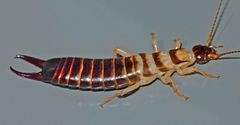
Maritime earwigs are about 2.5 to 3 cm long and have no wings. They live under seaweed or driftwood on beaches, preferring dark, warm, humid spots. They hunt small invertebrates such as fleas, crickets, ants, beetles and even eat other earwigs.
Source: Wikipedia
How to recognize it
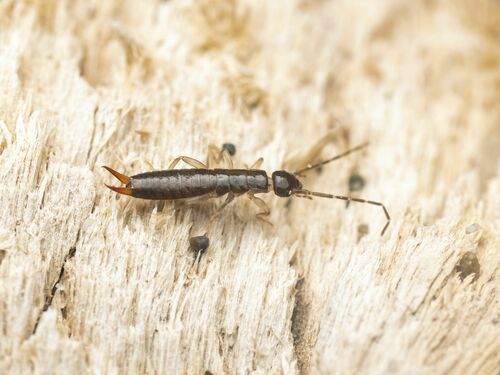
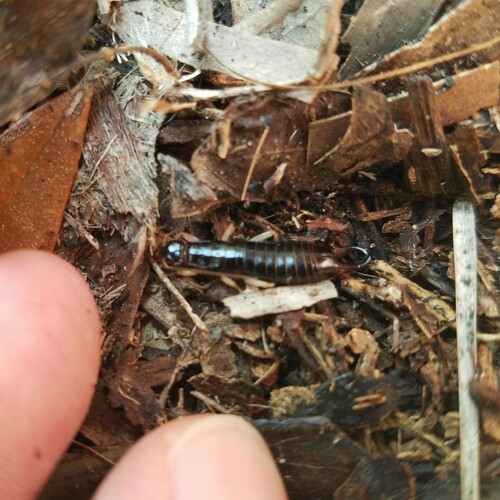
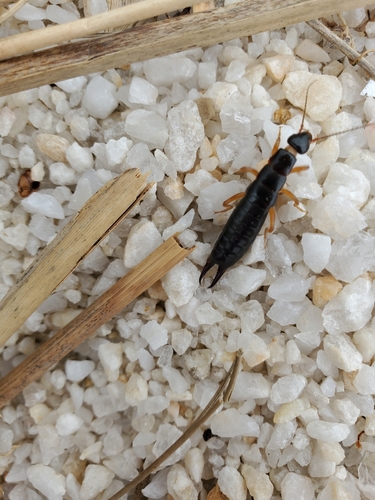
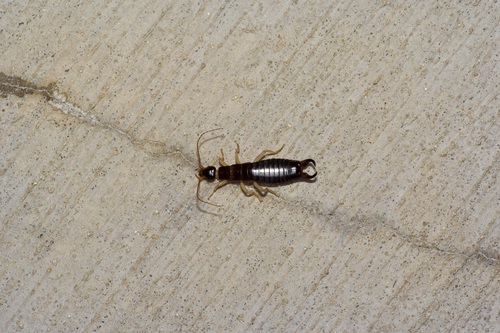
They lack wings, unlike many other earwig species. Males have asymmetrical forceps used for mating, catching prey, and defense.
Source: Wikipedia
Does it bite or sting?
Their forceps can break human skin if they bite.
Source: Wikipedia
Where it lives
During the day they hide under seaweed and driftwood on the beach. They seek out dark, warm, and humid micro-habitats.
Source: Wikipedia
What it eats
They prey on many small invertebrates, including fleas, crickets, ants, beetles, sowbugs, and may also eat other earwigs.
Source: Wikipedia
Life cycle
Mothers sometimes eat some of their own offspring (filial cannibalism).
Source: Wikipedia
Where it comes from
Scientists think the species originally came from Asia.
Source: Wikipedia
Lookalikes
They are similar to the seashore earwig and can be found near the shoreline.
Source: Wikipedia
Where it is found in the US
Recorded in 21 of 51 states and DC. Most records: California, New York, Massachusetts, Washington, New Jersey, Maine, Maryland, Florida.
Darker = more records. Counts are museum and citizen-science records, not population size.
Source: GBIF
Status: introduced in Canada; introduced in United States. Source: iNaturalist
Months it is reported in the US
Source: GBIF
More photos
Questions people ask
Can maritime earwigs bite humans?
Yes, their forceps are strong enough to break skin when they bite.
Source: Wikipedia
Where are maritime earwigs usually found?
They hide under seaweed or driftwood on beaches, preferring dark, warm, humid spots.
Source: Wikipedia
What do maritime earwigs eat?
They hunt small invertebrates such as fleas, crickets, ants, beetles, sowbugs, and may also eat other earwigs.
Source: Wikipedia
Same family (Anisolabididae)

Sources
- Wikipedia: https://en.wikipedia.org/wiki/Anisolabis_maritima
Look it up elsewhere: GBIF · iNaturalist · BugGuide · ITIS · Wikipedia
Text written 2026-10-23 from the sources above and checked sentence by sentence against them. Data fetched 2026-10-22.