 Bug FAQ
Rhynocoris iracundus
Rhynocoris iracundus · Order: Hemiptera · Family: Reduviidae
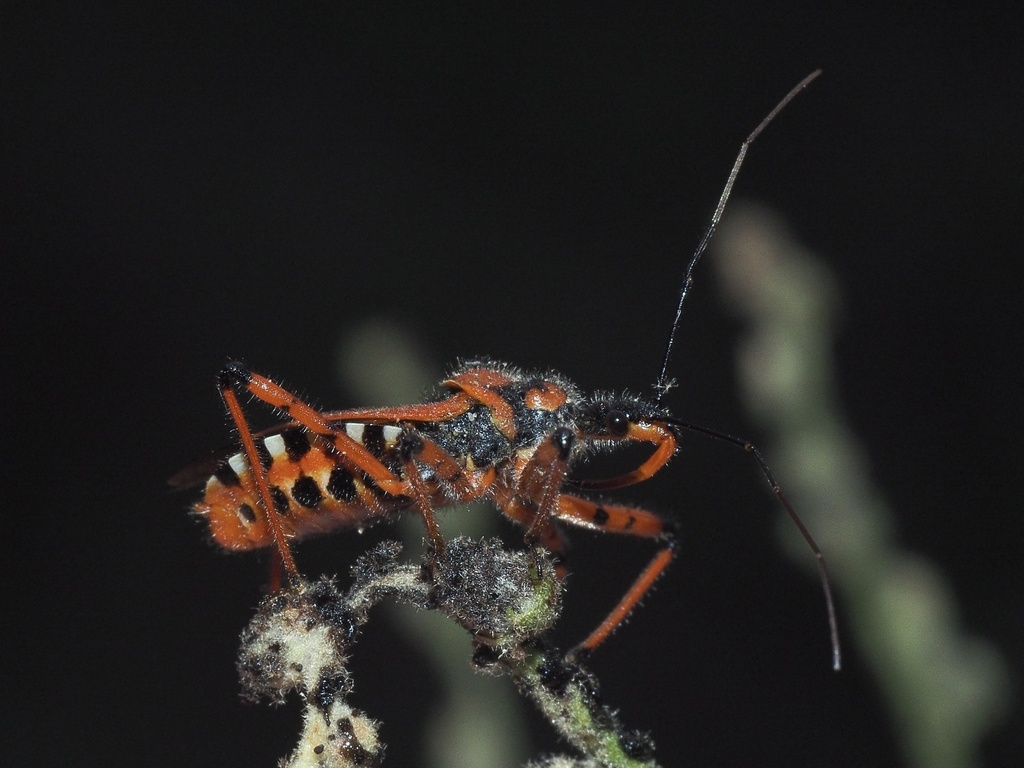
The front of the pronotum is broadly blackened, and the red stripes on the legs and abdomen are narrow. It lives in many parts of Europe. It differs from Rhynocoris erythropus, which has yellow/orange and black sides on the abdomen, while R. iracundus has red and black sides.
Source: Wikipedia
How to recognize it
The front lobe of the pronotum is broadly blackened, unlike the red front lobe of R. rubricus. The red stripes on the legs and abdomen are narrower than in related species.
Source: Wikipedia
Where it comes from
Its native range includes many European countries.
Source: Wikipedia
Lookalikes
It can be told apart from R. erythropus because the latter has yellow/orange and black abdomen sides, while R. iracundus has red and black sides.
Source: Wikipedia
More photos
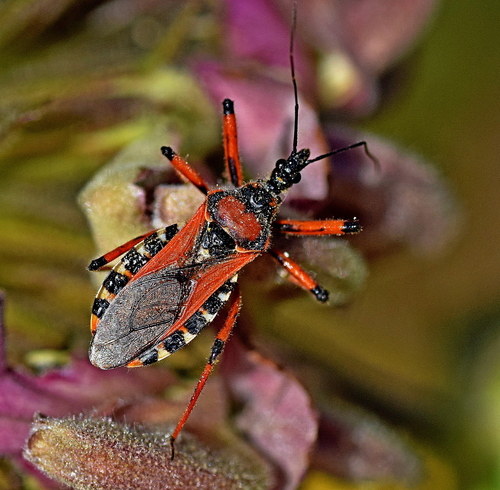
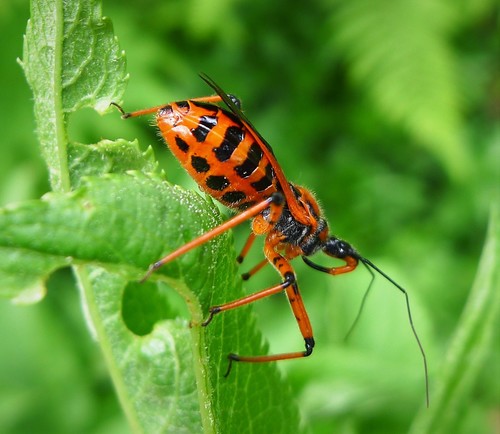
Questions people ask
How can I tell Rhynocoris iracundus apart from similar bugs?
Look for a broadly blackened front pronotum and narrow red stripes on the legs and abdomen; also, unlike R. erythropus, its abdomen sides are red and black, not yellow/orange.
Source: Wikipedia
Same family (Reduviidae)
 North American Wheel BugArilus cristatusCan bite
 Leafhopper Assassin BugZelus renardiiCan bite
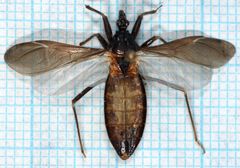 Masked HunterReduvius personatusCan bite
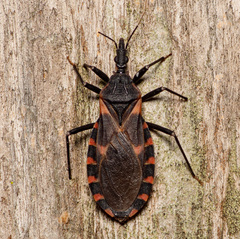 Eastern Bloodsucking ConenoseTriatoma sanguisugaCan spread germs or disease
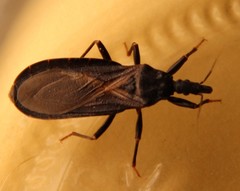 Western Bloodsucking ConenoseTriatoma protractaCan spread germs or disease
 Pale Green Assassin BugZelus luridusCan bite
Sources
- Wikipedia: https://en.wikipedia.org/wiki/Rhynocoris_iracundus
Look it up elsewhere: GBIF · iNaturalist · BugGuide · ITIS · Wikipedia
Text written 2026-10-22 from the sources above and checked sentence by sentence against them. Data fetched 2026-10-22.