 Bug FAQ
Red-legged Grasshopper
Melanoplus femurrubrum · Order: Orthoptera · Family: Acrididae
Also called: Redlegged Grasshopper, Red-legged Locust
Source: Wikipedia
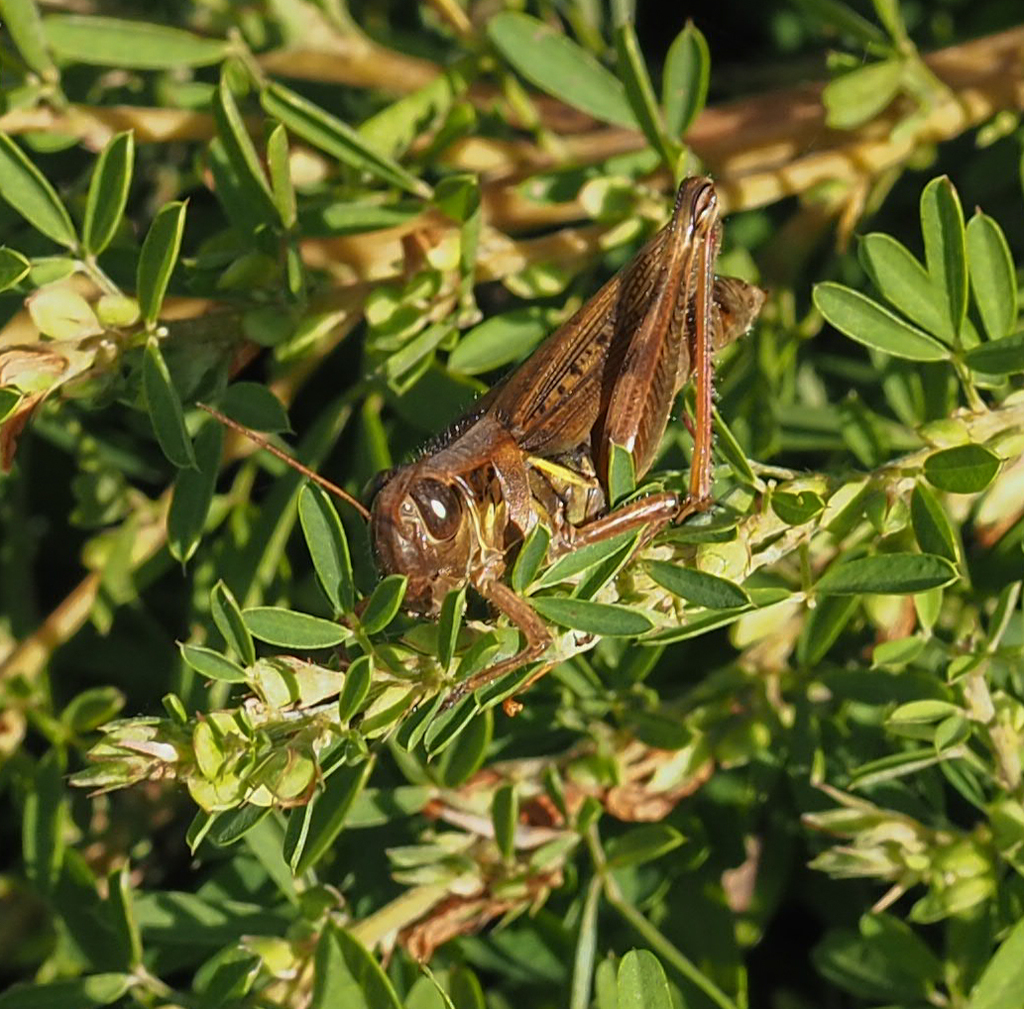
The red-legged grasshopper is a medium-sized insect with a reddish-brown back, greenish-yellow belly and red hind legs, and its wings reach past the abdomen. It lives in grasslands, thick vegetation, disturbed areas and old fields across most of North America, especially in Mexico, the United States and Canada. It feeds on a wide range of grasses, shrubs, forbs and crops, and at high numbers it can become a pest of gardens and grain fields.
Source: Wikipedia
Size
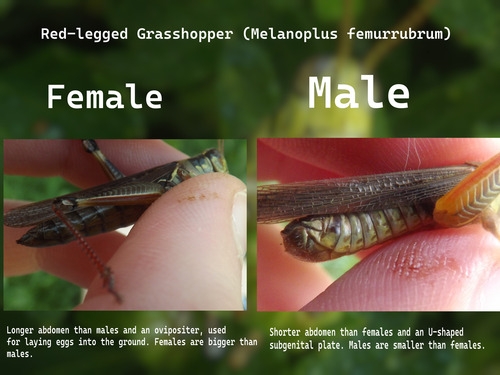
Males are about 1.7 to 2.4 cm long and females about 1.8 to 3.0 cm.
Source: Wikipedia
Is it a pest in the house?
In large numbers it can become a garden pest and damage grain crops such as soybeans, alfalfa, wheat and barley.
Source: Wikipedia
Where it lives
Found in grasslands, thick vegetation, disturbed habitats and old fields.
Source: Wikipedia
What it eats
A mixed-feeding herbivore that eats grasses, shrubs, forbs and various garden and crop plants, including leaves, fruits, flowers, buds and even bark.
Source: Wikipedia
Life cycle
Undergoes incomplete metamorphosis with egg, nymph and adult stages. Usually one generation per year, though southern populations may have more.
Source: Wikipedia
When you see it
Females lay eggs in the top 2 cm of soil in autumn; eggs overwinter in diapause and hatch as first-instar nymphs when soil warms in spring.
Source: Wikipedia
Where it comes from
Common throughout Mexico, the United States and Canada.
Source: Wikipedia
Where it is found in the US
Recorded in 50 of 51 states and DC. Most records: Colorado, Michigan, New York, Massachusetts, Utah, Texas, Washington, Ohio.
Darker = more records. Counts are museum and citizen-science records, not population size.
Source: GBIF
Status: native in North America; native in United States; native in Canada. Source: iNaturalist
Months it is reported in the US
Source: GBIF
More photos
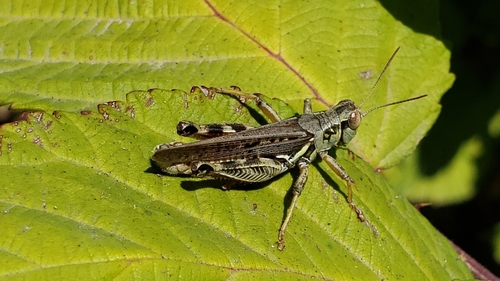
Questions people ask
What plants do they damage?
They can feed on and damage a variety of garden plants and grain crops, especially soybeans, alfalfa, wheat and barley.
Source: Wikipedia
Where are they found?
They occur throughout most of North America, favoring grasslands, thick vegetation, disturbed sites and old fields.
Source: Wikipedia
How big do they get?
Males range from about 1.7 to 2.4 cm, while females are slightly larger, 1.8 to 3.0 cm long.
Source: Wikipedia
Same family (Acrididae)
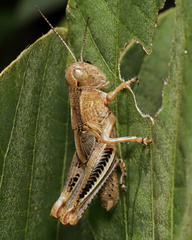 Differential GrasshopperMelanoplus differentialisDamages trees, gardens or crops
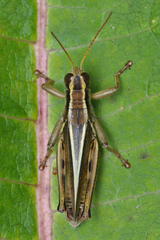 Two-striped GrasshopperMelanoplus bivittatusDamages trees, gardens or crops
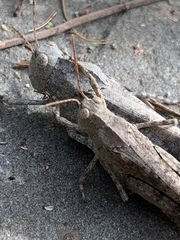 Carolina GrasshopperDissosteira carolinaDamages trees, gardens or crops
 Common Field GrasshopperChorthippus brunneus
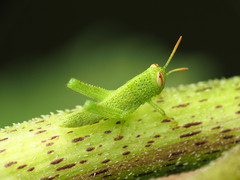 Egyptian Bird GrasshopperAnacridium aegyptium
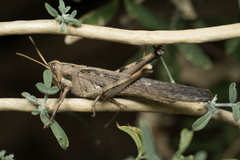 Gray Bird GrasshopperSchistocerca nitensDamages trees, gardens or crops
Sources
- Wikipedia: https://en.wikipedia.org/wiki/Melanoplus_femurrubrum
Look it up elsewhere: GBIF · iNaturalist · BugGuide · ITIS · Wikipedia
Text written 2026-10-22 from the sources above and checked sentence by sentence against them. Data fetched 2026-10-22.