 Bug FAQ
Razor Grinder
Henicopsaltria eydouxii · Order: Hemiptera · Family: Cicadidae
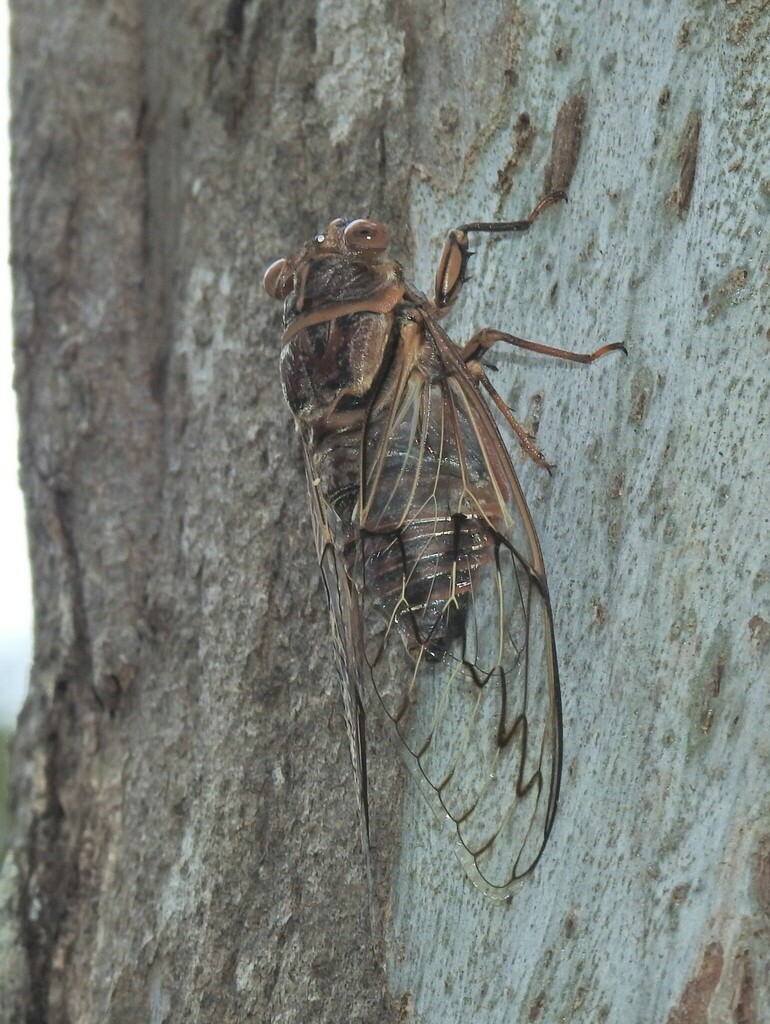
It lives in dry or wet sclerophyll forest and at rainforest edges in eastern Australia, and adults appear mainly in December and January. Adults feed silently in the afternoon, can fly fast, and their numbers vary widely from year to year.
Source: Wikipedia
How to recognize it
The head and thorax are red-brown with black markings, and the transparent wings have some brown spots.
Source: Wikipedia
Where it lives
Found in dry and wet sclerophyll forest and at rainforest margins.
Source: Wikipedia
Life cycle
Population numbers can be huge some years and very low in others.
Source: Wikipedia
When you see it
Most visible in December and January, sometimes early November.
Source: Wikipedia
Where it comes from
Native to eastern Australia.
Source: Wikipedia
Questions people ask
When can I expect to see razor grinders?
They are most often seen in December and January, with occasional early November appearances.
Source: Wikipedia
Where do razor grinders live?
They inhabit dry and wet sclerophyll forests and the edges of rainforests in eastern Australia.
Source: Wikipedia
What do razor grinders look like?
They have a red-brown head and thorax with black markings, and transparent wings with some brown discoloration.
Source: Wikipedia
Same family (Cicadidae)
Sources
- Wikipedia: https://en.wikipedia.org/wiki/Henicopsaltria_eydouxii
Look it up elsewhere: GBIF · iNaturalist · BugGuide · Wikipedia
Text written 2026-10-23 from the sources above and checked sentence by sentence against them. Data fetched 2026-10-22.