 Bug FAQ
Pharaoh Cicada
Magicicada septendecim · Order: Hemiptera · Family: Cicadidae
Also called: Decim Periodical Cicada, Periodical Cicada, Seventeen Year Periodical Cicada
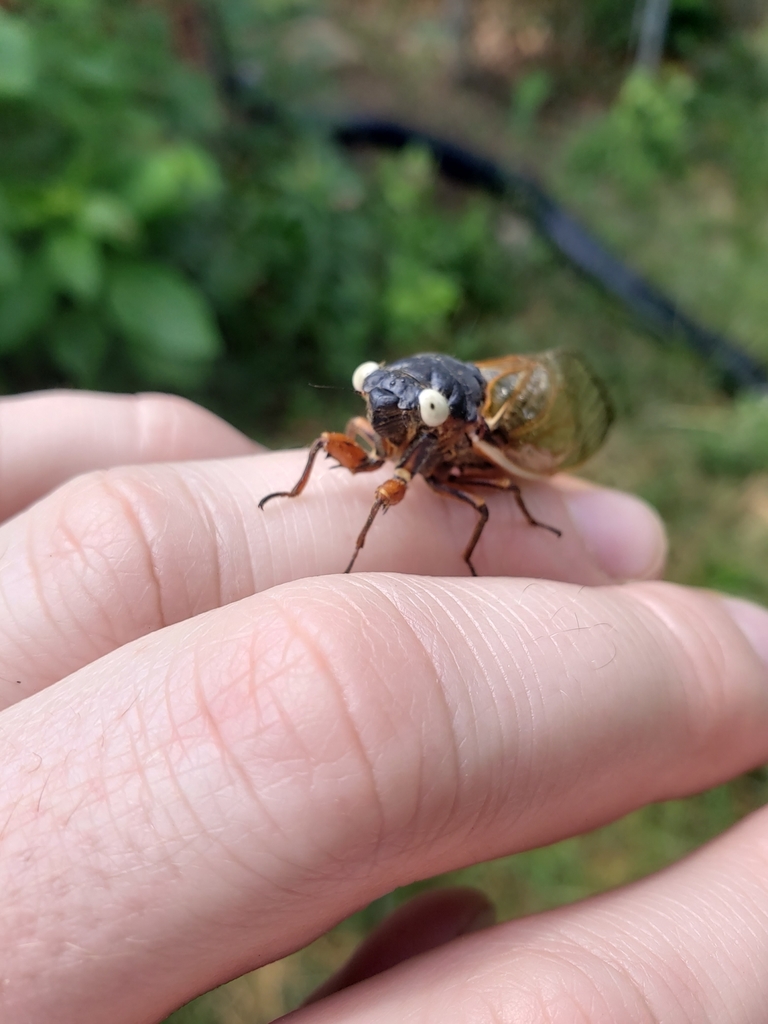
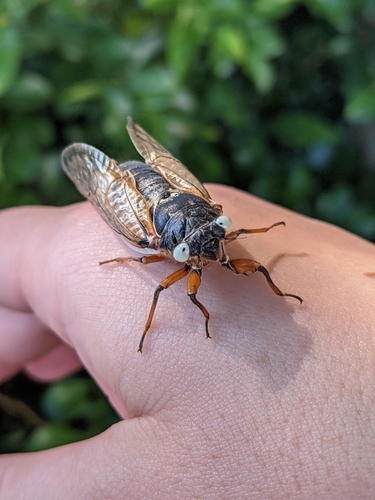
The Pharaoh cicada is the largest North-American periodical cicada and lives about 17 years from egg to adult death. Adults have reddish eyes and wing veins, a black back, orange stripes on the belly underside and orange patches on the thorax sides. Females lay eggs in small tree twigs, and the nymphs drop to the ground after hatching.
Source: Wikipedia
How to recognize it
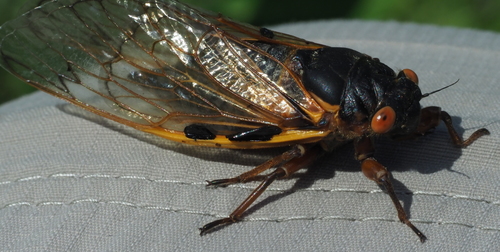
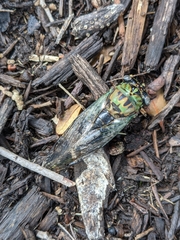
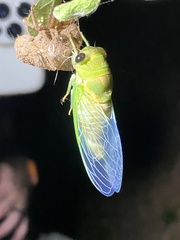
They show reddish eyes and wing veins, a black dorsal thorax, broad orange stripes on the abdomen underside, and orange patches on the thorax sides.
Source: Wikipedia
Size
They are the largest of the periodical cicadas in North America.
Source: Wikipedia
Where it lives
They emerge from the ground in spring, often in May, after many years underground.
Source: Wikipedia
What it eats
Females deposit eggs in small tree twigs.
Source: Wikipedia
Life cycle
Their median life cycle is about seventeen years, but can vary from thirteen to twenty-one years.
Source: Wikipedia
When you see it
They were first described in the 18th century and are known to appear every 16-17 years in some regions.
Source: Wikipedia
Where it comes from
They are native to Canada and the United States.
Source: Wikipedia
Lookalikes
They are often grouped with two similar 13-year species because of close resemblance.
Source: Wikipedia
Where it is found in the US
Recorded in 29 of 51 states and DC. Most records: Maryland, Virginia, Illinois, Massachusetts, Tennessee, Pennsylvania, Ohio, North Carolina.
Darker = more records. Counts are museum and citizen-science records, not population size.
Source: GBIF
Status: native in North America; native in Canada; native in United States. Source: iNaturalist
Months it is reported in the US
Source: GBIF
More photos
Questions people ask
Are they a problem for trees or gardens?
The only recorded activity is females laying eggs in small tree twigs; no damage to trees is noted in the sources.
Source: Wikipedia
Same family (Cicadidae)

Sources
- Wikipedia: https://en.wikipedia.org/wiki/Magicicada_septendecim
Look it up elsewhere: GBIF · iNaturalist · BugGuide · ITIS · Wikipedia
Text written 2026-10-22 from the sources above and checked sentence by sentence against them. Data fetched 2026-10-22.