 Bug FAQ
Ash Cicada
Cicada orni · Order: Hemiptera · Family: Cicadidae
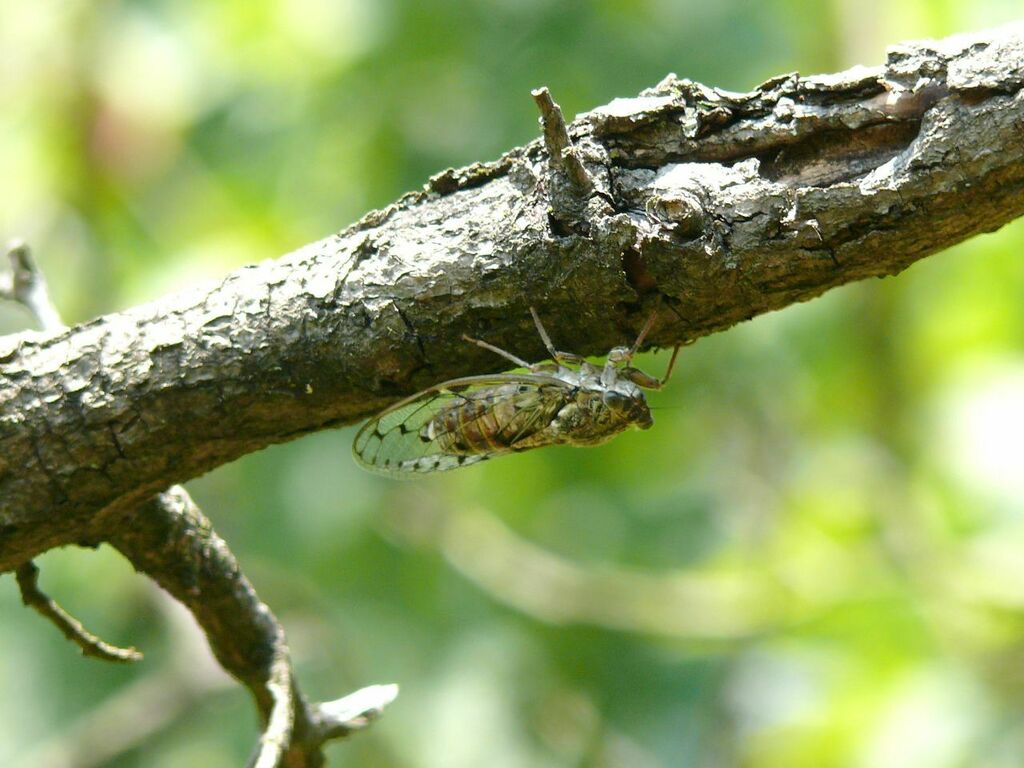
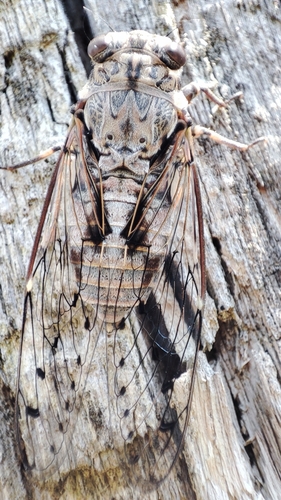
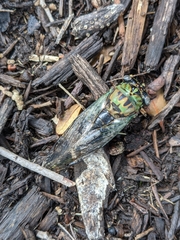
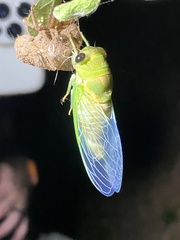
Adult Ash cicadas are about 25 mm long with a wingspan around 70 mm. They are brown to gray, have reddish abdominal segments with silky hairs, and transparent front wings marked with black spots. Adults appear in summer, feed on tree sap, and males gather on sunny branches to sing; the larvae live underground for several years feeding on plant-root juices.
Source: Wikipedia
How to recognize it
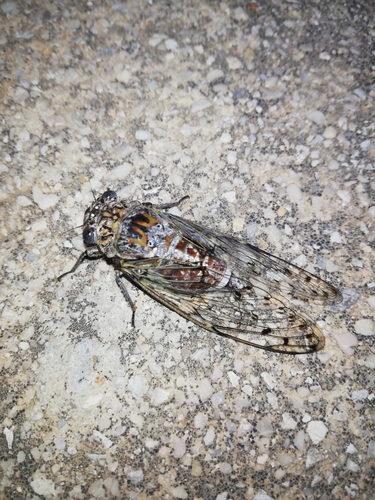
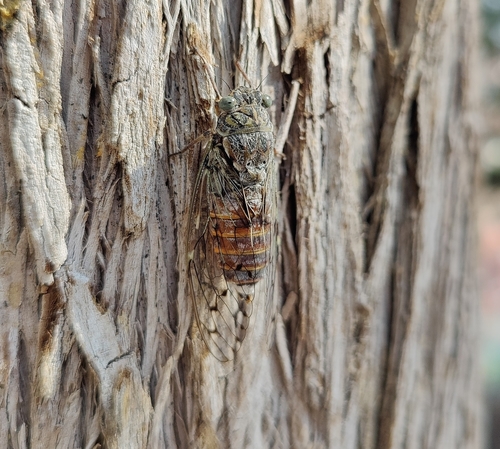
The body coloration ranges from brown to gray. The abdomen shows reddish segments covered with fine silky hairs. The clear front wings bear several distinctive black spots.
Source: Wikipedia
Size
Adults reach roughly 25 mm in length and have a wingspan of about 70 mm.
Source: Wikipedia
Where it lives
Males often sing together on sunny tree branches.
Source: Wikipedia
What it eats
The underground larvae feed on the juices of plant roots.
Source: Wikipedia
Life cycle
Adults lay eggs in summer; the eggs hatch in late summer or autumn.
Source: Wikipedia
When you see it
Adults can be encountered during the summer months.
Source: Wikipedia
Where it comes from
This species is common in southern and central Europe and also occurs in the Near East.
Source: Wikipedia
More photos
Questions people ask
Where are Ash cicadas found?
They are common in southern and central Europe and the Near East.
Source: Wikipedia
Same family (Cicadidae)

Sources
- Wikipedia: https://en.wikipedia.org/wiki/Cicada_orni
Look it up elsewhere: GBIF · iNaturalist · BugGuide · Wikipedia
Text written 2026-10-22 from the sources above and checked sentence by sentence against them. Data fetched 2026-10-22.