 Bug FAQ
Rattle Grasshopper
Psophus stridulus · Order: Orthoptera · Family: Acrididae

Males are about 23 to 25 mm long and females 26 to 40 mm. They live in dry, rocky, open mountain areas up to 2 000 m elevation across Central and Southern Europe, parts of Asia, and the Near East, appearing from July/August to October.
Source: Wikipedia
Size
Males reach 23 to 25 mm and females 26 to 40 mm in length.
Source: Wikipedia
Where it lives
Found mainly in arid, rocky open areas of mountains up to 2 000 m. It is a xeric specialist and often shares its habitat with Zygaena ephialtes.
Source: Wikipedia
When you see it
Adults are present from July or August through October.
Source: Wikipedia
Where it comes from
Occurs in Central and Southern Europe, the eastern Palearctic (Siberia to China and Mongolia), and the Near East.
Source: Wikipedia
Lookalikes
It often occurs with Zygaena ephialtes in its dry habitats.
Source: Wikipedia
More photos

Questions people ask
When can I expect to see Rattle Grasshoppers?
Adults are active from July or August until October.
Source: Wikipedia
Where do they live?
They prefer dry, rocky, open mountain areas up to 2 000 m elevation across Europe and parts of Asia.
Source: Wikipedia
Same family (Acrididae)
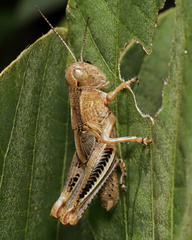 Differential GrasshopperMelanoplus differentialisDamages trees, gardens or crops
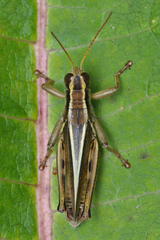 Two-striped GrasshopperMelanoplus bivittatusDamages trees, gardens or crops
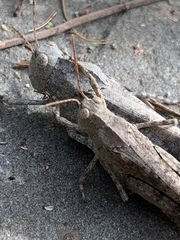 Carolina GrasshopperDissosteira carolinaDamages trees, gardens or crops
 Common Field GrasshopperChorthippus brunneus
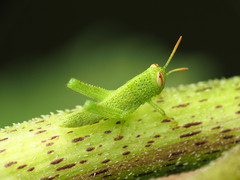 Egyptian Bird GrasshopperAnacridium aegyptium
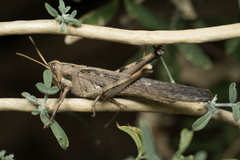 Gray Bird GrasshopperSchistocerca nitensDamages trees, gardens or crops
Sources
- Wikipedia: https://en.wikipedia.org/wiki/Psophus
Look it up elsewhere: GBIF · iNaturalist · BugGuide · Wikipedia
Text written 2026-10-23 from the sources above and checked sentence by sentence against them. Data fetched 2026-10-22.