 Bug FAQ
Propertius Duskywing
Erynnis propertius · Order: Lepidoptera · Family: Hesperiidae
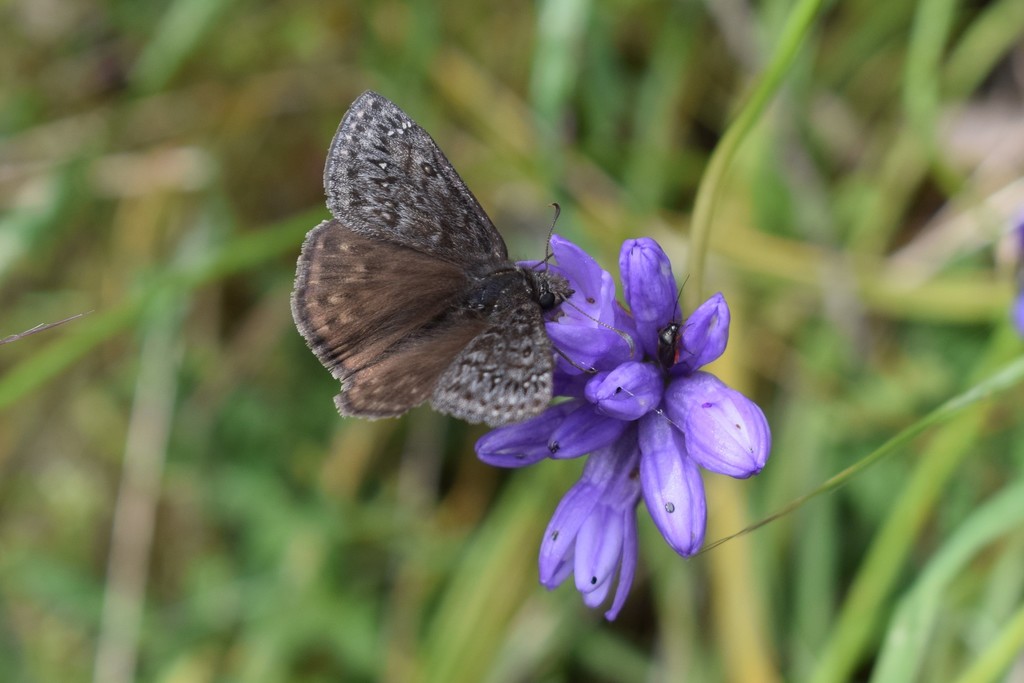
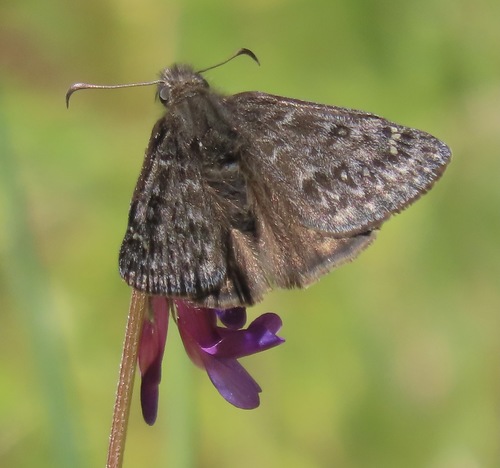
The duskywing (Erynnis propertius) is a small skipper butterfly with a wingspan of about 35 to 45 mm and a stout body. Adults are dark brown-gray on the upper side, with pale spots on the forewings and uniformly dusky hindwings, and can be told apart from similar duskywings by two subapical spots on the underside of the hindwing and no white fringe. It lives in low-elevation oak woodlands and savannas along the Pacific coast from southern British Columbia to northern Baja California, where its larvae feed on Garry oak leaves.
Source: Wikipedia
How to recognize it
Adults are dark brown-gray with pale forewing spots and uniformly dusky hindwings.
Source: Wikipedia
Size
Wingspan ranges from 35 to 45 mm. They have a stout body, relatively small wings, and hooked antenna tips.
Source: Wikipedia
How to get rid of it
Conservation actions include herbicide use, mechanical restoration of native prairie, removal of invasive trees, and seeding native oak woodland. A major threat is loss of oak forest and savanna habitats due to invasive species.
Source: Wikipedia
Where it lives
Found in open oak woodlands and forest openings, but not in deserts or hot central valleys. Prefers low-elevation (up to 2000 ft) open-canopied oak woodlands and savannas.
Source: Wikipedia
What it eats
Larvae feed on oak leaves, especially Garry oak at the northern edge of the range. Adults sip nectar from wildflowers and sometimes take minerals from damp soil.
Source: Wikipedia
Life cycle
The species has one generation per year. Larvae pupate in early spring within leaf nests, and adults emerge in April and May.
Source: Wikipedia
When you see it
Adults appear mainly in April and May. Later in the season, most individuals are female.
Source: Wikipedia
Where it comes from
Its range follows Garry oak, covering southwestern British Columbia, Puget Sound, the eastern Cascades in Washington, western Oregon, and northwestern California.
Source: Wikipedia
Lookalikes
It looks similar to Erynnis tristis and Erynnis funeralis, all having dark dorsal wings.
Source: Wikipedia
Where it is found in the US
Recorded in 9 of 51 states and DC. Most records: California, Oregon, Washington, Nevada, Utah, New Mexico, Arizona, Kansas.
Darker = more records. Counts are museum and citizen-science records, not population size.
Source: GBIF
Status: native in North America; native in Canada; native in United States. Source: iNaturalist
Months it is reported in the US
Source: GBIF
More photos
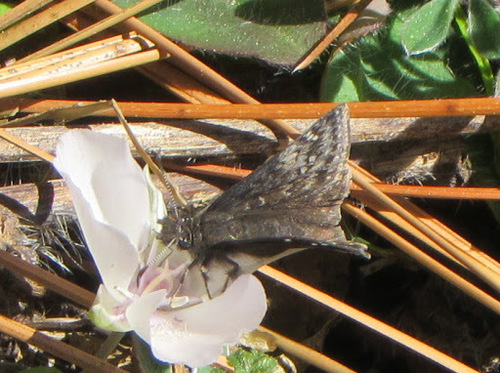
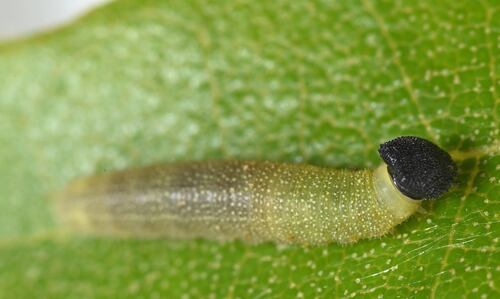
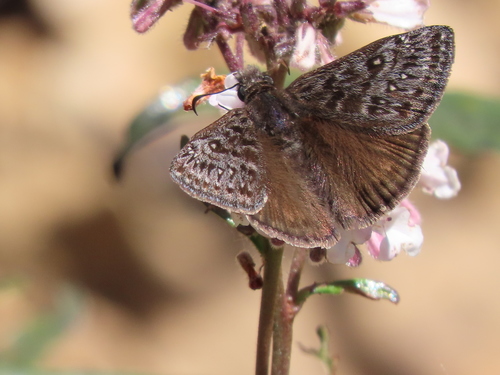
Same family (Hesperiidae)




Sources
- Wikipedia: https://en.wikipedia.org/wiki/Erynnis_propertius
Look it up elsewhere: GBIF · iNaturalist · BugGuide · Wikipedia
Text written 2026-10-23 from the sources above and checked sentence by sentence against them. Data fetched 2026-10-23.