 Bug FAQ
Privet Tortrix
Clepsis consimilana · Order: Lepidoptera · Family: Tortricidae
Also called: Privet Twist
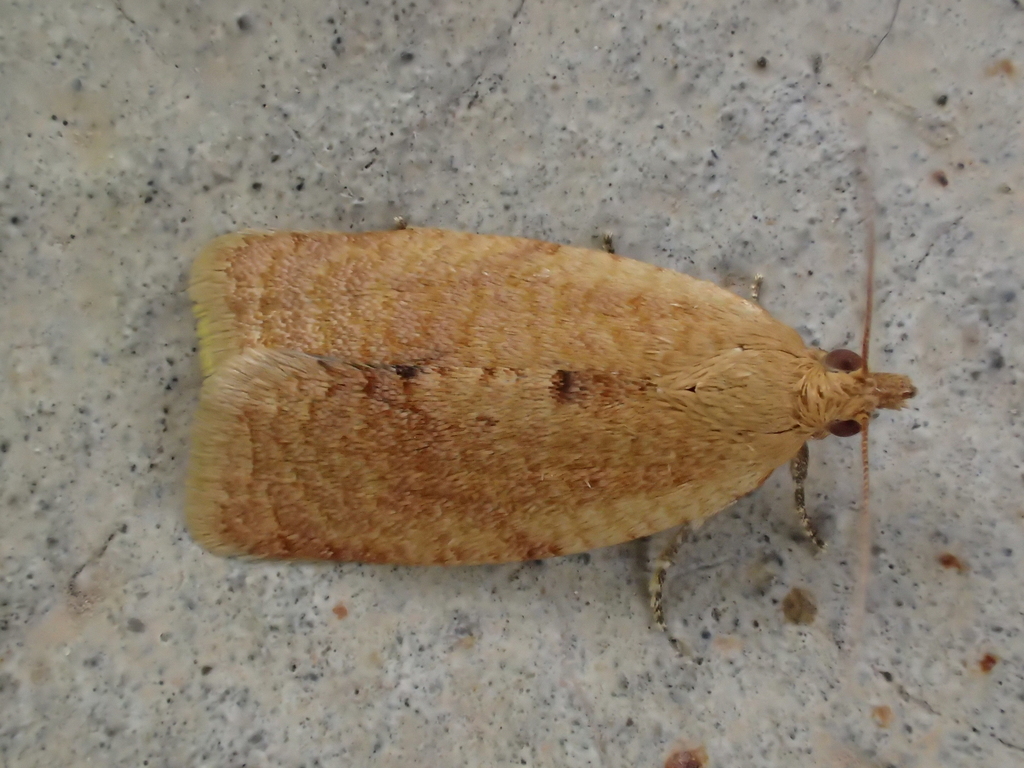
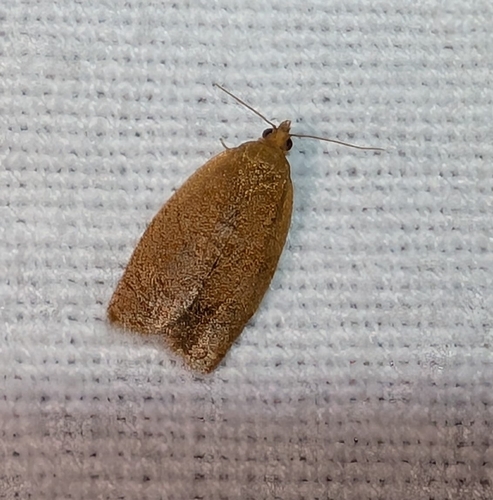
The Privet Tortrix moth has a wingspan of about 13 to 19 mm and reddish-brown forewings with dark markings and two small dark spots near the hind edge; its hindwings are brownish-grey. Adults fly from June to September, are active in the afternoon and evening, and are attracted to light.
Source: Wikipedia
How to recognize it
Hindwings are brownish-grey.
Source: Wikipedia
Size
The wingspan ranges from 13 to 19 mm.
Source: Wikipedia
Where it lives
Larvae feed on various trees, especially on dead leaves.
Source: Wikipedia
What it eats
Larvae eat a range of trees including privet, lilac, ivy, honeysuckle, knotweed, apple, hornbeam, hawthorn and cotoneaster.
Source: Wikipedia
Life cycle
Pupation takes place where the larvae feed. A partial second generation occurs in September and the third-instar larvae hibernate.
Source: Wikipedia
When you see it
Adults are on the wing from June through September. They are active in the afternoon and evening and are attracted to light.
Source: Wikipedia
Where it is found in the US
Recorded in 8 of 51 states and DC. Most records: Washington, Oregon, New York, Massachusetts, Connecticut, New Jersey, Pennsylvania, Oklahoma.
Darker = more records. Counts are museum and citizen-science records, not population size.
Source: GBIF
Status: introduced in Canada. Source: iNaturalist
Months it is reported in the US
Source: GBIF
More photos
Questions people ask
When are Privet Tortrix moths active?
Adults fly from June to September, mainly in the afternoon and evening, and they come to light.
Source: Wikipedia
What do the larvae eat?
The caterpillars feed on many trees such as privet, lilac, ivy, honeysuckle, knotweed, apple, hornbeam, hawthorn and cotoneaster.
Source: Wikipedia
Same family (Tortricidae)
 Oblique-banded Leafroller MothChoristoneura rosaceanaDamages trees, gardens or crops
 Garden TortrixClepsis peritanaDamages trees, gardens or crops
 Common MarbleSyricoris lacunanaDamages trees, gardens or crops
 Red-banded Leafroller MothArgyrotaenia velutinanaDamages trees, gardens or crops
 Light Brown Apple MothEpiphyas postvittanaDamages trees, gardens or crops
 Aster and Reddish Eucosma Moths and AlliesEucosma parmatana
Sources
- Wikipedia: https://en.wikipedia.org/wiki/Clepsis_consimilana
Look it up elsewhere: GBIF · iNaturalist · BugGuide · Wikipedia
Text written 2026-10-26 from the sources above and checked sentence by sentence against them. Data fetched 2026-10-26.