 Bug FAQ
Predatory Bush-cricket
Saga pedo · Order: Orthoptera · Family: Tettigoniidae
Also called: Common Predatory Bush-cricket, Matriarchal Katydid, Predatory Katydid, Spiked Magician
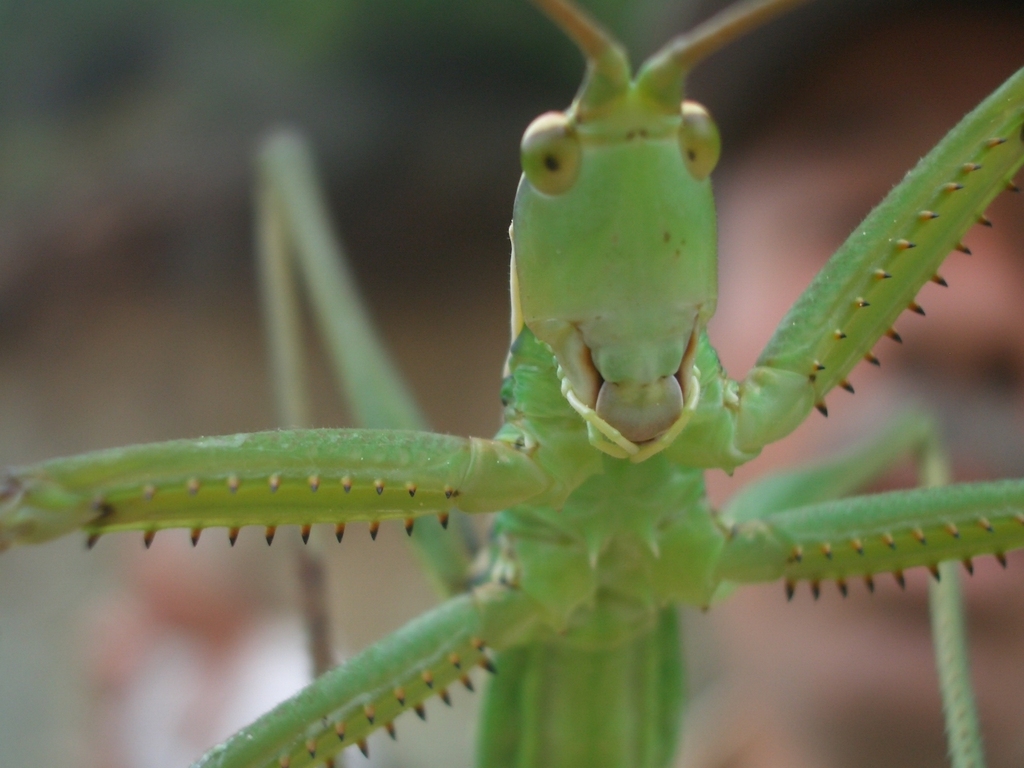
The predatory bush-cricket can grow up to about 10.5 cm long, sometimes reaching 12 cm, making it one of the largest European insects. It lives in dry-summer habitats such as grasslands, meadows, shrublands and the edges of forests from sea level up to 1,750 m. Adults hunt other insects, especially other Orthoptera and mantises, while nymphs are also predatory and may occasionally sip nectar.
Source: Wikipedia
How to recognize it
It blends in with vegetation, being brown or green with a pale side stripe. Its fore and mid legs have sharp spines for catching prey.
Source: Wikipedia
Size
Total length from head to ovipositor tip can reach up to 10.5 cm, occasionally 12 cm. The body alone is usually 5 to 7 cm long, sometimes as long as 7.8 cm.
Source: Wikipedia
Where it lives
Prefers areas with dry summers, mild winters, from sea level up to 1,750 m altitude.
Source: Wikipedia
What it eats
Adults mainly eat other Orthoptera and mantises, and sometimes small lizards. Nymphs are predatory like adults, with one record of feeding on nectar.
Source: Wikipedia
Life cycle
Females lay eggs a few weeks after maturing and continue for up to six months. Nymphs hatch no earlier than April and pass through five to seven molts before becoming adults.
Source: Wikipedia
When you see it
Adults are most active at dusk and early night, with little daytime activity. Nymphs are generally active during the day.
Source: Wikipedia
Where it comes from
It is a wingless bush cricket native to southern Europe and western-central Asia.
Source: Wikipedia
Lookalikes
Only a few orthopteran species, including S. pedo, are strictly parthenogenetic.
Source: Wikipedia
Where it is found in the US
Recorded in 1 of 51 states and DC. Most records: Michigan.
Darker = more records. Counts are museum and citizen-science records, not population size.
Source: GBIF
Questions people ask
How big can a predatory bush-cricket get?
It can reach up to about 10.5 cm, with rare individuals as long as 12 cm.
Source: Wikipedia
Where is this bush-cricket likely to be found?
In dry-summer habitats like grasslands, meadows, shrublands and forest edges, from sea level up to 1,750 m.
Source: Wikipedia
What does the predatory bush-cricket eat?
Adults mainly prey on other Orthoptera and mantises; nymphs are also predatory and have been seen feeding on nectar.
Source: Wikipedia
Same family (Tettigoniidae)
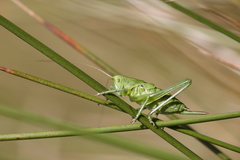 Great Green Bush-cricketTettigonia viridissimaCan bite
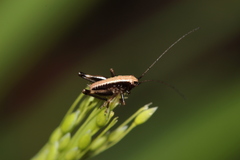 Dark Bush-cricketPholidoptera griseoaptera
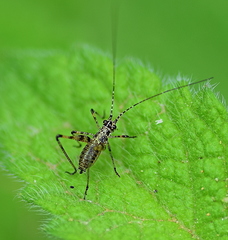 Mediterranean KatydidPhaneroptera nanaDamages trees, gardens or crops
 Fork-tailed Bush KatydidScudderia furcataDamages trees, gardens or crops
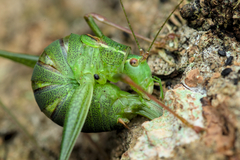 Speckled Bush-cricketLeptophyes punctatissima
 Roesel's Bush-cricketRoeseliana roeselii
Sources
- Wikipedia: https://en.wikipedia.org/wiki/Saga_pedo
Look it up elsewhere: GBIF · iNaturalist · BugGuide · ITIS · Wikipedia
Text written 2026-10-23 from the sources above and checked sentence by sentence against them. Data fetched 2026-10-22.