 Bug FAQ
Poplar Twiggall Fly
Euhexomyza schineri · Order: Diptera · Family: Agromyzidae
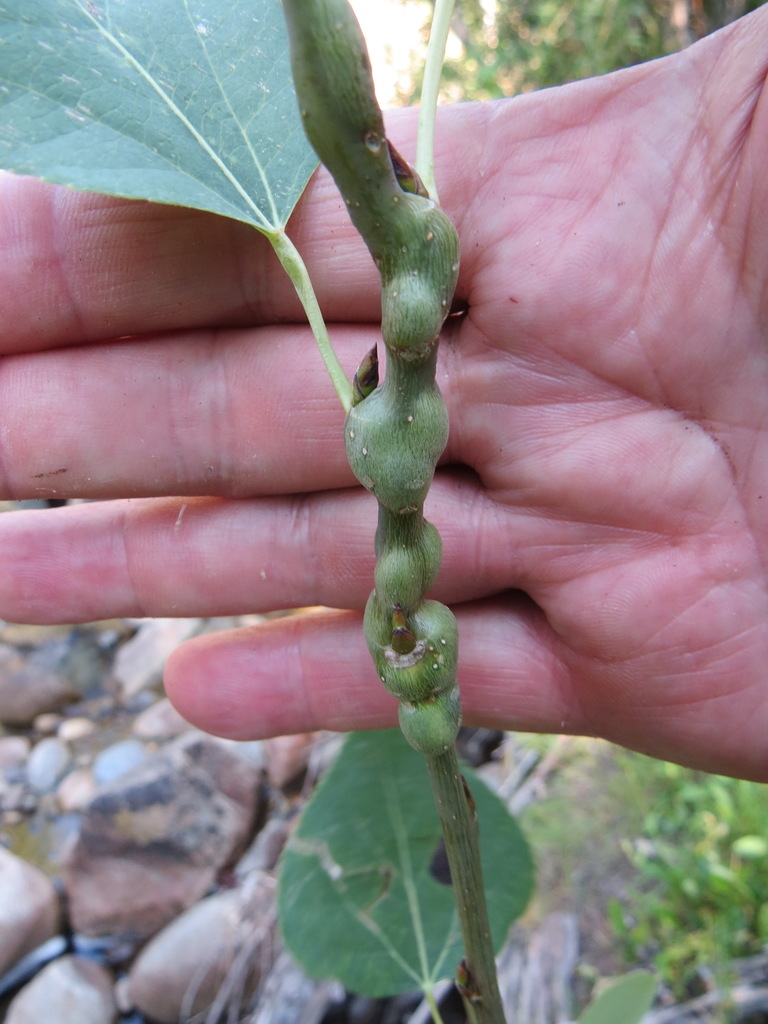
The poplar twiggall fly is a tiny, stout, shiny dark insect about 2 to 4 mm long. Its larvae develop inside galls that form on quaking aspen and other poplars during summer and autumn. Adults emerge in late winter to early spring and rest on leaves during the day.
Source: Wikipedia
How to recognize it
They have a stout body, a shiny dark appearance, and are about 2 to 4 mm long.
Source: Wikipedia
Size
Adults measure roughly 2 to 4 mm in length.
Source: Wikipedia
Where it lives
Quaking aspen is the primary host, though they are also found on many poplar species.
Source: Wikipedia
What it eats
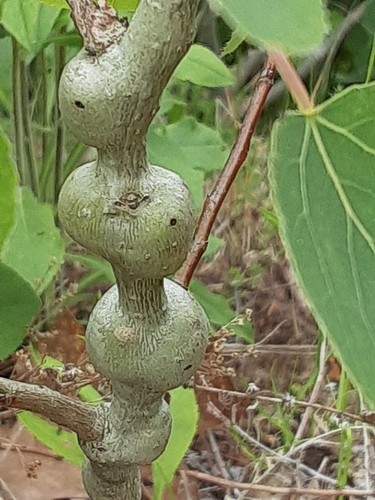
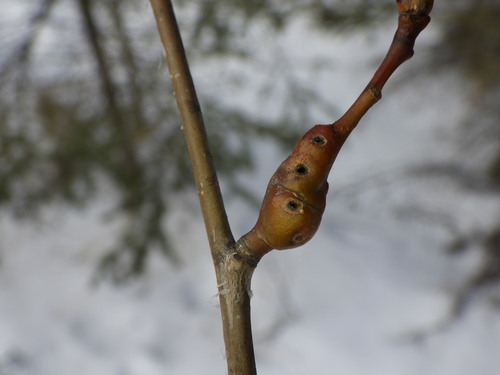
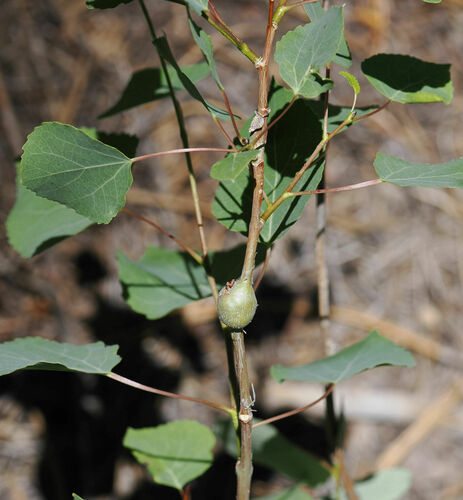
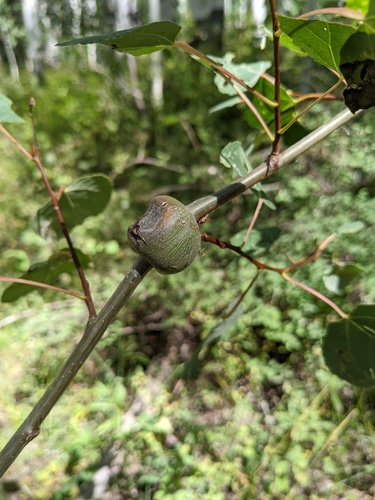
The larvae live inside yellow-green galls that develop on the host tree during summer and autumn.
Source: Wikipedia
Life cycle
Galls form in summer, grow through autumn, and the larvae overwinter inside them before pupating in late winter to early spring. Adult flies drop to the ground after pupation and emerge in early spring.
Source: Wikipedia
When you see it
When active, the flies rest on leaves throughout the day.
Source: Wikipedia
Where it comes from
They are mainly recorded across the western coast, the northeastern United States, and southeastern Canada. Additional records exist from Europe and Asia.
Source: Wikipedia
Where it is found in the US
Recorded in 20 of 51 states and DC. Most records: Minnesota, California, Washington, Colorado, Oregon, Massachusetts, Utah, Wisconsin.
Darker = more records. Counts are museum and citizen-science records, not population size.
Source: GBIF
Status: native in North America; native in Canada. Source: iNaturalist
Months it is reported in the US
Source: GBIF
More photos
Questions people ask
What trees do poplar twiggall flies affect?
They form galls on quaking aspen and many other poplar species.
Source: Wikipedia
When do the adult flies appear?
Adults emerge from the ground in late winter to early spring.
Source: Wikipedia
Where are poplar twiggall flies found?
They are most common on the West Coast, the Northeast US, and southeastern Canada, with some records in Europe and Asia.
Source: Wikipedia
Same family (Agromyzidae)


Sources
- Wikipedia: https://en.wikipedia.org/wiki/Euhexomyza_schineri
Look it up elsewhere: GBIF · iNaturalist · BugGuide · Wikipedia
Text written 2026-10-26 from the sources above and checked sentence by sentence against them. Data fetched 2026-10-26.