 Bug FAQ
Long Dash
Polites mystic · Order: Lepidoptera · Family: Hesperiidae
Also called: Long Dash Skipper

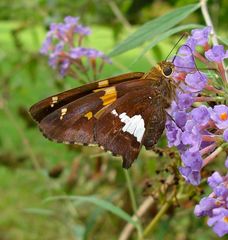
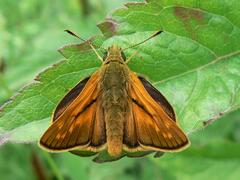
The Long Dash has dark brown-reddish to yellow-orange markings on top and the female’s forewing shows a broad black patch at the base.
Source: Wikipedia
How to recognize it
Top markings are dark brown-reddish to yellow-orange. Male forewing bears a long, slightly curved stigma that may connect to a dash near the apex.
Source: Wikipedia
Where it lives
Found in northern North America and in mountains of southern North America, preferring grassy habitats.
Source: Wikipedia
Where it comes from
Native to northern North America and mountainous regions of the south.
Source: Wikipedia
Where it is found in the US
Recorded in 36 of 51 states and DC. Most records: Vermont, California, Michigan, Colorado, Minnesota, Idaho, Ohio, Massachusetts.
Darker = more records. Counts are museum and citizen-science records, not population size.
Source: GBIF
Months it is reported in the US
Source: GBIF
Same family (Hesperiidae)




Sources
- Wikipedia: https://en.wikipedia.org/wiki/Limochores_mystic
Look it up elsewhere: GBIF · iNaturalist · BugGuide · ITIS · Wikipedia
Text written 2026-10-23 from the sources above and checked sentence by sentence against them. Data fetched 2026-10-23.