 Bug FAQ
Plains Cicada
Megatibicen dealbatus · Order: Hemiptera · Family: Cicadidae
Also called: Great Plains Cicada, Plains Harvest-Fly
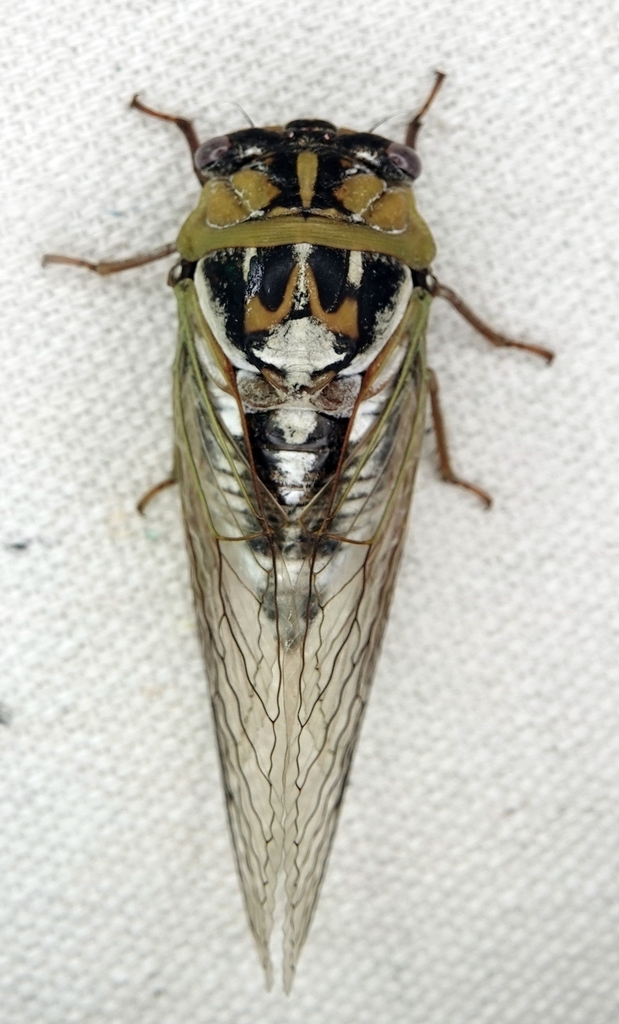
They live in grassland and riparian areas of the U.S. Great Plains, especially on cottonwoods, willows and other trees, and are active from July through September, most often between 10 am and 6 pm. The life cycle lasts about 3 to 5 years, with five underground nymphal instars before emerging as adults that feed on plant xylem.
Source: Wikipedia
How to recognize it
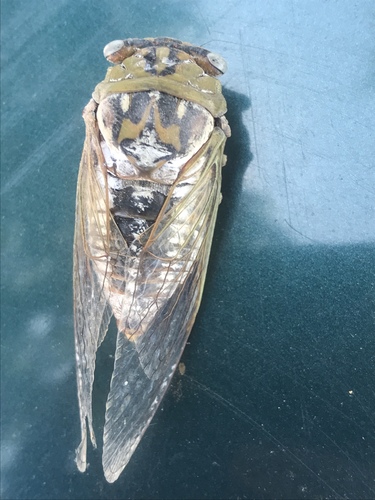
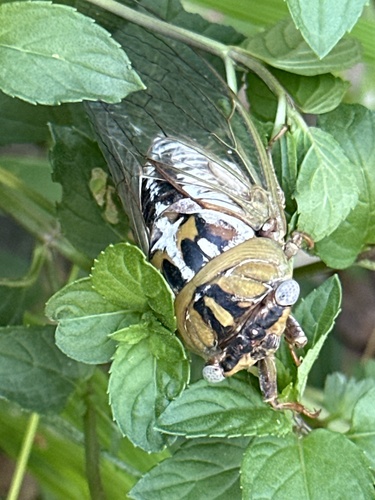
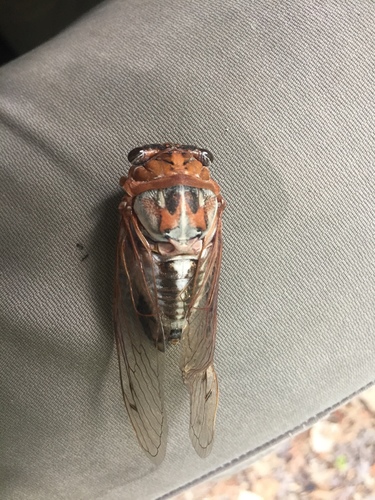
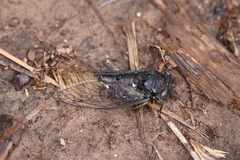
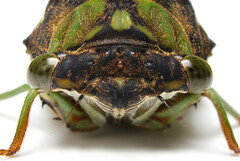
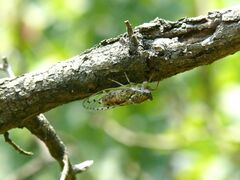
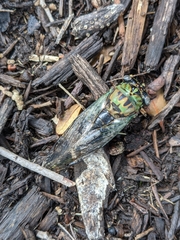
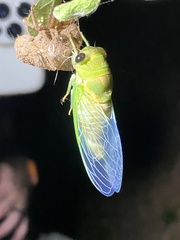
Adults have beige eyes and a black mask that runs from each bulging eye.
Source: Wikipedia
Where it lives
Found in grassland ecosystems, often near water where cottonwoods and willows grow, and also on ornamental and nut trees.
Source: Wikipedia
What it eats
Adults pierce plant stems to drink xylem fluid; nymphs feed on plant roots underground.
Source: Wikipedia
Life cycle
The complete life cycle takes about three to five years, with five underground instars before the adult emerges.
Source: Wikipedia
When you see it
Adults are active from July to September, most often between 10 am and 6 pm on warm, sunny days.
Source: Wikipedia
Where it comes from
Native to the central North American Great Plains of the United States.
Source: Wikipedia
Lookalikes
May be confused with Megatibicen dorsatus, which shares similar abdominal pruinosity and a narrow head.
Source: Wikipedia
Where it is found in the US
Recorded in 13 of 51 states and DC. Most records: Colorado, New Mexico, Oklahoma, Texas, Kansas, Nebraska, Montana, South Dakota.
Darker = more records. Counts are museum and citizen-science records, not population size.
Source: GBIF
Months it is reported in the US
Source: GBIF
More photos
Questions people ask
When are Plains cicadas active?
They are active from July through September, especially between 10 am and 6 pm on warm, sunny days.
Source: Wikipedia
What trees do they like?
Adults are often found on cottonwoods, willows, ornamental and nut trees.
Source: Wikipedia
How long does their life cycle last?
The life cycle is about three to five years, including five underground nymphal stages.
Source: Wikipedia
What other cicada looks similar?
Megatibicen dorsatus looks similar, sharing abdominal pruinosity patterns and a narrow head.
Source: Wikipedia
Same family (Cicadidae)
Sources
- Wikipedia: https://en.wikipedia.org/wiki/Neotibicen_dealbatus
Look it up elsewhere: GBIF · iNaturalist · BugGuide · Wikipedia
Text written 2026-10-23 from the sources above and checked sentence by sentence against them. Data fetched 2026-10-23.