 Bug FAQ
Plain flashwing
Vestalis gracilis · Order: Odonata · Family: Calopterygidae
Also called: Clear-winged forest glory
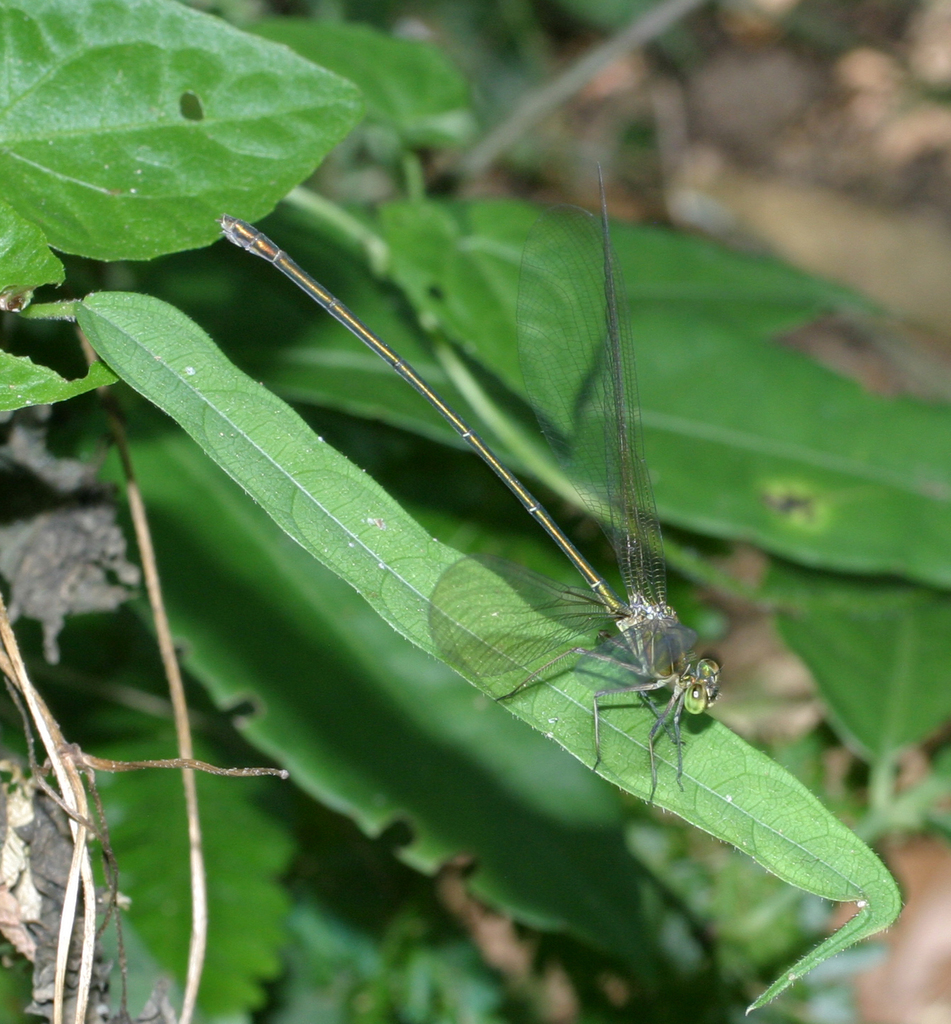
Males are bright iridescent green with yellow-black undersides, brown legs and bluish transparent wings, while females are a duller greenish-brown. Males have abdomens about 45 to 46 mm long and hindwings 34 to 38 mm; females have abdomens 43 to 50 mm and hindwings 36 to 39 mm. They live near forest streams, often in disturbed or cultivated areas, and are seen resting in groups among bushes on forest paths together with Vestalis apicalis.
Source: Wikipedia
How to recognize it
Males are iridescent green with a yellow-black underside, brown legs and bluish transparent wings. Females are a duller greenish-brown.
Source: Wikipedia
Size
Male abdomen length is 45 to 46 mm and hindwing length 34 to 38 mm. Female abdomen length is 43 to 50 mm and hindwing length 36 to 39 mm.
Source: Wikipedia
Where it lives
Breeds in forest streams and also in disturbed or cultivated areas. Often rests in groups among bushes on forest paths and in shade.
Source: Wikipedia
Where it comes from
Native to Southeast Asia and surrounding regions.
Source: Wikipedia
Lookalikes
Often found together with the similar species Vestalis apicalis.
Source: Wikipedia
More photos
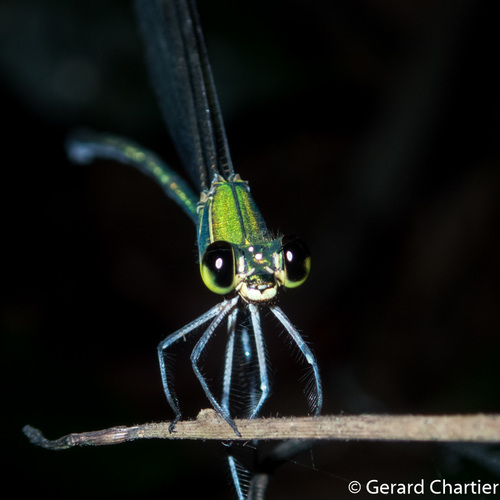
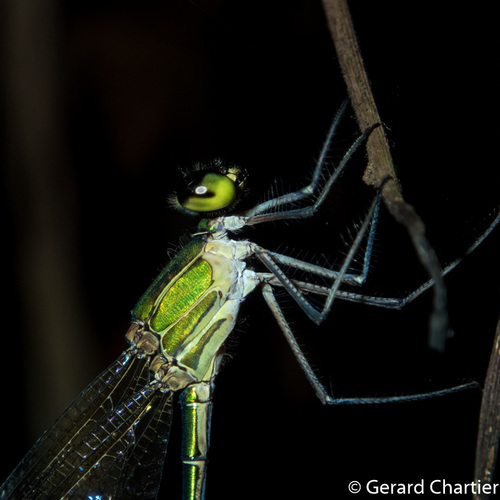
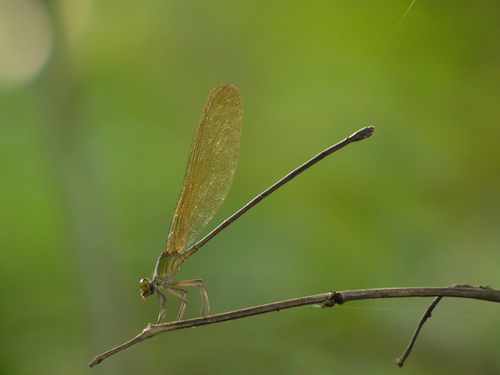
Same family (Calopterygidae)


Sources
- Wikipedia: https://en.wikipedia.org/wiki/Vestalis_gracilis
Look it up elsewhere: GBIF · iNaturalist · BugGuide · Wikipedia
Text written 2026-10-23 from the sources above and checked sentence by sentence against them. Data fetched 2026-10-22.