 Bug FAQ
Pittosporum leaf-gall fly
Phytoliriomyza pittosporophylli · Order: Diptera · Family: Agromyzidae
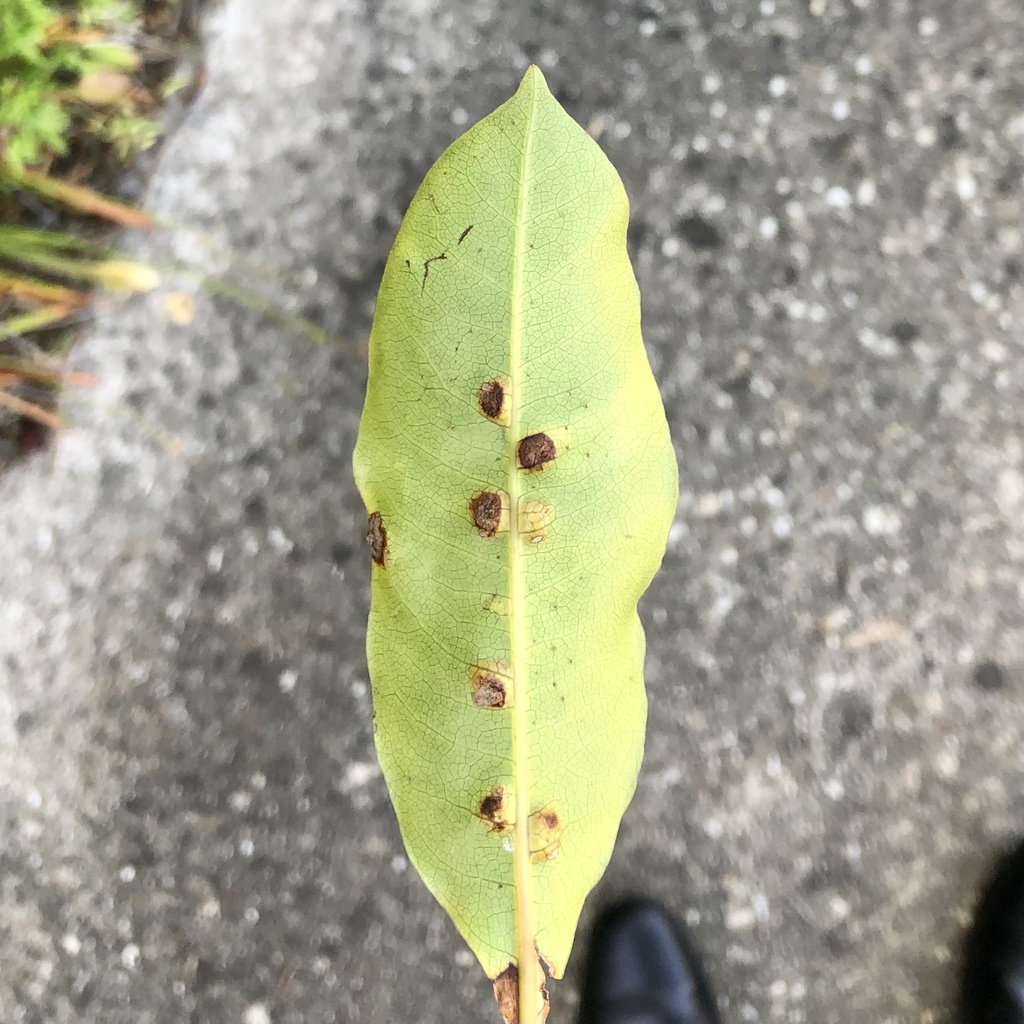
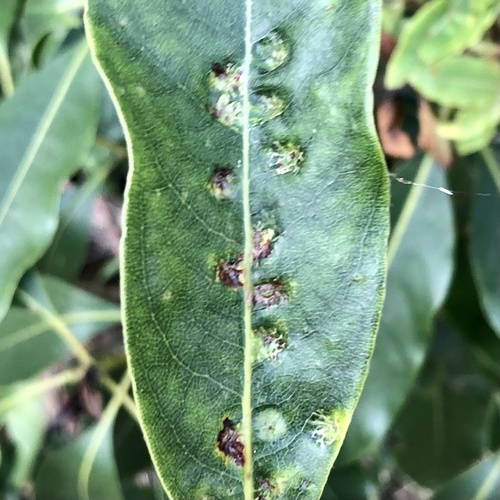
The leaf-gall fly is an Australian agromyzid whose larvae form circular galls on the leaves of sweet pittosporum (Pittosporum undulatum).
Source: Wikipedia
How to recognize it
The third antennal segment is completely black, which separates it from the similar P. pittosporocaulis.
Source: Wikipedia
Where it lives
It lives in Australia as a member of the leaf-miner fly family Agromyzidae.
Source: Wikipedia
What it eats
Larvae feed by forming circular leaf galls on sweet pittosporum.
Source: Wikipedia
Life cycle
Full descriptions of the adult, larva, and the gall they produce are given by Hering.
Source: Wikipedia
Where it comes from
Its native range is Australia.
Source: Wikipedia
Lookalikes
It looks like P. pittosporocaulis, sharing many head and body markings. It can be told apart by the entirely black third antennal segment.
Source: Wikipedia
More photos
Questions people ask
How can I tell this fly apart from similar species?
Check the third antennal segment; if it is completely black, it is Phytoliriomyza pittosporophylli.
Source: Wikipedia
Same family (Agromyzidae)
 European Holly LeafminerPhytomyza ilicis
 Jewelweed Leaf-miner FlyPhytoliriomyza melampyga
 Agromyza vockerothiAgromyza vockerothiDamages trees, gardens or crops
 Calycomyza flavinotumCalycomyza flavinotum
 Nemorimyza posticataNemorimyza posticata
 Dogwood leaf-mining flyPhytomyza agromyzinaDamages trees, gardens or crops
Sources
- Wikipedia: https://en.wikipedia.org/wiki/Phytoliriomyza_pittosporophylli
Look it up elsewhere: GBIF · iNaturalist · BugGuide · Wikipedia
Text written 2026-10-23 from the sources above and checked sentence by sentence against them. Data fetched 2026-10-23.