 Bug FAQ
Pitcher-plant Mosquito
Wyeomyia smithii · Order: Diptera · Family: Culicidae
Also called: pitcherplant mosquito
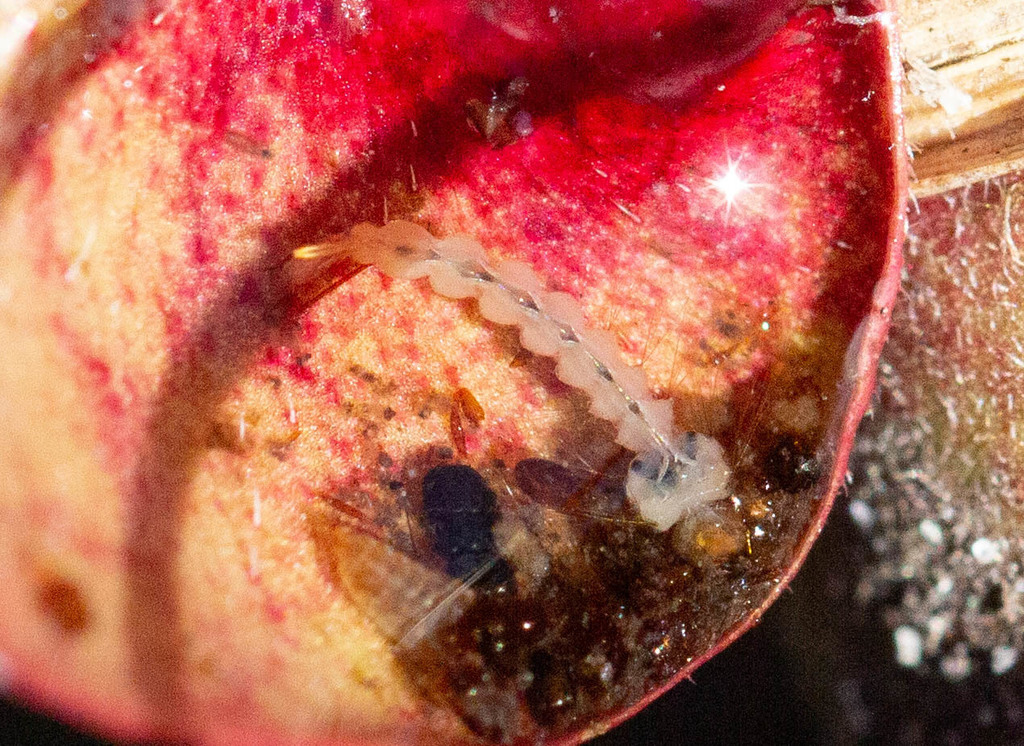
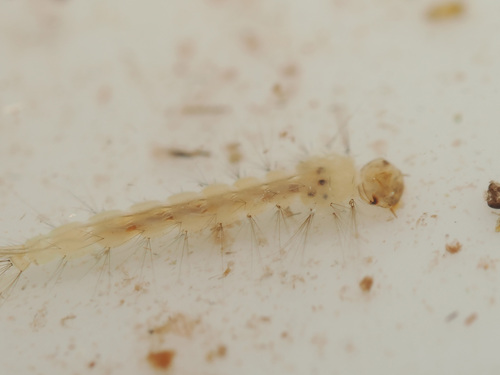
The pitcher-plant mosquito lives its whole larval life inside the water-filled leaves of the purple pitcher plant and feeds on bacteria, tiny animals, decaying insects and the prey the plant catches.
Source: Wikipedia
How to recognize it
Researchers use this mosquito to investigate how organisms use day length to schedule seasonal life-history events.
Source: Wikipedia
Is it a pest in the house?
It is not considered a pest mosquito.
Source: Wikipedia
Where it lives
It completes its entire pre-adult development inside the water-filled cavities of the purple pitcher plant (Sarracenia purpurea).
Source: Wikipedia
What it eats
Larvae feed on bacteria, micro-animals and decaying insects in the pitcher water, and also on the insects the plant captures.
Source: Wikipedia
Life cycle
Adult females lay a clutch of fertilized eggs in the pitcher plant water in late spring or early fall, usually within two days of reaching sexual maturity.
Source: Wikipedia
When you see it
The larvae enter a hibernal diapause during winter.
Source: Wikipedia
Where it is found in the US
Recorded in 17 of 51 states and DC. Most records: Florida, Wisconsin, Illinois, Michigan, Minnesota, Alabama, New Jersey, North Carolina.
Darker = more records. Counts are museum and citizen-science records, not population size.
Source: GBIF
Status: native in North America; native in Canada. Source: iNaturalist
Months it is reported in the US
Source: GBIF
More photos
Questions people ask
Where do pitcher-plant mosquitoes live?
They develop entirely inside the water-filled leaves of the purple pitcher plant.
Source: Wikipedia
What do the larvae eat?
They feed on bacteria, tiny animals, decaying insects, and the prey captured by the pitcher plant.
Source: Wikipedia
Same family (Culicidae)
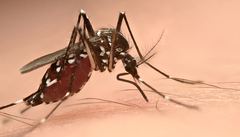 Asian Tiger MosquitoAedes albopictusCan spread germs or disease
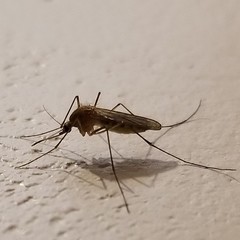 House Mosquito ComplexCulex pipiensCan spread germs or disease
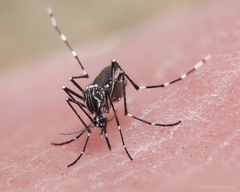 Yellow Fever MosquitoAedes aegyptiCan spread germs or disease
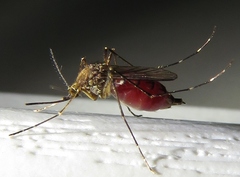 Inland Floodwater MosquitoAedes vexansCan spread germs or disease
 Asian Bush MosquitoAedes japonicusCan bite
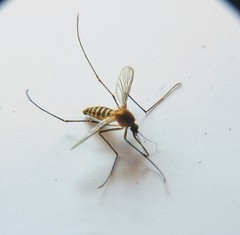 Southern House MosquitoCulex quinquefasciatusCan spread germs or disease
Sources
- Wikipedia: https://en.wikipedia.org/wiki/Wyeomyia_smithii
Look it up elsewhere: GBIF · iNaturalist · BugGuide · ITIS · Wikipedia
Text written 2026-10-26 from the sources above and checked sentence by sentence against them. Data fetched 2026-10-26.