 Bug FAQ
Phidippus octopunctatus
Phidippus octopunctatus · Order: Araneae · Family: Salticidae
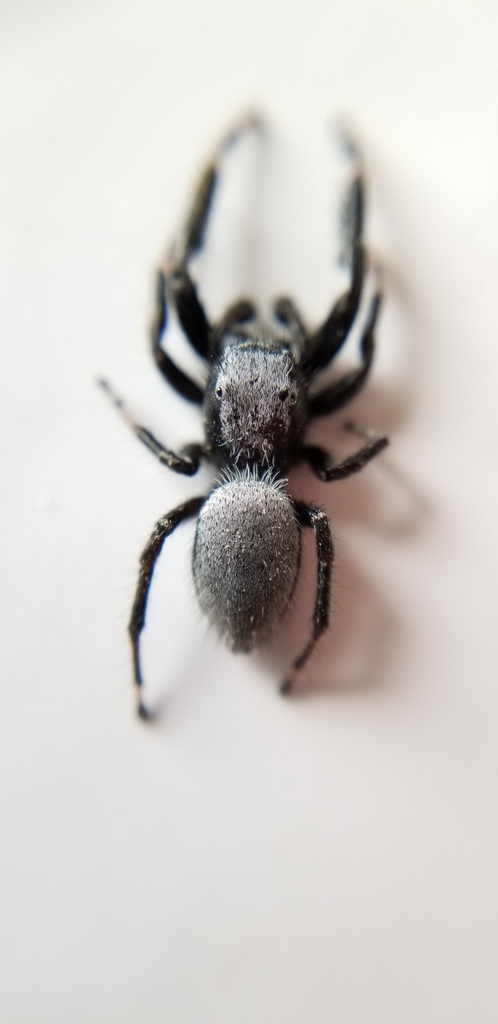
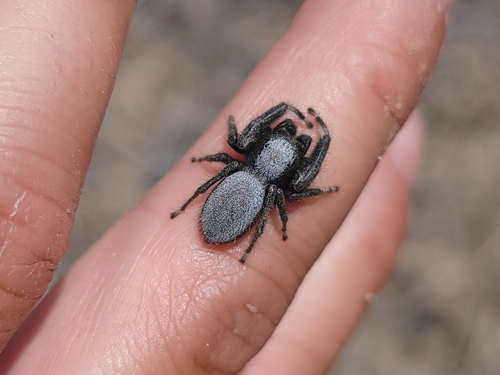
It is among the largest North American jumping spiders, growing to about 25 mm in body length. Its body is gray to brownish-gray and it builds a large, noticeable nest among bush branches for its egg cocoon. It preys on relatively large insects such as grasshoppers and bees, and adults are most commonly seen in late August.
Source: Wikipedia
How to recognize it
The spider’s coloration ranges from gray to brownish-gray.
Source: Wikipedia
Size
It can reach nearly 25 mm (about 1 inch) in body length, making it one of the biggest jumping spiders in North America.
Source: Wikipedia
What it eats
It has been observed hunting sizable prey such as grasshoppers and bees.
Source: Wikipedia
Life cycle
Adult males, unmated adult females and subadult females are present in late August.
Source: Wikipedia
When you see it
Adults of both sexes and subadult females are most often found in late August.
Source: Wikipedia
Lookalikes
Unlike the similar Phidippus californicus, this species builds a conspicuous nest in bush branches for its egg cocoon.
Source: Wikipedia
Where it is found in the US
Recorded in 16 of 51 states and DC. Most records: Colorado, Arizona, New Mexico, California, Utah, Idaho, Texas, Nevada.
Darker = more records. Counts are museum and citizen-science records, not population size.
Source: GBIF
Months it is reported in the US
Source: GBIF
More photos
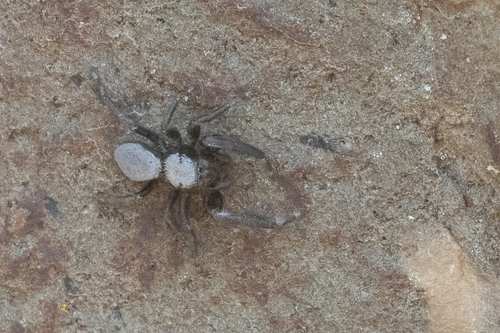
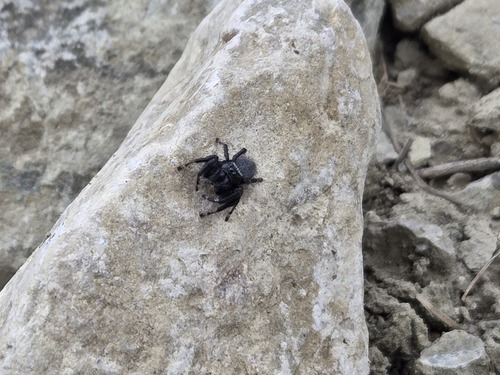
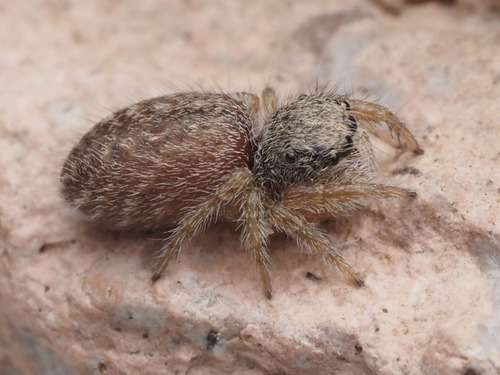
Questions people ask
When are adult Phidippus octopunctatus spiders most likely to be seen?
Adult males, unmated adult females and subadult females are typically observed in late August.
Source: Wikipedia
Same family (Salticidae)



Sources
- Wikipedia: https://en.wikipedia.org/wiki/Phidippus_octopunctatus
Look it up elsewhere: GBIF · iNaturalist · BugGuide · ITIS · Wikipedia
Text written 2026-10-25 from the sources above and checked sentence by sentence against them. Data fetched 2026-10-25.