 Bug FAQ
Passionvine hopper
Scolypopa australis · Order: Hemiptera · Family: Ricaniidae
Source: Wikipedia
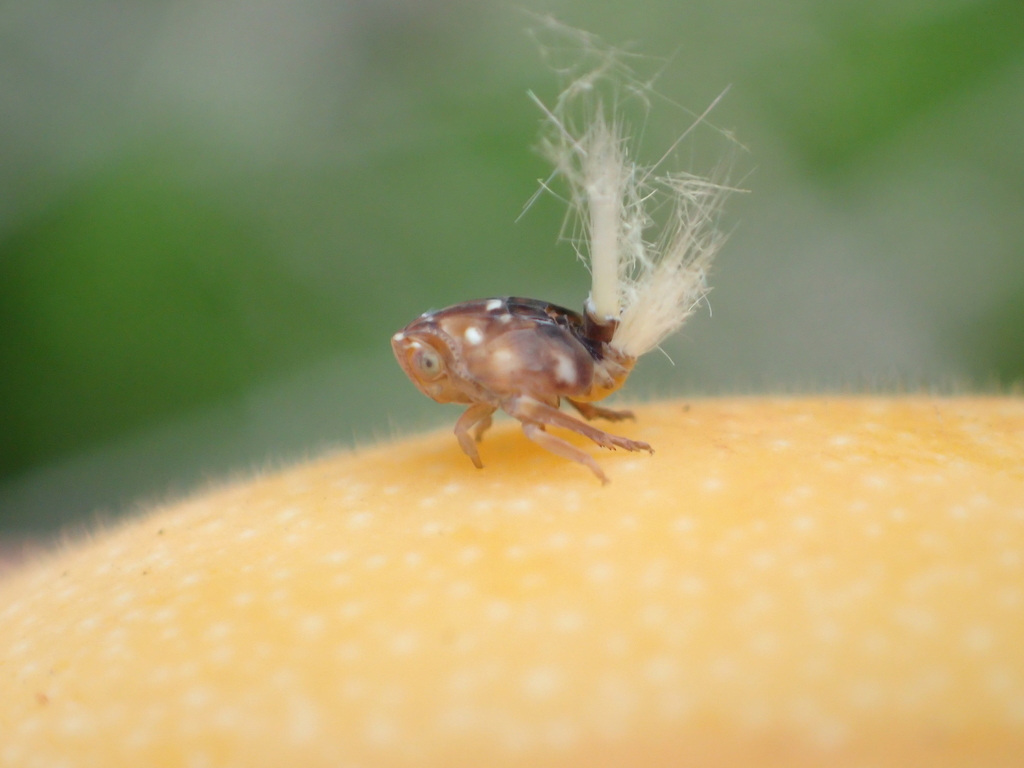
They are common in summer and autumn north of Nelson, where they feed on plant sap and excrete honeydew that attracts bees. The nymphs are wingless, called “fluffy bums”, and can hop off plants with a snap when disturbed.
Source: Wikipedia
How to recognize it
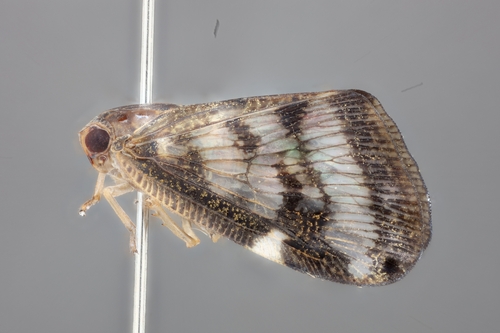
Adults look brown with partly transparent wings and may be mistaken for a moth, moving delicately like a ballerina. Nymphs have no wings and are popularly called fluffy bums.
Source: Wikipedia
Size
Adults measure 5 to 6 mm long; nymphs are about 5 mm.
Source: Wikipedia
Where it lives
They are very common in summer and autumn north of Nelson.
Source: Wikipedia
What it eats
They suck plant sap like all planthoppers, producing honeydew that bees collect.
Source: Wikipedia
Life cycle
Nymphs are wingless and called fluffy bums; when agitated they hop off the plant with a snap.
Source: Wikipedia
When you see it
They are most abundant in summer and autumn north of Nelson.
Source: Wikipedia
Where it comes from
Native to Australia, the species was introduced to New Zealand.
Source: Wikipedia
Lookalikes
Other similar planthoppers include the green Siphanta acuta, red Achilus flammeus, and grey Anzora unicolor, all from Australia.
Source: Wikipedia
Where it is found in the US
Recorded in 1 of 51 states and DC. Most records: Hawaii.
Darker = more records. Counts are museum and citizen-science records, not population size.
Source: GBIF
More photos
Questions people ask
Can they damage my garden?
They can spread a disease that harms native cabbage trees, making them a garden pest.
Source: Wikipedia
What do the nymphs look like?
Nymphs are wingless, fluffy-looking insects often called “fluffy bums”.
Source: Wikipedia
Same family (Ricaniidae)

Sources
- Wikipedia: https://en.wikipedia.org/wiki/Scolypopa_australis
Look it up elsewhere: GBIF · iNaturalist · BugGuide · Wikipedia
Text written 2026-10-22 from the sources above and checked sentence by sentence against them. Data fetched 2026-10-22.