 Bug FAQ
Black planthopper
Ricania speculum · Order: Hemiptera · Family: Ricaniidae
Source: Wikipedia
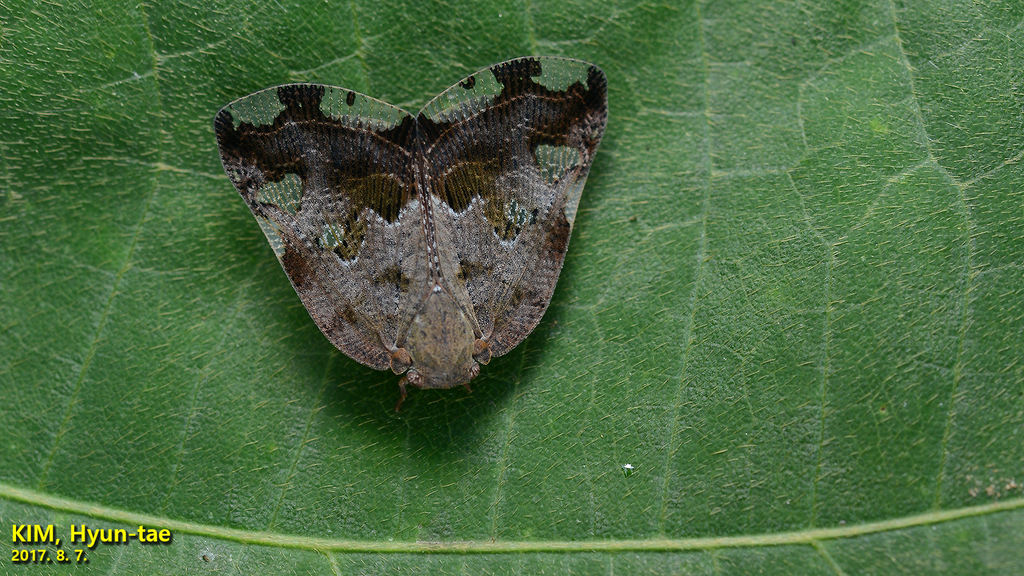
Adults are about 8 mm long with a wingspan near 15 mm. The species lives in low-elevation mountains, prefers dark places, and is found across China, India, Indonesia, Japan, Korea, the Philippines and Vietnam.
Source: Wikipedia
Size
Adults reach about 8 mm in length and have a wingspan of roughly 15 mm.
Source: Wikipedia
Where it lives
They are found in low-elevation mountainous areas and tend to stay in dark environments.
Source: Wikipedia
What it eats
They feed by sucking sap from the leaves of host plants.
Source: Wikipedia
Life cycle
The species produces one generation each year. Eggs overwinter in bark and hatch in spring.
Source: Wikipedia
Where it comes from
Their range includes China, India, Indonesia, Japan, Korea, the Philippines and Vietnam.
Source: Wikipedia
Questions people ask
How big is the black planthopper?
Adults are about 8 mm long with a wingspan near 15 mm.
Source: Wikipedia
Where are black planthoppers found?
They live in low-elevation mountains, prefer dark places, and occur in China, India, Indonesia, Japan, Korea, the Philippines and Vietnam.
Source: Wikipedia
Same family (Ricaniidae)
Sources
- Wikipedia: https://en.wikipedia.org/wiki/Ricania_speculum
Look it up elsewhere: GBIF · iNaturalist · BugGuide · Wikipedia
Text written 2026-10-22 from the sources above and checked sentence by sentence against them. Data fetched 2026-10-22.