 Bug FAQ
Brown Winged Plant Hopper
Pochazia shantungensis · Order: Hemiptera · Family: Ricaniidae
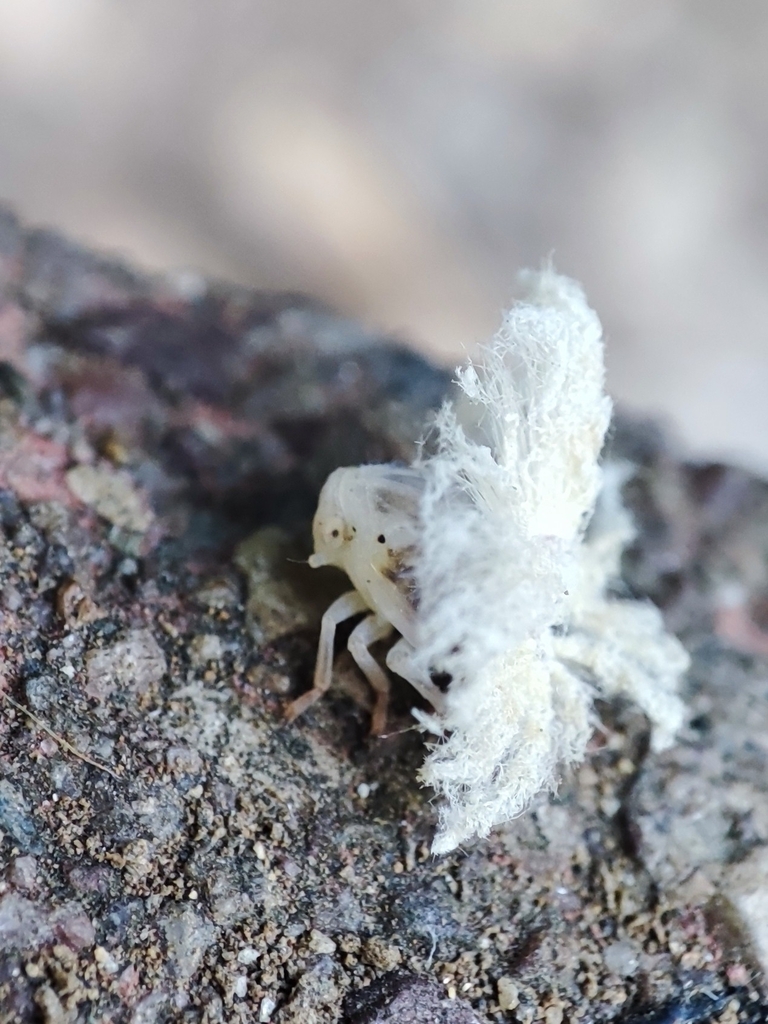
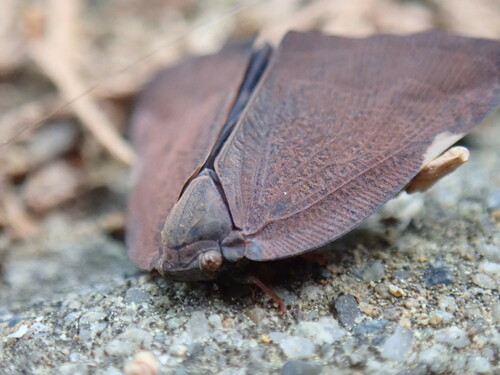
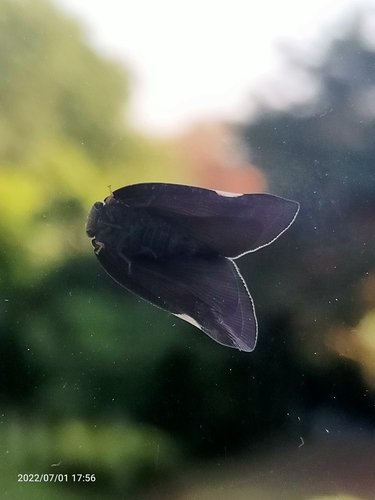
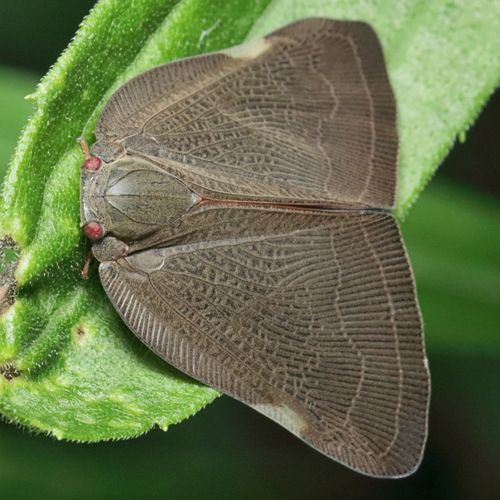
Brown winged plant hoppers are brown to dark brown planthoppers with broad forewings that often show a pale oval mark near the front edge. They feed on the sap of many woody plants, including apple, blueberry, chestnut, peach and persimmon, and can cause damage by feeding, laying eggs in young branches and producing honeydew that leads to sooty mould. Adults are about 14 mm long, while nymphs are creamy yellow and covered in waxy filaments.
Source: Wikipedia
How to recognize it
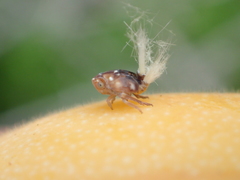
Nymphs are pale yellow or whitish, have grey-brown markings and are covered with conspicuous waxy filaments, especially at the abdomen tip.
Source: Wikipedia
Is it a pest in the house?
Feeding, egg-laying in young branches and honeydew production can damage plants and promote sooty mould on leaves and other surfaces.
Source: Wikipedia
How to get rid of it
Host plants can spread the hopper when eggs are carried on young branches.
Source: Wikipedia
Where it lives
In Istanbul they are found on urban ornamental plants such as glossy privet and olive.
Source: Wikipedia
Life cycle
In Korea eggs hatch in May, nymphs develop in spring and early summer, and adults appear from July; one generation per year is typical there, while two generations occur in China and have been seen in Turkey.
Source: Wikipedia
When you see it
One generation per year occurs in Korea, whereas two generations per year are reported from China and Turkey.
Source: Wikipedia
Lookalikes
Some records from East Asia may be confused with Pochazia chinensis.
Source: Wikipedia
Where it is found in the US
Recorded in 1 of 51 states and DC. Most records: Georgia.
Darker = more records. Counts are museum and citizen-science records, not population size.
Source: GBIF
More photos
Questions people ask
What plants does the brown winged plant hopper damage?
It feeds on many woody hosts, especially fruit trees such as apple, blueberry, chestnut, peach and persimmon, and can cause damage by feeding, laying eggs in young branches and producing honeydew that leads to sooty mould.
Source: Wikipedia
When are adults most likely to be seen?
Adults are usually observed from July after eggs hatch in May and nymphs develop through spring and early summer.
Source: Wikipedia
Same family (Ricaniidae)

Sources
- Wikipedia: https://en.wikipedia.org/wiki/Pochazia_shantungensis
Look it up elsewhere: GBIF · iNaturalist · BugGuide · Wikipedia
Text written 2026-10-22 from the sources above and checked sentence by sentence against them. Data fetched 2026-10-22.