 Bug FAQ
Parsnip Webworm
Depressaria radiella · Order: Lepidoptera · Family: Depressariidae
Also called: Parsnip Flat-body, Parsnip Moth, Parsnip Webworm Moth
Source: Wikipedia
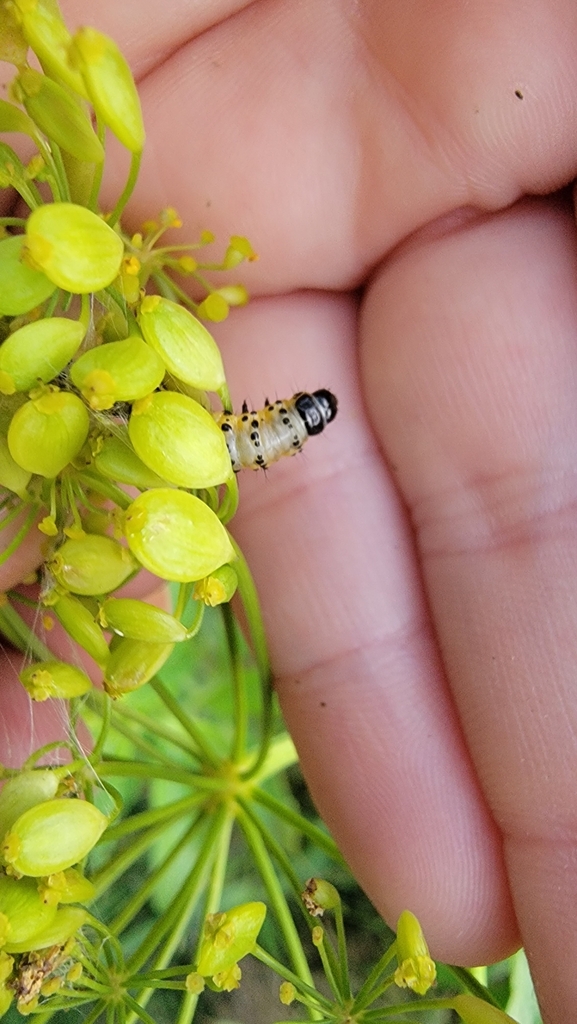
Adults have a wingspan of about 19 to 27 mm and are active from August through May after overwintering. Larvae feed on wild carrot, parsnip and water celery, pupating inside the main stem of these plants. It occurs across most of Europe (except Portugal and much of the Balkans) and has been introduced to New Zealand.
Source: Wikipedia
How to recognize it
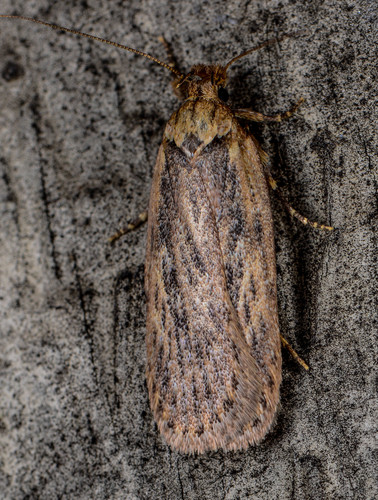
It can be told apart by many long black streaks that start in the centre of the wing and end before the outer edge, following the wing veins.
Source: Wikipedia
Size
The moth’s wingspan ranges from 19 to 27 mm.
Source: Wikipedia
What it eats
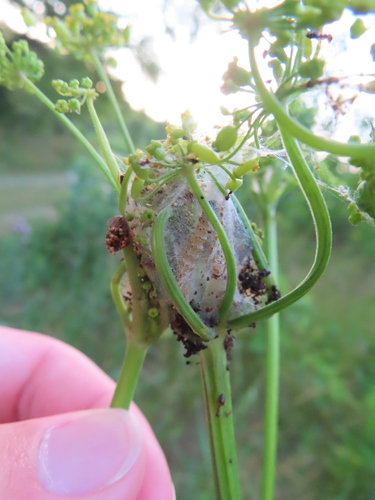
The caterpillars eat wild carrot (Heracleum sphondylium), cultivated parsnip (Pastinaca sativa) and water celery (Apium nodiflorum).
Source: Wikipedia
Life cycle
Adults are on the wing from August until May after overwintering in a sheltered spot, producing one generation each year. Pupation occurs inside the main stem of the host plant.
Source: Wikipedia
When you see it
Adults can be seen from late summer through spring, spanning August to May.
Source: Wikipedia
Where it comes from
Its native range covers most of Europe, excluding Portugal and much of the Balkans.
Source: Wikipedia
Lookalikes
It is distinguished from similar moths by the numerous longitudinal black streaks that end before the wing margin and follow the veins.
Source: Wikipedia
Where it is found in the US
Recorded in 24 of 51 states and DC. Most records: Illinois, New York, Vermont, Wisconsin, Minnesota, Washington, Montana, West Virginia.
Darker = more records. Counts are museum and citizen-science records, not population size.
Source: GBIF
Status: introduced in Canada; introduced in United States. Source: iNaturalist
Months it is reported in the US
Source: GBIF
More photos
Questions people ask
What plants do the larvae feed on?
The larvae eat wild carrot, parsnip and water celery.
Source: Wikipedia
When can I see the adult moths?
Adults are active from August through May after overwintering.
Source: Wikipedia
Where is this moth found?
It occurs across most of Europe, except Portugal and much of the Balkans, and has been introduced to New Zealand.
Source: Wikipedia
Same family (Depressariidae)


Sources
- Wikipedia: https://en.wikipedia.org/wiki/Depressaria_radiella
Look it up elsewhere: GBIF · iNaturalist · BugGuide · Wikipedia
Text written 2026-10-27 from the sources above and checked sentence by sentence against them. Data fetched 2026-10-27.