 Bug FAQ
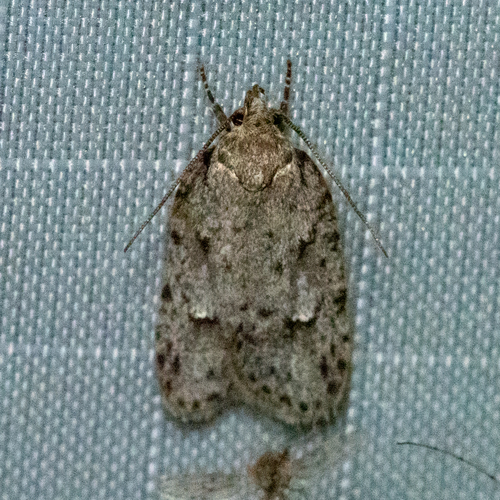
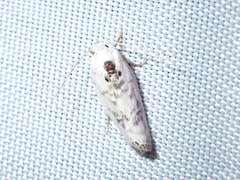
Bog Bibarrambla Moth
Bibarrambla allenella · Order: Lepidoptera · Family: Depressariidae
Also called: Bog Bibarrambla
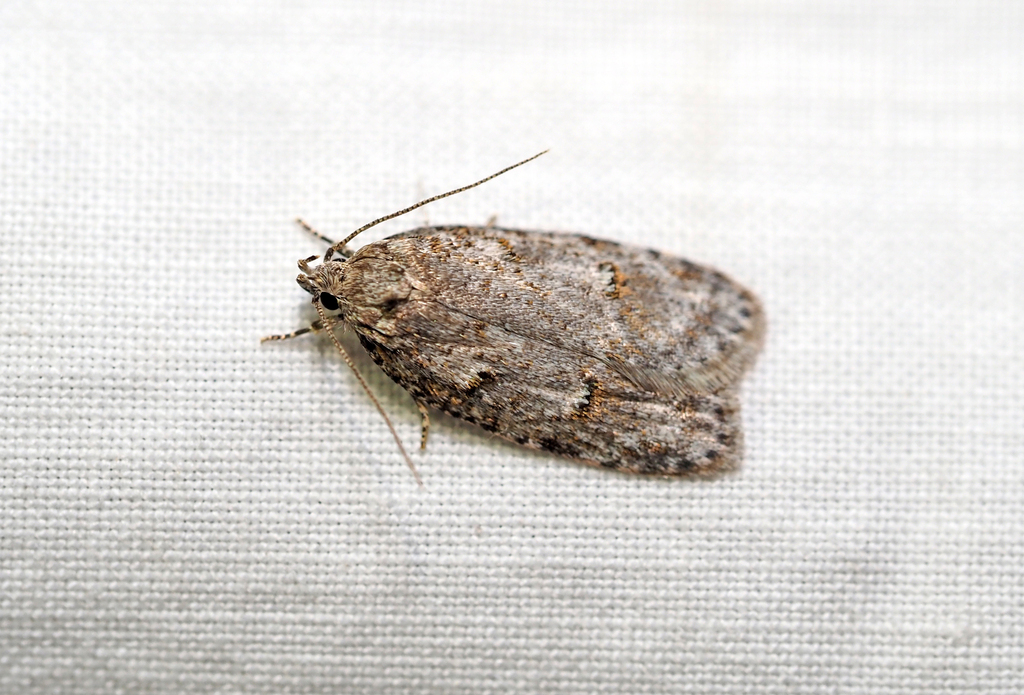
The Bog Bibarrambla moth is found in North America, ranging from Nova Scotia and other Atlantic provinces down to North Carolina and across to Minnesota. Its larvae feed on alder (Alnus) and birch (Betula) trees.
Source: Wikipedia
What it eats
Caterpillars eat leaves of alder and birch species.
Source: Wikipedia
Where it comes from
The moth occurs in North America, from eastern Canada through the northeastern and mid-western United States.
Source: Wikipedia
Where it is found in the US
Recorded in 21 of 51 states and DC. Most records: Vermont, New York, Massachusetts, Pennsylvania, Michigan, Maine, North Carolina, New Hampshire.
Darker = more records. Counts are museum and citizen-science records, not population size.
Source: GBIF
Status: native in North America; native in Canada. Source: iNaturalist
Months it is reported in the US
Source: GBIF
More photos
Questions people ask
What plants do the larvae of the Bog Bibarrambla moth eat?
The larvae feed on alder and birch trees.
Source: Wikipedia
Where is the Bog Bibarrambla moth found?
It is recorded from Nova Scotia to Minnesota and from North Carolina to New York, Connecticut and Maryland.
Source: Wikipedia
Same family (Depressariidae)
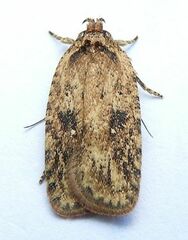 Goldenrod Leaffolder MothAgonopterix pulvipennella
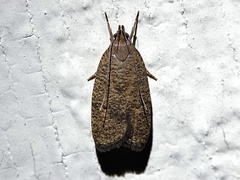 Dotted Leaftier MothPsilocorsis reflexella
 Schlaeger's Fruitworm MothAntaeotricha schlaegeri
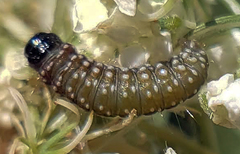 Purple Carrot-seed MothDepressaria depressana
 Poison hemlock mothAgonopterix alstroemeriana
 Pale Gray Bird-dropping MothAntaeotricha leucillanaDamages trees, gardens or crops
Sources
- Wikipedia: https://en.wikipedia.org/wiki/Bibarrambla
Look it up elsewhere: GBIF · iNaturalist · BugGuide · Wikipedia
Text written 2026-10-24 from the sources above and checked sentence by sentence against them. Data fetched 2026-10-24.