 Bug FAQ
Poison hemlock moth
Agonopterix alstroemeriana · Order: Lepidoptera · Family: Depressariidae
Also called: Moth
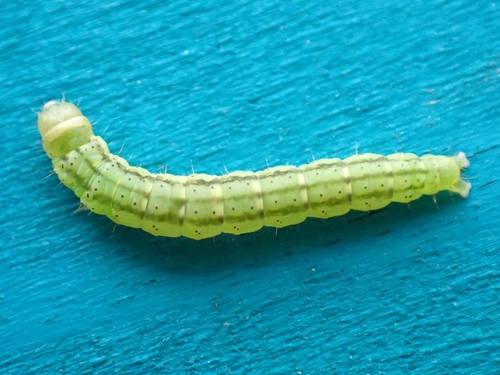
Its caterpillars start yellow with a black head, grow to about 10 mm, and become thin light-green as they feed on poison hemlock leaves, sometimes building protective leaf tubes.
Source: Wikipedia
How to recognize it
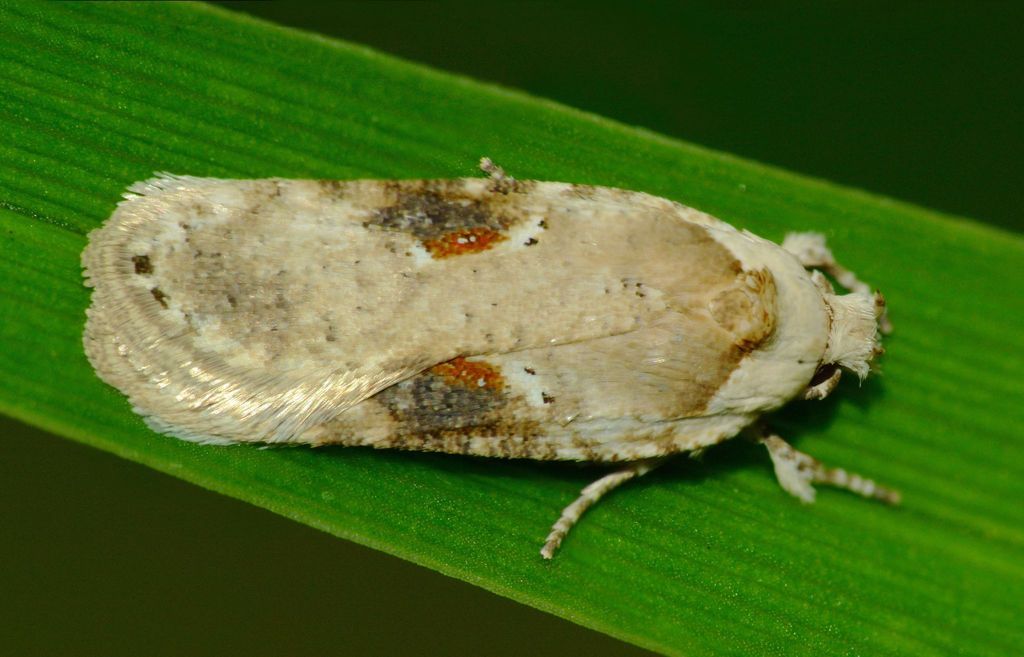
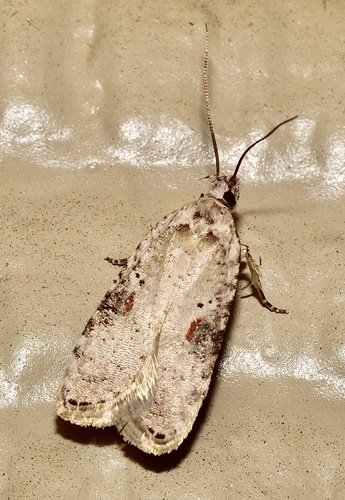
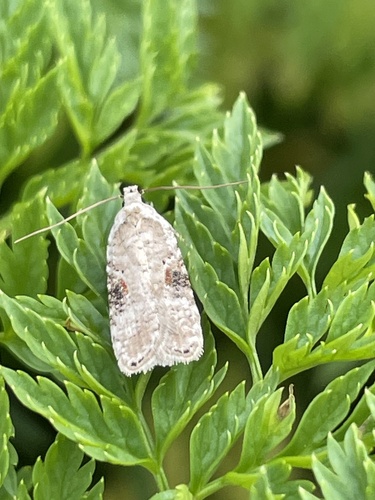
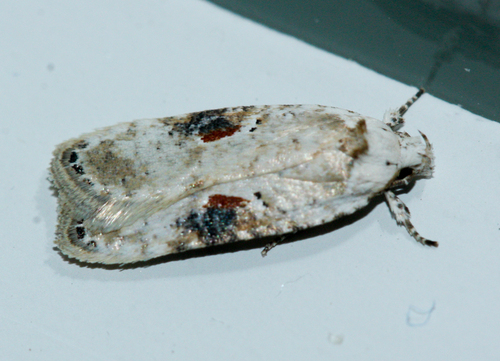
Each wing has a distinctive brown or reddish spot near its center.
Source: Wikipedia
Size
Caterpillars grow to about 10 mm long. Adult moths have a wingspan of 17 to 19 mm.
Source: Wikipedia
Is it a pest in the house?
In the U.S. they often overwinter in firewood and can fly out when the wood is brought inside. Adults may enter houses at night because they are drawn to light.
Source: Wikipedia
Does it bite or sting?
Research has not found any harmful physiological effects from the moth despite the high alkaloid content of its host plant.
Source: Wikipedia
How to get rid of it
Use of this moth for biological control is limited because little is known about its life history and because larvae are only available in early to mid-spring. Its strong dependence on poison hemlock makes it unlikely to affect non-target plants.
Source: Wikipedia
Where it lives
They are found wherever poison hemlock grows, often in open fields and roadside areas of suburban and rural locations. In the United States they commonly overwinter under firewood bark and emerge when the wood is warmed indoors. Moths are attracted to light and may enter homes at night.
Source: Wikipedia
What it eats
Caterpillars feed on the leaves of poison hemlock, which is why the moth is used for biological control of this toxic plant. They also use host plant leaves to construct protective tubes around themselves.
Source: Wikipedia
Life cycle
Eggs are pale off-white; larvae hatch yellow with a black head before turning light green as they grow.
Source: Wikipedia
When you see it
Larvae are typically harvested in early to mid-spring, which limits the use of this moth for biological control. Adults may be seen indoors at night when attracted to lights.
Source: Wikipedia
Where it comes from
The species is native to Europe and was first recorded in North America in 1973 after accidental introduction. It has since spread to Australia and New Zealand.
Source: Wikipedia
Lookalikes
It can be confused with Exaeretia canella, which lacks the reddish wing spot and has a dark head.
Source: Wikipedia
Where it is found in the US
Recorded in 26 of 51 states and DC. Most records: California, Ohio, Pennsylvania, Colorado, Michigan, Indiana, Illinois, Washington.
Darker = more records. Counts are museum and citizen-science records, not population size.
Source: GBIF
Status: introduced in Canada; introduced in United States. Source: iNaturalist
Months it is reported in the US
Source: GBIF
More photos
Questions people ask
What do the caterpillars look like?
They start yellow with a black head, grow to about 10 mm, then become thin and light-green as they feed.
Source: Wikipedia
Where might I find these moths in my yard?
They are common where poison hemlock grows, especially in open fields and roadside areas, and adults may come inside at night attracted to lights.
Source: Wikipedia
Do they bite or sting people?
Studies have not found any harmful physiological effects from the moth, even though its host plant contains toxic alkaloids.
Source: Wikipedia
Same family (Depressariidae)
Sources
- Wikipedia: https://en.wikipedia.org/wiki/Agonopterix_alstroemeriana
Look it up elsewhere: GBIF · iNaturalist · BugGuide · Wikipedia
Text written 2026-10-24 from the sources above and checked sentence by sentence against them. Data fetched 2026-10-24.